Here we go ’round the mulberry bush

I admit it: I’m an old fuddy-duddy. 

I admit it: I’m an old fuddy-duddy.  [Half of this post seems to have ended up in the English notes below, beginning with fuddy-duddy.] Case in point: I fought like hell the introduction of wikis into the daily working life of our lab.  Eventually, I folded, and it did not go without notice: one day in a lab meeting I mentioned my delight at having edited something on Wikipedia, and one of our graduate students was delighted to point out the unavoidable contrast with my oft-stated position on such things: Ha, Kevin’s using a wiki!  

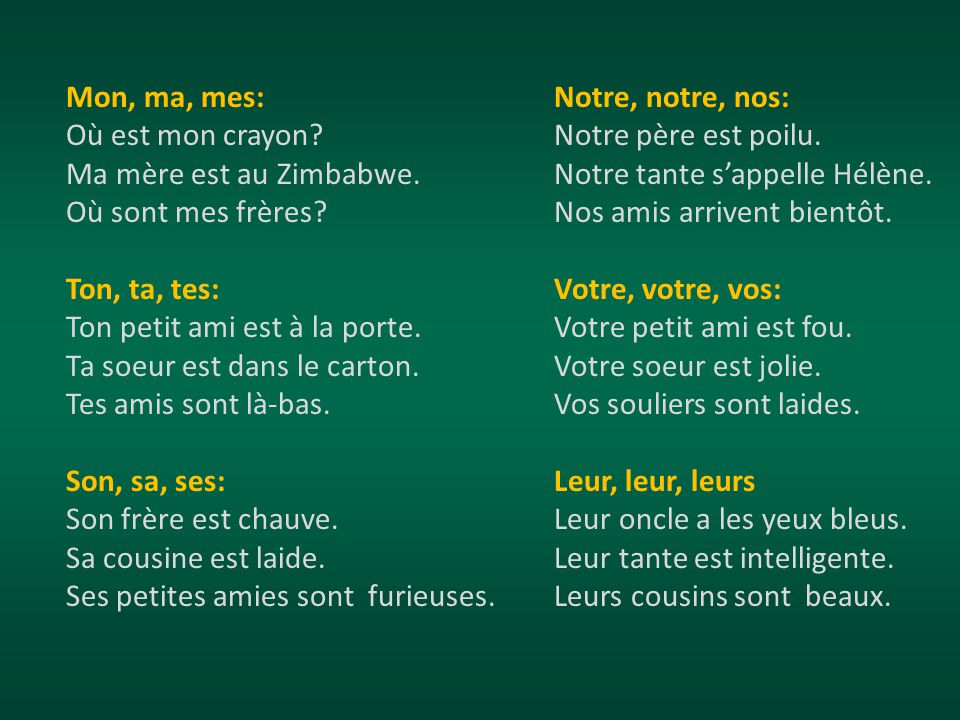
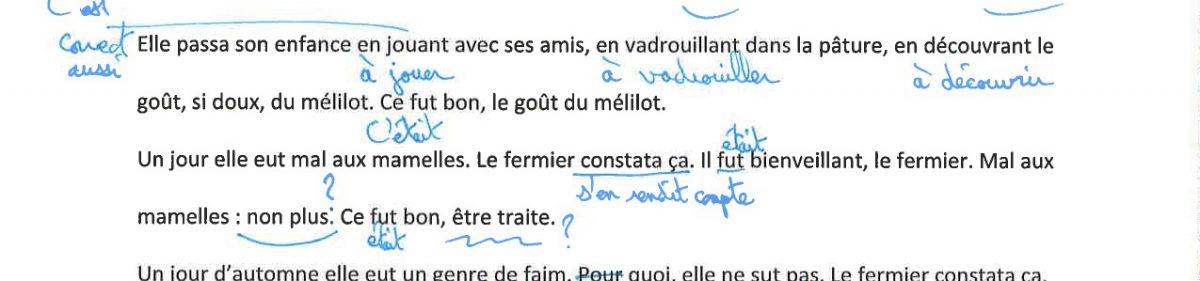
Today I am delighted once again: I just edited my first French-language Wikipedia entry!  Here’s the before-and-after.  Can you see the word whose spelling I edited–twice?  (You’ll find it in the French notes below.) Of course, being excited about having spotted a French-language spelling error means that before noon I’ll have said something stupid enough to make the entire lab bust out laughing, mais c’est normal, ça, it happens every day anyway…

Before:

Screen Shot 2017-11-24 at 07.06.19

After:

Screen Shot 2017-11-24 at 07.08.10


English notes

old fuddy-duddy: “one that is old-fashioned, unimaginative, or conservative” (Merriam-Webster)


like hell: an intensifying adverb.  It means something like very hard .

How I used it in the post: I fought like hell the introduction of wikis into the daily working life of our lab.  Eventually, I folded, and it did not go without notice.

There’s another use, meaning “very much,” often appearing with the verb to hurt:


…and there’s another use, explained by Merriam-Webster like this:

— used to say in an angry and forceful way that one will not do something, does not agree, etc. “It’s your fault!” “Like hell it is!”


to fold: to give in, to give up, to surrender.

How I used it in the post: I fought like hell the introduction of wikis into the daily working life of our lab.  Eventually, I folded, and it did not go without notice.

to bust out: to suddenly begin doing something–intensely, I think.  You might bust out laughing, for examply–suddenly you start laughing, hard.  This feels pretty informal, limite slang, because of the word bust, which is a low-register word (versus the word to break, which would be a more appropriate choice at work, in a classroom, etc.).

How I used it in the post: Before noon I’ll have said something stupid enough to make the entire lab bust out laughing.


French notes

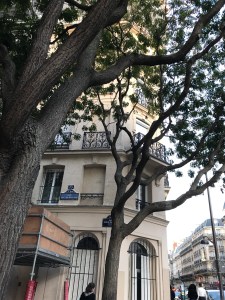
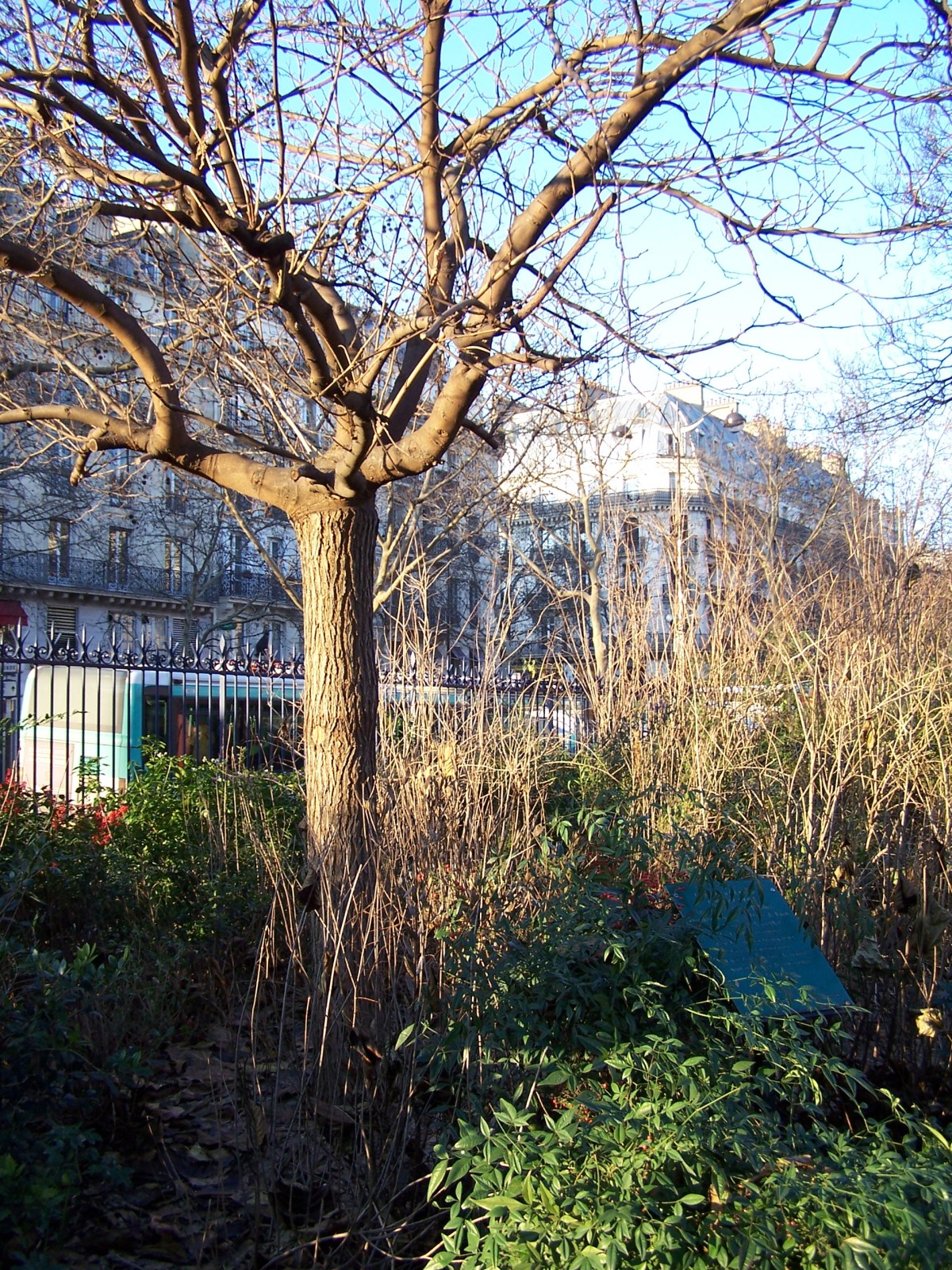
le mûrier : blackberry bush; mulberry tree
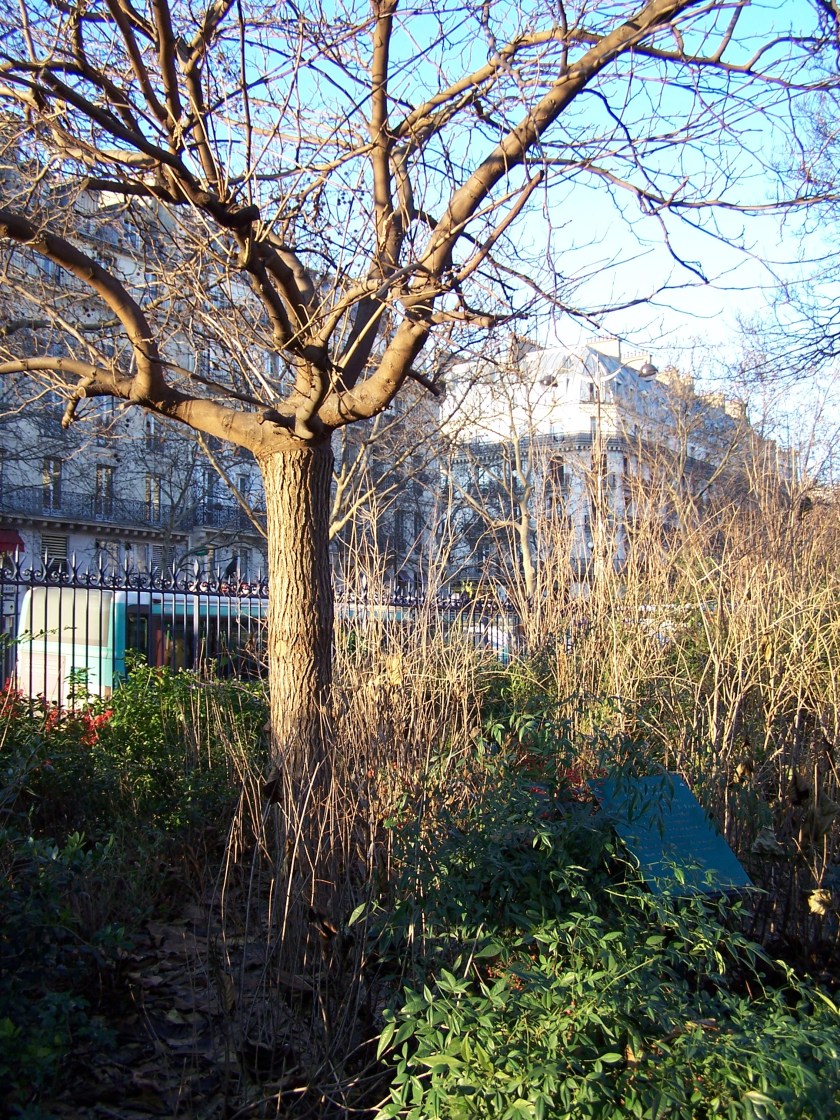
murier_c2ab_laissons-les_grandir_ici_c2bb
Picture source: Par LPLT — Travail personnel, CC BY-SA 3.0, https://commons.wikimedia.org/w/index.php?curid=23966478

How we’re sounding stupid today: “their”

The next morning I’ll show up at the lab and someone will say “good morning” to me in a way that I haven’t heard before, and I’ll stand there like a drooling idiot trying to figure out what the hell I just heard. 

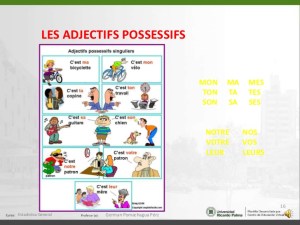
It never fails.  One evening I’ll be sitting around with friends discussing how the American right wing versus the American left wing defines “the establishment,” or the contrasting French and American understandings of religious freedom, or the lack of correspondence between the French and American categories of liberal, conservative, leftist, rightist, or something equally complex.  I’ll think that I’m finally starting to be able to function in the French language.  Then the next morning I’ll show up at the lab and someone will say “good morning” to me in a way that I haven’t heard before, and I’ll just stand there like a drooling idiot trying to figure out what the hell I just heard.  (For lots of ways to say “hello” in English, see the English notes below.)

presentacion-basica-16-728
Picture source: https://fr.slideshare.net/surco2011/presentacion-basica

Case in point: it was recently pointed out to me that I essentially always get the word their wrong.  It has two forms, leur and leurs, neither of which I ever get right–instead, I say/write son/ses.  Those are the singular forms.  Crazy–any child could get this right…

OK: enough self-castigation.  Let’s practice.  We’ll use a technique that I learned from the book Português Contemporâneo, by Maria Abreu and Cléa Rameh.  Amazon describes it like this:

This is the first volume of a basic course organized around the concept that to learn another language is to internalize another set of linguistic rules.

How do you do that?  Abreu and Rameh do it with drills.  Not tests, really–drills.  When you have things that contrast with each other–say, the first-person singular form of a verb (I like you) and the first-person plural form of a verb (We like you)–you repeat each one several times in a very similar sort of sentence.  Only after that do you start mixing them together.  If memory serves, you do this in sets of half a dozen or so.  For example:

Ça c’est son livre.

  1. stylo : Ça c’est son __________ stylo.
  2. porte-monnaie : Ça c’est __________ porte-monnaie.
  3. sac à dos : Ça c’est __________ sac à dos.
  4. père : Ça c’est __________ père.
  5. chien : Ça c’est __________ chien.
  6. bateau : Ça c’est __________ bateau.

Now, remember: I belong very firmly to the “write about what you don’t know” school of…well, of writing.  So, I may wander into error very quickly here–I depend on you native speakers to keep me straight here.  This is about to get to be a problem, because…

There can be quite a bit of variation between languages in how nouns get inflected–or don’t–when you’re talking about a group of individuals, each of which has something.  For example, suppose you’re talking to a group of kids, and their faces are dirty, and you’re going to tell them.  Here is how that works in English, and in Spanish:

  • Wash your faces.
  • Lavense la cara.

Notice that in English, faces is plural, while in Spanish, la cara is singular.  It’s pointless to talk about logic or lack thereof here–this isn’t about logic.  It’s just a fact about the individual language.  How does it work in French?  I actually have no idea, but I bet I can screw it up pretty easily.  In order to try to avoid that, I’m going to hunt about for real-life examples.  But–I’ll bet that native speakers disagree about this kind of thing.  I’d love to hear your opinions on this in the Comments, if they differ.  In order to try to get the most Académie-ish usage, I’ve taken these examples from the EUROPARL corpus, a set of speeches in all of the languages of the European Union.  These texts come from either native-speaker politicians or professional EU translators, so they should, in theory, be close to the spoken standard.
OK–leur: 

  1. travail : Je le déplore car nous devons agir du fait que d’ autres n’ ont pas fait __________ travail.
  2. choix : Nous espérons que ceux qui envisagent de voter contre ces amendements pourront donner de bonnes raisons de __________ choix au Parlement et aux citoyens qui sont à la recherche d’ un emploi.
  3. but : Pourtant, __________ but originel est d’ indiquer la direction à suivre et de fixer des priorités.
  4. part : Les États membres ont aussi __________ part de responsabilité dans ce domaine et ils ne doivent pas l ‘ oublier.
  5. région : Les gens réagissent en ” votant avec leurs pieds “, en quittant __________ région dans l ‘ espoir de trouver de meilleurs revenus.
  6. taux :  Je pense que nous en avons tous le plus grand besoin si nous considérons les résultats des dernières élections européennes, si nous considérons __________ taux de participation.

Now: that probably looks super-simple, but it’s probably six times more than I’ve used leur in the entire past six months–apparently, I get this wrong all the time.  It’s about to get a lot harder for me to set up the drill, because I have to figure out a way to cue whether the possessors are singular or plural, while simultaneously keeping the structures as similar as possible–difficult (for me, at any rate) in a language in which the verb agrees with the number (i.e., singular or plural) of the subject.  Let’s see what we can do here…
Il culpabilise son prof.

Ils culpabilisent leur prof.  (Note that we have to make the assumption that “they” share the same (single) professor–this is different from the “wash your faces” case, where everyone has their own, individual face.)

  1. il, cousin : Il culpabilise __________ cousin.
  2. ils, père : Ils culpabilisent __________ père.
  3. ils, président : Ils culpabilisent __________ président. 
  4. il, président : Il culpabilise __________ président.
  5. il, chien : Il culpabilise __________ chien.
  6. ils, chef : Ils culpabilisent __________ chef. 

OK, that wasn’t so bad…  Let’s do another drill of six examples.  This time, though, I’m going to use feminine nouns, so the singular will be sa.

  1. Les deux frères, mère : Les deux frères aiment __________ mère.
  2. Les deux maîtresses d’école, directrice : Les deux maîtresses d’école aiment__________ directrice.
  3. il, mère : Il aime __________ mère.
  4. ils, tante : Ils aiment __________ tante.
  5. il, voiture : Il aime __________ voiture.
  6. Le jeune homme et sa meuf, voiture : Le jeune homme et sa meuf aiment __________ voiture.

(OK, quick question for my fellow anglophones: or these more straightforward or less straightforward when I can find actual nouns (les deux frères) instead of pronouns (ils)?)

Notice that we haven’t even touched the form leurs, which is used when multiple things are owned–that gets us straight into the question of what you do in cases where everyone has their own of something (remember the example wash your faces in English versus lavense la cara in Spanish that we talked about above).  We’re up to 1200 words already, so let’s leave that for another day–if I can get this straight with the singular leur, maybe I’ll at least be making 50% fewer errors today, at any rate…


English notes

Here are a bunch of ways to say hello.  Some of them you would only use in the morning–I’ve listed them separately.  Good afternoon and good evening sound pretty formal–in America, we tend to use separate greetings for the morning only.  For the rest of the day, we mostly just use some form of hello. 

  1. Hello
  2. Hi
  3. Hey
  4. Hey there
  5. What’s up?
  6. ‘Sup?  (for young people only–I’ve probably never said this in my life.  It’s a form of what’s up?)
  7. What’s goin’ on?
  8. Howdy (don’t even think about using this one unless you want to make people smile/laugh, in which case: go for it)
  9. Howdy, pardner (see note above–and, yes, you have to pronounce it pardner, with a d, to get the full effect)

For the morning only:

  1. Good morning
  2. ‘mornin’
  3. mmmphglrg (or words to that effect–I’m (mostly) joking here)

Mystery solved: the Paris edition

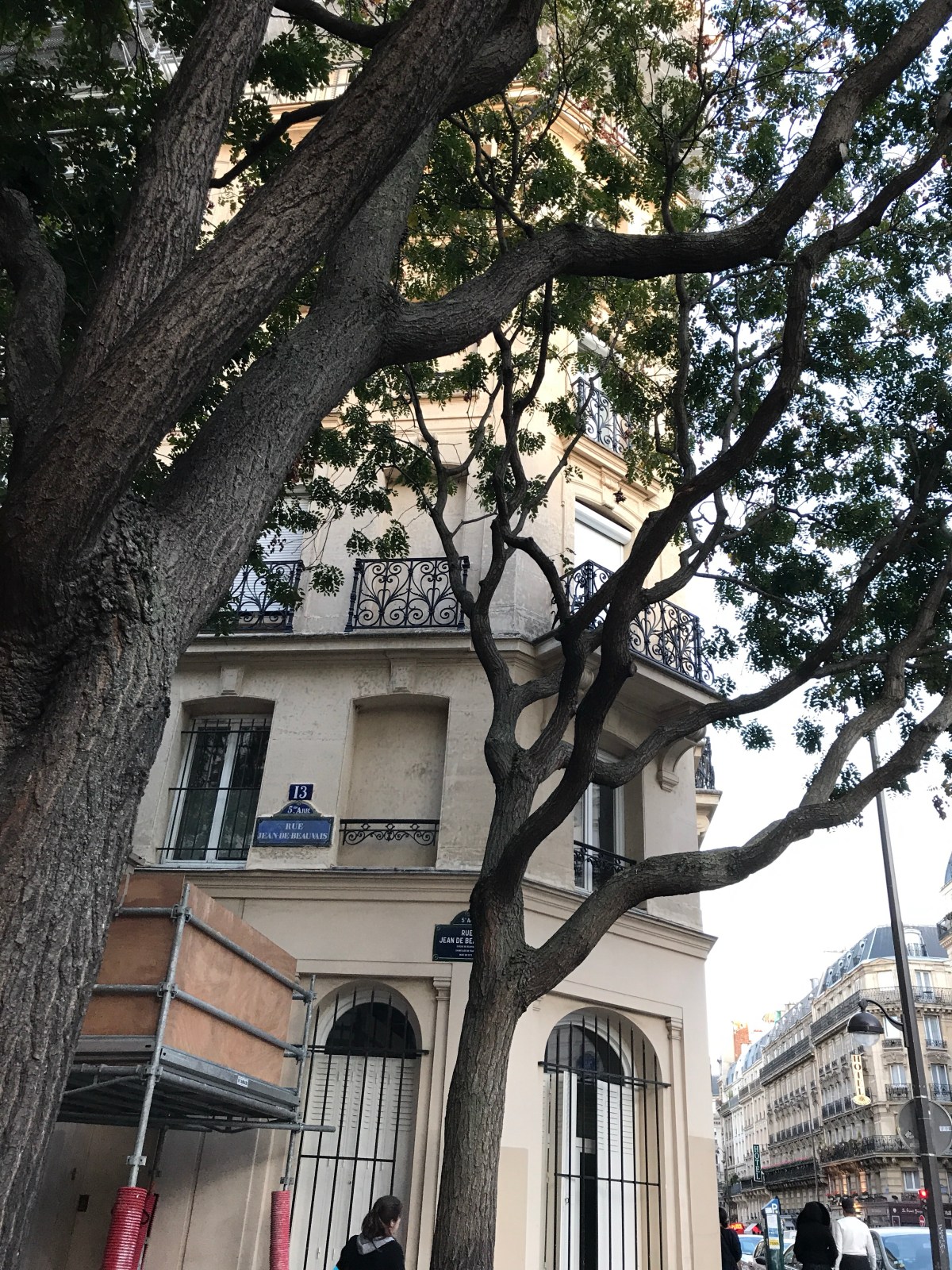
img_3139
Filled-in windows next to the gate of the Cordeliers campus of the École de médecine, Paris. Picture source: me.

Adam Gopnik’s Paris to the moon is the best writing that I know of on the experience of being an American ex-pat in Paris.  He maintains that the only really important difference between Paris and New York is the latitude: Paris is, in fact, so far to the north that in the wintertime, days are super-short here.  For me, it’s the one and only problem with this place—the winter darkness is crushing, a weight that I often think I can feel physically. 

Screen Shot 2017-11-22 at 05.17.57
Google’s autocompletes when I looked for the origin of Paris’s nickname, “The City of Light.” Note: Paris is NOT dirty.

In this city often called the City of Light, light actually is often an issue.  If you live on one of the lower floors of the typical 7-story Hausmannian apartment buildings that make up about 60% of Paris, the sunlight only actually shines into your home for a short time every day, even in the summer—in the winter, it’s a sort of perpetual gloom, even if you have big windows, just because of the height of the surrounding buildings.   Your windows are everything here, as far as I’m concerned.

img_3494
Bricked-up windows, someplace or other in Paris. Picture source: me.

Consequently, it’s always been a surprise to me to see things like you see in the photo to the left.  You’ll notice that a number of the windows have been bricked up.  In a city where sunlight is at a premium, why the hell would you do that?

A wonderful tour guide told me the answer: once upon a time, buildings were taxed by the number of windows.  Brick up your windows, and you paid less in taxes.  At the time, Parisians mostly rented their apartments (today it’s common to own your apartment), and from the landlord’s perspective, it made sense—if you didn’t think that you could make up the tax difference by charging more rent, you might as well brick up your windows, pay less taxes, and your renters be damned.

img_3150
Bricked-up windows overlooking a little café on the rue des Écoles. I accidentally learned the word “braguette” here when I walked inside to pay–with mine open. Picture source.

Interesting, but I was never able to find any documentation of the old tax rule that the tour guide had told me about, and I don’t typically write about things on this blog if I can’t find a source to cite.  Fast-forward a few months, though, and I find myself reading Victor Hugo’s Les misérables.  I was expecting a nasty cop trying to throw a guy in prison for stealing two loaves of bread; instead I’ve read  chapters and chapters about a really nice priest.  Is this book ever going to go anywhere?  I have no clue.  But, then I came across this.  Remember: as I said, the priest is really nice.  At one point, he gives this sermon:

« Mes très chers frères, mes bons amis, il y a en France treize cent vingt mille maisons de paysans qui n’ont que trois ouvertures, dix-huit cent dix-sept mille qui ont deux ouvertures, la porte et une fenêtre, et enfin trois cent quarante mille cabanes qui n’ont qu’une ouverture, la porte. Et cela, à cause d’une chose qu’on appellee l’impôt des portes et fenêtres. Mettez-moi de pauvres familles, des vieilles femmes, des petits enfants, dans ces logis-là, et voyez les fièvres et les maladies ! Hélas ! Dieu donne l’air aux hommes, la loi le leur vend. Je n’accuse pas la loi, mais je bénis Dieu. Dans l’Isère, dans le Var, dans les deux Alpes, les hautes et les basses, les paysans n’ont pas même de brouettes, ils transportent les engrais à dos d’hommes ; ils n’ont pas de chandelles, et ils brûlent des bâtons résineux et des bouts de corde trempés dans la poix résine. C’est comme cela dans tout le pays haut du Dauphiné. Ils font le pain pour six mois, ils le font cuire avec de la bouse de vache séchée. L’hiver, ils cassent ce pain à coups de hache et ils le font tremper dans l’eau vingt-quatre heures pour pouvoir le manger. — Mes frères, ayez pitié ! voyez comme on souffre autour de vous. »  — Victor Hugo, Les misérables


Hugo, a champion of the poor, had it right: search for impôt des portes et fenêtres and you’ll find the Wikipedia page on the subject.  Turns out the tax was first instituted during the Revolution of 1789, but it comes from an older Roman tax scheme called the ostiarium.  In effect until 1926, the original goal was to have a progressive tax, i.e. one that falls proportionally more heavily on richer people.  As it turned out, it had a bad effect on the renters.  From Wikipedia:

Cet impôt fut accusé de pousser à la construction de logements insalubres, avec de très petites ouvertures, donc sombres et mal aérés, et il conduisit à la condamnation de nombreuses ouvertures, ainsi qu’à la destruction, par les propriétaires eux-mêmes, des meneaux qui partageaient certaines fenêtres en quatre, ce qui augmentait substantiellement l’impôt.  Wikipedia

Sombres et mal aérés–exactly as Hugo described them.

On the plus side, the lack of any prolonged sunshine on my windows means that my apartment never gets very hot in the summertime.  When the days get short, I pull a light box out from under my little water heater (which turns out to be related to another Parisian mystery, but more on that another time), and half an hour a day in front of that makes the crushing winter darkness feel less…crushing.  Spring will be here before we know it.


French notes

Dieu donne l’air aux hommes, la loi le leur vend.  “God gives men the air, the law sells it to them.”  What interests me about this is the double pronominal objects: le leur vend, “sells it to them.”  I have a terrible time with that kind of double-pronominal construction, and as it turns out, a lot of French people do, too–ask someone how to say I give myself to you and you give yourself to me, and I’ll bet that they have to think about it for a minute.  The most common answers that I get are along the lines of Je me donne à toi and Tu te donnes à moi, where the indirect object pronoun (in this case, the person to whom something is being given) is not placed in front of the verb, but rather after it, in a prepositional phrase–contrast those with le leur donne, where both of the pronouns are pre-verbal (before the verb).  Native speakers, got any help for us anglophones here?

The basic principle of shopping in a market

Expecting everyone in the file d’attente behind me to be groaning at my idiocy in not being prepared to pay, I dug out my wallet and started digging through it frantically.  “Relax, it’s Sunday,” said the nice lady behind the counter. 

The basic principle of shopping in a marché (market) is this: look for the longest line, and get in that one.  If there are lots of little old ladies in it: all the better.

So, it’s my turn at the chosen fromagier’s kiosk, and madame is weighing my little Vacherin.  Because there are tons of people in line behind me, I’ve got my money right there in my hand, waiting to pay as soon as I have the goods in hand.  Seulement voilà (the thing is), when the fromagière tells me the price, it turns out to be twice what I thought I remembered from last year.  Expecting everyone in the file d’attente behind me to be groaning at my idiocy in not being prepared to pay, I dug out my wallet and started digging through it frantically.  Relax, it’s Sunday, said the nice lady behind the counter.  (If it’s in italics, in happened in French.  But, this gentleman in line behind me, this lady–I don’t want to inconvenience them.  

Oh, no–madame is right, it’s Sunday.  No one is in a hurry, said the gentleman.  He smiled.  The lady behind him smiled.  The fromagière smiled.  even smiled.  I got my Vacherin, said au revoir to everyone, and walked away.  Have a good Sunday, said the fromagière.

Explain to me again why you think that French people are rude??


The reason that I hadn’t boughten a Vacherin for a year: it’s a winter cheese.  (Boughten discussed in the English notes below.) Yes, cheeses have seasons, and this one shows up around the time that the days start to get depressingly short and you wonder whether or not you can find last year’s gloves.  According to my copy of Marie-Anne Cantin’s Guide de l’amateur de fromagesIl est de nos jours un des rare fromages saisonniers.  (The kid at the fromagerie that I usually go to–it’s about a 20-second walk from where the firing squads used to do their thing up against the wall of the Fermiers généraux, as recently as 1871–told me one day about some of the tricks that are now used to get sheep to produce milk outside of the lambing season.  It’s not cruel, but not exactly appetizing, either.)

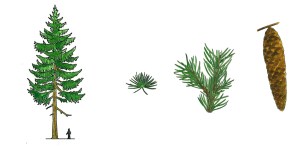
epicea_commun
Picture source: http://www.haussimont.com/

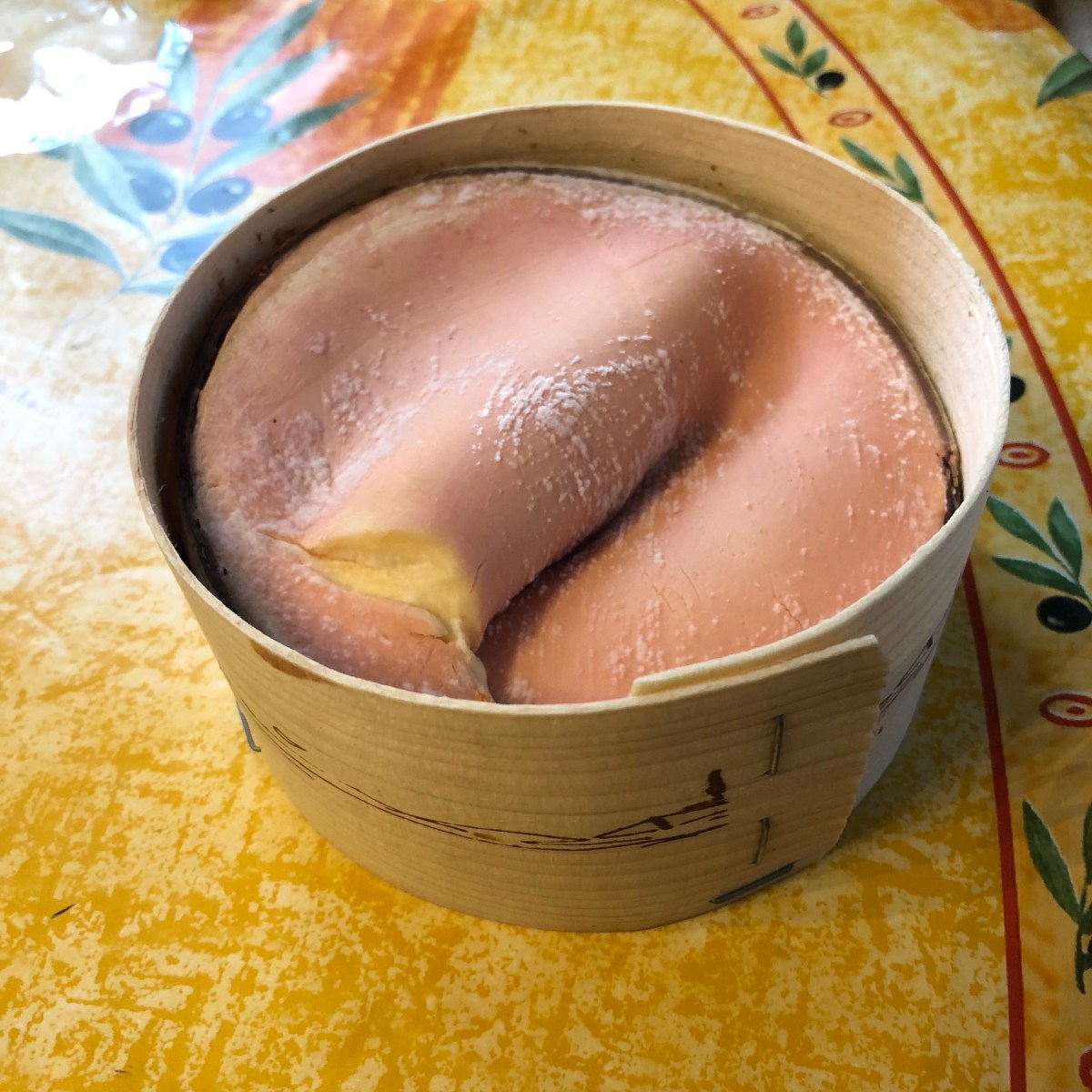
Also known as Mont d’or, I think it’s hyper-bon, and apparently a lot of other people do, too, because at this time of year, it’s stocked more heavily than anything else.  As you can see in the photo (taken on my kitchen table), it comes in a box (and it must come in a box), and the box is made of épicéa (spruce) (and it must be made of épicéa).  Cantin says that it’s from the spruce that the unusual taste of a Vacherin comes.

As you can see from the picture, a good Mont d’or has undulations on the surface–des vagues (waves), Cantin calls them.  It’s a very soft cheese, to the point that if you a buy a larger one, it typically comes with a wooden spoon–indeed, you can just scoop it out, and it spreads easier than butter.  (One of my friends insists that the only way to eat a Mont d’or is to pour some white wine on top, put it in the oven for a bit, and then pour the melted cheese over boiled potatoes.  Cantin sees it my way, though, and what my friend doesn’t know, won’t hurt her.)

In the time that it’s taken me to write this post, I’ve eaten approximately 25% of my Vacherin, and you know what?  I don’t care.  The other day I calculated how many more weekends I have to live: 680.  Probably sounds morbid, but it inspired me to work not more than, say, 30 minutes all of this weekend, which happens, like, never–did you calculate how many weekends you have left yesterday, and if not, what did you do this weekend?  Carpe diem, baby!


French notes

l’épicéa (n.m.) : spruce.

le vacher : cowherd.  Le vacherin était autrefois le fromage des vachers.  As Cantin explains this: back in the days, comte was made in the mountains while the cows did their summer grazing.  In the winter, the cows would be back in the stables, and the milk quantity and quality decreased.  Additionally, the roads could impassable.  So, rather than taking the milk to a cheese-maker, the farmers made their own cheese out of it–hence Vacherin being a vacher’s cheese.


English notes

boughten: yes, boughten is English.  More commonly, it’s bought, but you will run into the boughten form in some dialects–the Midwest and the Northeast, mostly, I think, although I couldn’t swear to that.

quote-no-memory-of-having-starred-atones-for-later-disregard-or-keeps-the-end-from-being-hard-robert-frost-230318
Picture source: http://izquotes.com/quote/230318
boughten
Picture source: bittersoutherner.com
1280x720-zoe
http://www.dailymotion.com/video/x2yaza1


A day in the life of a puppy

There was a leaf and I sniffed it and there was kibble and I peed and I took a nap and there was a bird and I barked at it and we played King of the Hill and I peed and I took a nap and…

J’ai bien reçu cet SMS du chiot d’un pote aujourd’hui :

yavê une feui é jl’é reniiiphlé é yavê dé krokè é sétè miam miam et pui jé fê pipi é popo et pui jmesui fê un peti som et pui jé fê pipi et pui yavê un ouoyzo et jé hurlé trê férossmen et ysanètalé et pui on a jwé roy de la montanie et pui jé fê un peti som et pui jé fê pipi é pui ma seur m’a bouskulé et jé di “iapiapiap” é pui on a rennniphlé un ballllon é pui on a jwé loup-garou é pui jé fê pipi é pui jmsui fê un peti som et pui jé fê pipi

Nul en ponctuation mais il se débrouille pour bien exprimer ce qui lui passe quand même, hein ?


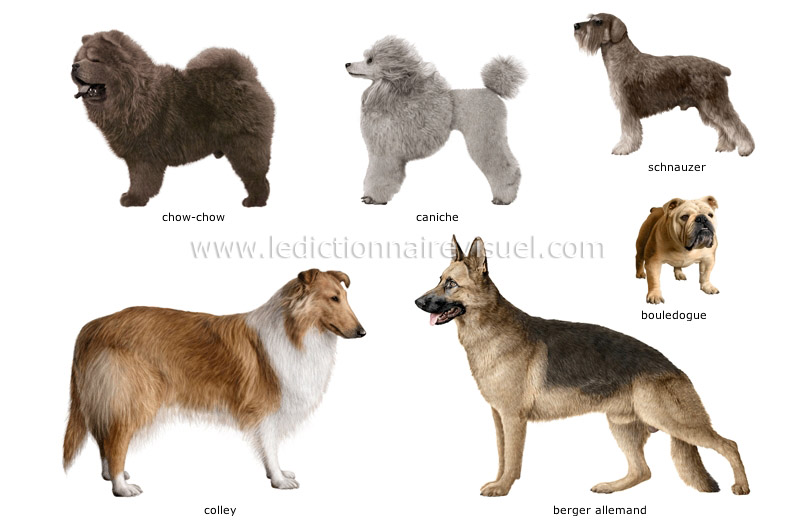
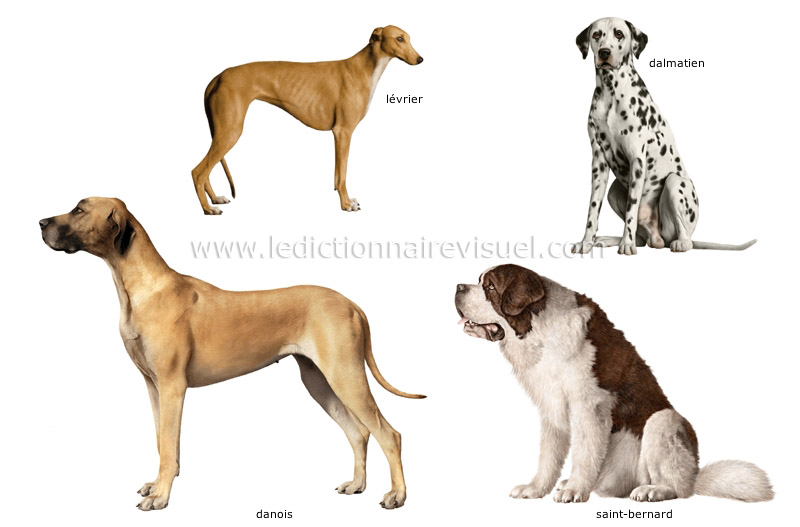
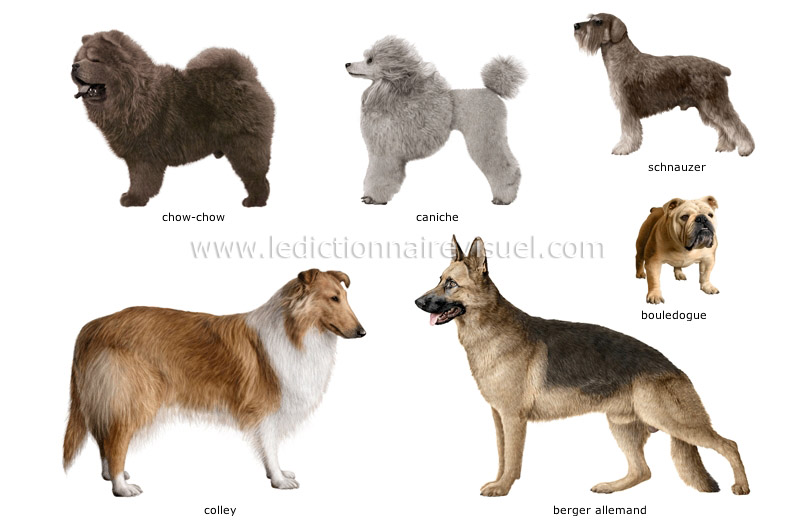
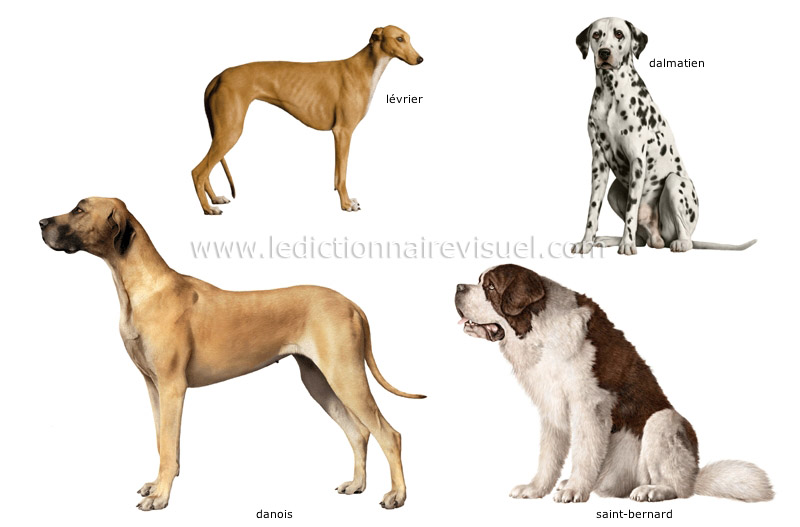
French notes: You’ll find the names of some dog breeds below.  (I have no idea how one pronounces chow-chow in French.)  One of the delightful aspects of regulation in France: you can call your purebred dog  (le chien de race) anything you want, but its registry name has to start with the official letter of that year.  2017 is N, so look for lots of registry names like Ninou, Nanette, or Nadine until fin décembre, and then lots of puppies named things like Olivier, Odette, or Ourson beginning January 1st…  One of the delightful aspects of the language itself is the occasional presence of names for males and females of a given breed, but the only one that I know off the top of my head is levrette–no limite remarks necessary on that one, but I’d love to hear about others in the Comments section…

races-de-chiens-290540
Picture source: http://www.ikonet.com/fr/ledictionnairevisuel/images/qc/races-de-chiens-290540.jpg
races-de-chiens-290541
Picture source: http://www.ikonet.com/fr/ledictionnairevisuel/images/qc/races-de-chiens-290541.jpg

Speak to us of drinking, not of marriage

The feeling was like what gay friends have described to me when they first learned that they weren’t the only guys in the world who wanted to have sex with other men.

A Basque joke about the alleged difficulty of the Basque language: The Devil wanted to tempt the Basques to sin, so he decided to learn to speak Basque.  He quit after seven years, only having learned the word “no.”  The Devil did better learning Basque than I’ve done learning French, because I still don’t know how to say “no” in French.  My stumbling block: the second clause in a contrast.  My father speaks Portuguese, but I don’t.  We have pinot noirs in Oregon, but not Brouillies.

Jean Girodet’s magisterial Pièges et difficultés de la langue française to the rescue.  According to Girodet, the issue comes up in what he calls ellipticals.  In this situation, he says that literary language tends to prefer non, while the spoken language tends to prefer pas: 

Dans les tours élliptiques, la langue littéraire préfère en général non, la langue familière pas.

He gives these examples:

Non Pas
Veut-on réformer la société ou non Qu’il travaille ou pas, je m’en moque !
Il néglige son travail, moi non. Elle aime le ski, moi pas.
Cette parole est d’un marchand et non d’un prince. J’irai en voiture, pas à pied.
Il habite une villa, non loin de Cimiez. Il tient un café, pas loin d’ici.
Il veut créer un art tout nouveau, pourquoi non ? Partir tout de suite ? Pourquoi pas, après tout.

OK, good so far: you can use either, with non sounding more literary, and pas sounding more casual.  But, why do you occasionally run into both of them together??  Here’s a clear elliptical in Girodet’s sense of the word: the refrain of the song Parlez-nous à boire, “Speak to us of drinking (not of marriage).”  There are many recordings of it available (sometimes with minor differences in the lyrics), but my favorite du moment is this one from the film Southern Comfort.  Lyrics follow, from CajunLyrics.com:

Oh parlez-nous à boire, non pas du marriage
Toujours en regrettant, nos jolies temps passé

Si que tu te maries avec une jolie fille,
T’es dans les grands dangers, ça va te la voler.

Si que tu te maries aves une vilaine fille,
T’es dans les grands dangers, faudra tu fais ta vie avec.

Oh parlez-nous à boire, non pas du marriage
Toujours en regrettant, nos jolies temps passé

Si que tu te maries avec une fille bien pauvre,
T’es dans les grands dangers, faudra travailler tout la vie.

Si que tu te maries avec une fille qu’a de quoi,
T’es dans les grands dangers, tu vas attraper des grandes reproches.
Fameux, toi grand vaurien, qu’a tout gaspillé mon bien
Oh parlez-nous à boire, non pas du marriage.

Source: cajunlyrics.com

Native speakers, can you help this poor, lost anglophone?  (Note: I’m guessing that jolies temps passé should be jolis temps passés, but what do I know?)

My source for the Basque joke: I don’t remember, but it’s probably one of Mario Pei‘s many books.  Pei was a linguist who wrote tons of popular-press books about language between the 1930s and the 1970s or so.  Running across one of them in a used bookstore  was the first time I ever heard of “linguistics.”  After a lifetime of mostly keeping quiet about my unending obsessions with language, the feeling was like what gay friends have described to me when they first learned that they weren’t the only guys in the world who wanted to have sex with other men.

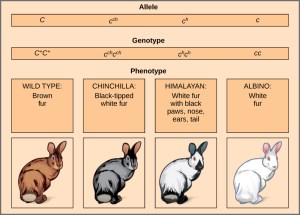
Just in case you were wondering why your rabbit looks like it does

Black lab, yellow lab, chocolate lab, meth lab.

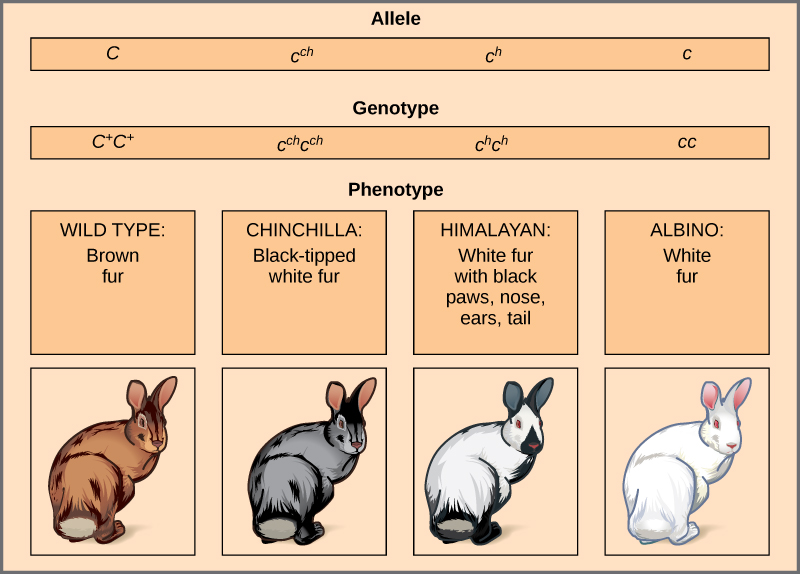
When I’m in the US, I live in the Wild West, and that means rabbits.  Where there are rabbits, there are probably man-eating rabbits, and I hate them.  So, the chart explaining rabbit coat coloration that you see above intrigued me–to survive the man-eating rabbits, you must be able to spot them, and you can’t always rely on seeing their long, sinister ears protruding from the grass, so you need to know their coat colors.  But, how do those particular genes explain the devilishly sly diversity of color and pattern that you see in the illustration?

For context, let me give you the rundown (as I understand it–bear in mind that I’m a linguist, not a geneticist) on Labrador retrievers:

black-lab-yellow-lab-chocolate-lab-meth-lab-nny-e299a4e299a4e299a4e299a4e299a4-12613532
Picture source: https://goo.gl/Zxb4Dk
  • Labs come in three colors: black, “chocolate,” and yellow.
  • Which color they are is determined by two genes.
  • One gene determines whether your hair is black or “chocolate.”
  • The other gene determines whether or not your hair has any pigment (think of pigment as the molecule that actually has the color) at all.
  • If you have the form of the gene (the “allele”) that allows your hair to have a color, then you will be either black or “chocolate” (assuming that you are a Labrador retriever).
  • If you have the form of the gene (the “allele”) that keeps your hair from having any pigment at all, then regardless of which form of the black-versus-chocolate gene you have, you will be yellow–yellow being what a Labrador retriever hair looks like if it doesn’t have any pigment deposited therein.

My point being: you don’t actually need to have a large amount of genetic variability to get a large amount of “phenotypic” variability (in this case, variability in appearance)–actually, very few things are affected by a single gene.  Rather, most traits are affected by a combination of a number of different genes.


OK, so: how do those rabbits come about?  They differ not just in their colors, but in the pattern of those colors.  Here’s a reasonable guess.

The odd data point in that graphic is the Himalayan.  Everybody else is monochrome, but the Himalayan has a color difference between his (I’m pretty sure that rabbits are generically male, probably due to the known viciousness of the man-eating variety–le lapin anthropophage in French, el conejo antropófago in Spanish, Lepus anthropophagos in Latin, I think, but I couldn’t swear to it) extremities and his…well, everything else.

maxresdefault
A Siamese cat with a baby. Note that the cat is not eating the baby—as far as I know, there is no such thing as a man-eating Siamese cat. Picture source: https://www.youtube.com/watch?v=JAC-s8cWJxQ

You’ve seen that pattern before–in Siamese cats, for instance.  My understanding is that the distribution–lighter towards the center, darker at the extremities–is related to reduced blood flow in said extremities.  The reduced blood flow gives you a reduced temperature, and that has some effect or another on the deposition of pigment.  (As I said, don’t quote me on this–I’m a linguist, not a Siamese cat expert.)  Looking at the rabbit that way, you wonder: OK, dark on the extremities and light on the rest, but which dark?  Which light?  Why doesn’t the rabbit have the same colors as a Siamese cat, for instance?  (Think of the evolutionary advantage for a rabbit who looked like a cat–it would be soooo much easier to get humans to take you in, in which case if you were the man-eating variety of rabbit, you could just gobble those overly-trusting humans right down.)

I went digging around for evidence for this explanation for the coloration patterns in Siamese cats.  I found a few papers on a group of related temperature-sensitive tyrosinase mutations that are associated with eye color differences in a range of Siamese cats and Himalayan mice and a rare mink discovered on a ranch in Nova Scotia–and with albinism in humans. (As an albino, your likelihood of going blind due to a lack of protective pigment in the iris and the retina is high–and that’s why we spend your tax dollars on studies of Himalayan mice.)  I found a paper on a temperature-sensitive tyrosinase mutation in a human with the following: white hair in the warmer areas (scalp and axilla) and progressively darker hair in the cooler areas (extremities) of her body. I haven’t tracked it down to the fur color question in Siamese cats, though.  Still think I just make this shit up?  Here’s the paper on the mink found on the ranch in Nova Scotia.  I mean, yeah, I make up the zombies and the man-eating rabbits–but, the rest of the stuff is “for reals,” as the kids say.

figure_12_02_05
Picture source: https://goo.gl/jR2r1Y

Look to the left, look to the right: if the colors in the figure are true to life, the Himalayan rabbit extremities are the color of the rabbit to the left, while the center is the color of the rabbit to the right.  (I am cursed to always remember a scene from an autobiography that I read when I was a kid.  The author has been arrested by the NKVD and finds himself in their notorious Lubyanka prison.  Whenever a prisoner is taken from one room to another, the machine-gun-toting guards intone step to the left, step to the right: attempt to escape.  The NKVD were murderous fuckers, and the threat was entirely believable.  Hence: look to the left, look to the right.)  Likely cause of the pattern of the Himalayan: temperature-dependent pigment deposition gradient of whatever pigment the chinchilla and albino rabbits have or do not have.

Yes, I have been known to spend my Saturday mornings looking for scientific literature on the topic of pigmentation deposition in Siamese cats when I could have been taking a walk in the beautiful fall weather.  This is probably related to why I get divorced so often.  French notes below–no English notes today.


French notes

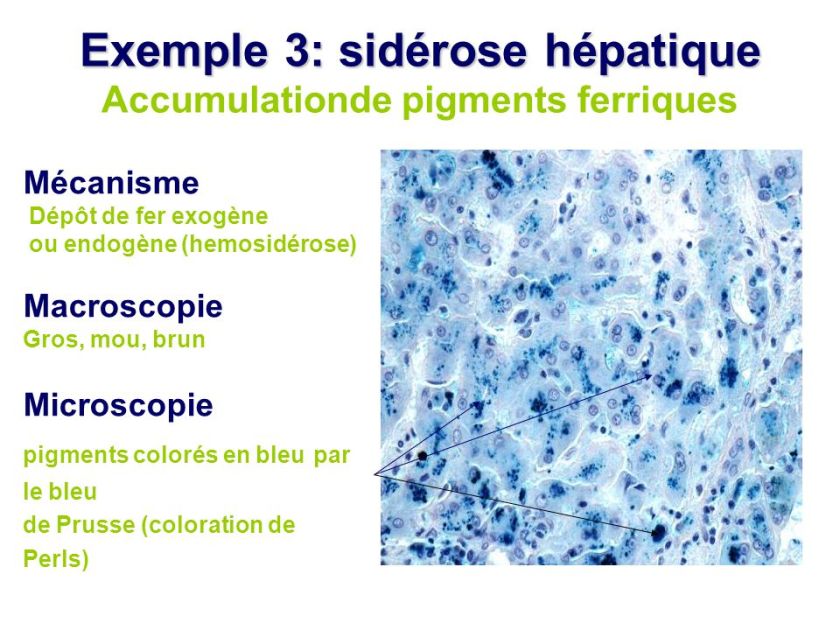
le dépôt: deposition, in the sense of deposition of a substance.  This seems to be what would be used to talk about pigment deposition.  For example:  La synthèse et le dépôt de mélanines continuent jusqu’à ce que la structure interne ne soit plus visible, on parle alors de mélanosome de stade IV.  (biologiedelapeau.fr)  

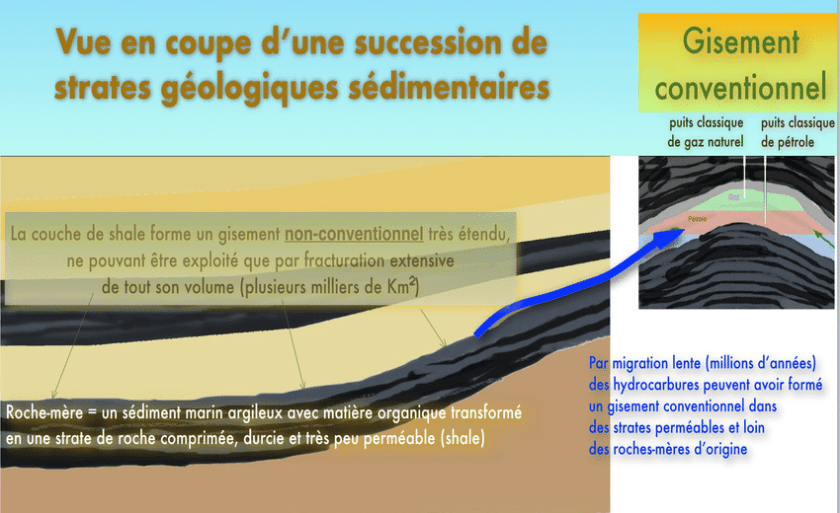
le gisement: deposit, in the sense of a deposit of minerals, of archeological finds, and the like.  I haven’t been able to find any examples of it being used in a medical or biological context to refer to deposition of pigments in the skin.

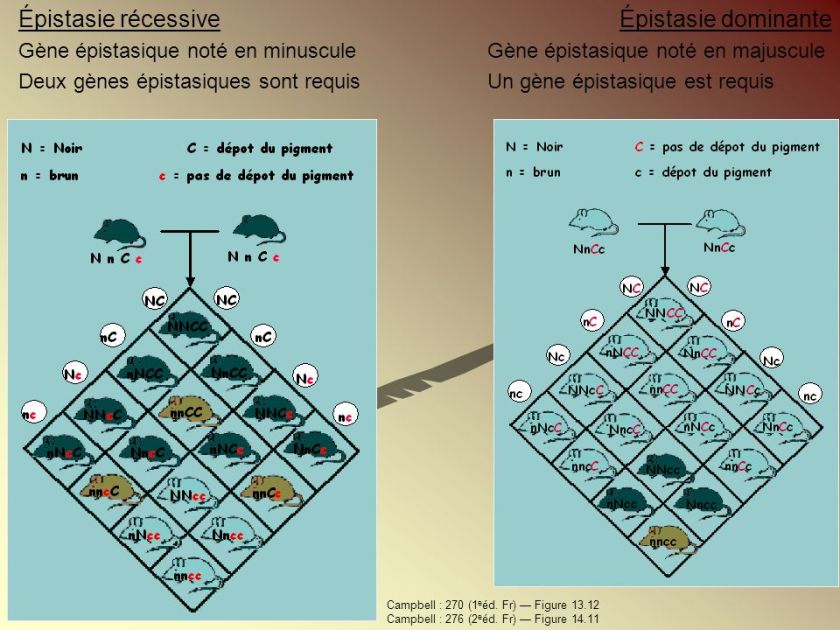
c389pistasierc3a9cessivec389pistasiedominante
The same thing that we saw in Labrador retrievers: one gene for color, one gene for pigment deposition, and you get three kinds of coats. Faute d’orthographe: dépot should be dépôt.  Source: Bernadette Féry, http://slideplayer.fr/slide/181167/
exemple3sidc3a9rosehc3a9patiqueaccumulationdepigmentsferriques
With the correct spelling dépôt: Deposition of exogenous or endogenous iron. Picture source: http://slideplayer.fr/slide/5124382/, author unknown.
fig-1-gisement-non-conventionnel-a-gauche-versus-gisement-conventionnel-a-droite
Picture source: Marc Durand, https://goo.gl/3GcDDN.


51cofiqmavl-_sx351_bo1204203200_
Source: Alain Muret.


Emporter versus emmener

Two ways to say “to take” in French.

p51t1g10
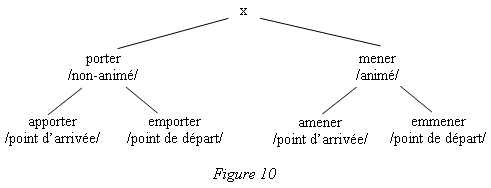
Source: http://web.fu-berlin.de/phin/phin51/p51t1.htm

I am of the “write about what you DON’T know” philosophy, and I sure as hell don’t know how to speak French.  So: today, here are two words that native speakers of English (say, me) tend to have trouble with in French: emporter  and emmener.   They both can be translated as to take, but they get used in different contexts.

First, I recommend that you check out this video on the topic from the Learn French with Pascal YouTube series.  Pascal’s explanations are always clear, he always has good examples, and he will give you native speaker pronunciations.  For example, emmener can be pronounced with or without the medial e, and he demonstrates both of them.  Scroll down after you’ve watched the video, and I’ll give you a bunch of examples from the Sketch Engine web site.

[https://youtu.be/xrDcv8KIf3o]

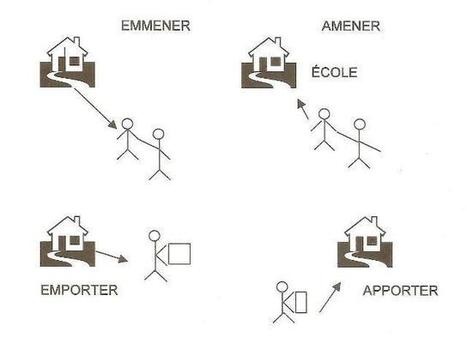
Pascal’s take on these two verbs is that you use them as follows:

  •  emmener in a situation where the thing being taken can move on its own.  He lists people and animals as the two kinds of things with which you would use emmener.
  • emporter when the thing that is being moved cannot move on its own–for example, a package.
ob_ae7361_emmener
Source: http://olalachamonix.overblog.com/2014/01/amener-emmener-apporter-emporter.html

Let’s see how this holds up in practice.  As we’ll see, it seems to be the case that these are more like heuristics than absolute rules; more probabilistic than deterministic.  In other words: the observations hold true more often than not, but there can be some variability.  To find these examples, I went to the Sketch Engine web site.  It allows you to search multiple corpora (singular corpus)–that is, collections of language that have been analyzed in some way.  I used the DGT French corpus, which is intended to support translations and therefore gives us English equivalents, as well as the frTenTen corpus.  It contains 9.9 billion words scraped from the Web.  When I got my results back, I randomized their order so that I wouldn’t be biased towards any particular sets of documents.

  • Objet: exemption de l’exigence d’ emporter un document de transport et une déclaration du transporteur pour certaines quantités de marchandises dangereuses définies sous 1.1.3.6 (n1). 
    • Subject:Exemption from the requirement to carry a transport document and a shippers’ declaration for certain quantities of dangerousgoods as defined in 1.1.3.6 (n1).
    • Comment: these are documents, therefore not capable of moving themselves, therefore emporter.
  • Les voyageurs ne peuvent emporter dans leur bagage à main que des marchandises dangereuses destinées à leur usage personnel ou professionnel. 
    • Only dangerous goods for personal or own professional use are permitted to be carried in hand luggage.
    • Comment: we’re talking about dangerous goods of some sort, and apparently those dangerous goods do not include, say, tigers (which are capable of movement on their own), so: emporter.
  • Et au lieu d’ emporter la pizza, j’ai eu envie de manger sur place, pour changer un peu…
    • Comment: it’s a pizza that’s being (or not) transported, therefore emporter.
  • Où est-ce que je nous ai emmenés 
    • Comment: the object pronoun is “us,” therefore the transportees are animate (alive), therefore they are capable of moving themselves, and therefore the verb is emmener.  
  • Indique-moi juste le chemin de ta villa, je t’y emmène.
    • Comment: the thing being taken somewhere can show something, so it is animate and sentient, so it can move on its own, so the verb is emmener.
  • La vie de Caroline est monotone, et sans surprise : chaque matin son père l’ emmène à l’école, et le soir une étudiante pas très sympa vient la chercher.
    • Comment: Caroline is human, so she can move on her own, so the verb is emmener.
  • Sécuriser les appâts afin qu’ils ne puissent pas être emmenés par les rongeurs.
    • Secure bait blocks so that they cannot be dragged away by rodents.
    • Comment: I have no clue why this is emmener.  By Pascal’s rule, since the things being moved–les appâts–are not capable of moving themselves, this should be emporter.
  • Le véhicule est alors emmené au moteur jusqu’à l’enceinte de mesure, en utilisant au minimum la pédale d’accélérateur.
    • The vehicle is then driven to the measuring chamber with a minimum use of the accelerator pedal.
    • Comment: maybe this is emmener because a vehicle is capable of moving under its own power (so to speak)?
  • Dans les 5 minutes qui suivent l’achèvement de l’opération de préconditionnement décrite au paragraphe 5.2.1., le capot-moteur est fermé et le véhicule est emmené hors du banc à rouleaux et est parqué dans la zone d’imprégnation.
    • Within five minutes of completing the preconditioning operation specified in paragraph 5.2.1. above the engine bonnetshall be completely closed and the vehicle driven off the chassis dynamometer and parked in the soak area.
    • Comment: another example of emmener with a vehicle.
geluck
Perhaps “emporter” despite being animate because he’s being carried, rather than moving under his own steam? Source: http://cocochanel58.blogspot.com

There are other verbs that refer to taking stuff places–apporter, amener, ramener–but this is about all my little head can handle for one day.  Native speakers: have at it in the Comments section, please!

Matching Game II: Marseille and a bakery

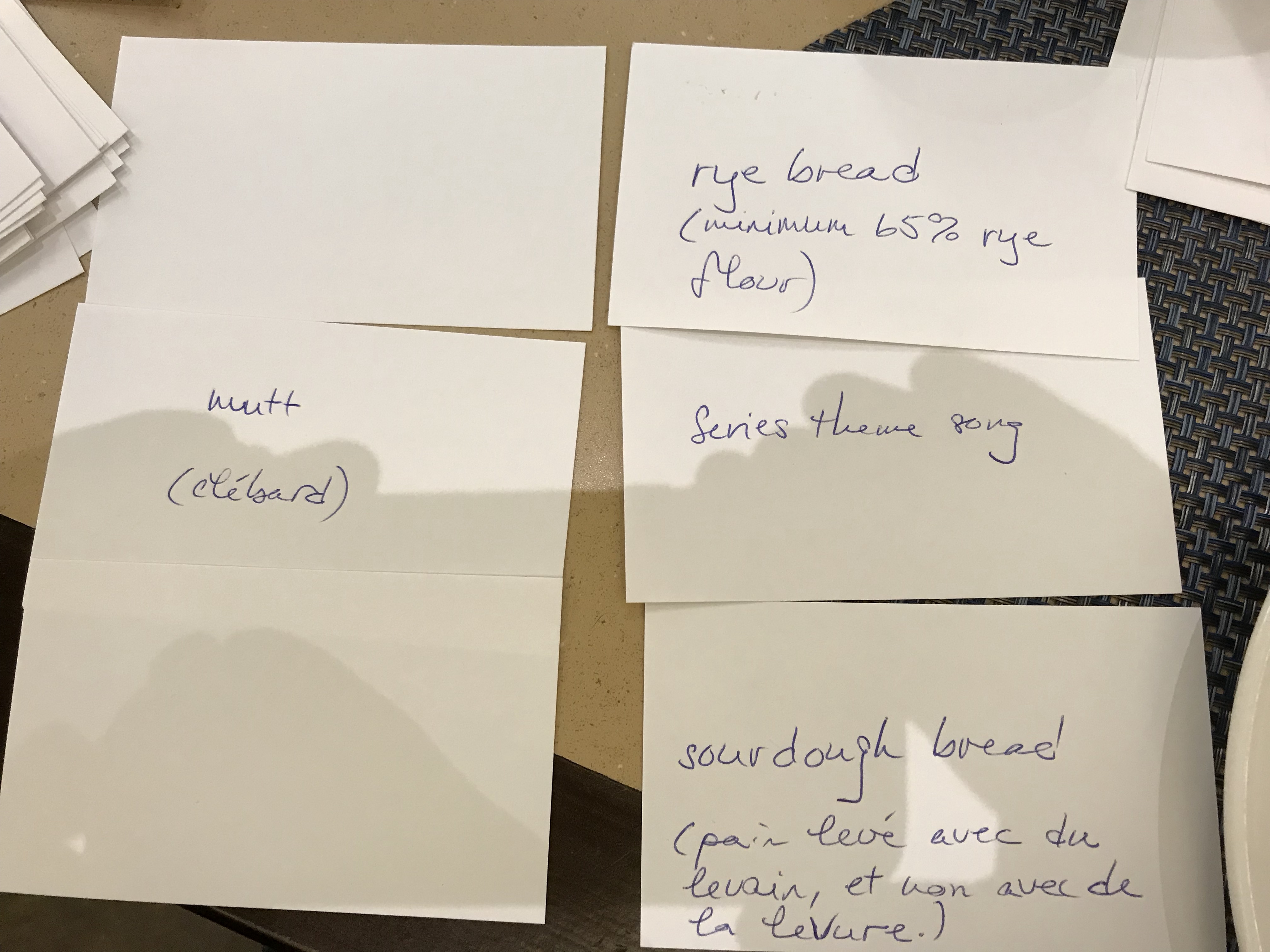
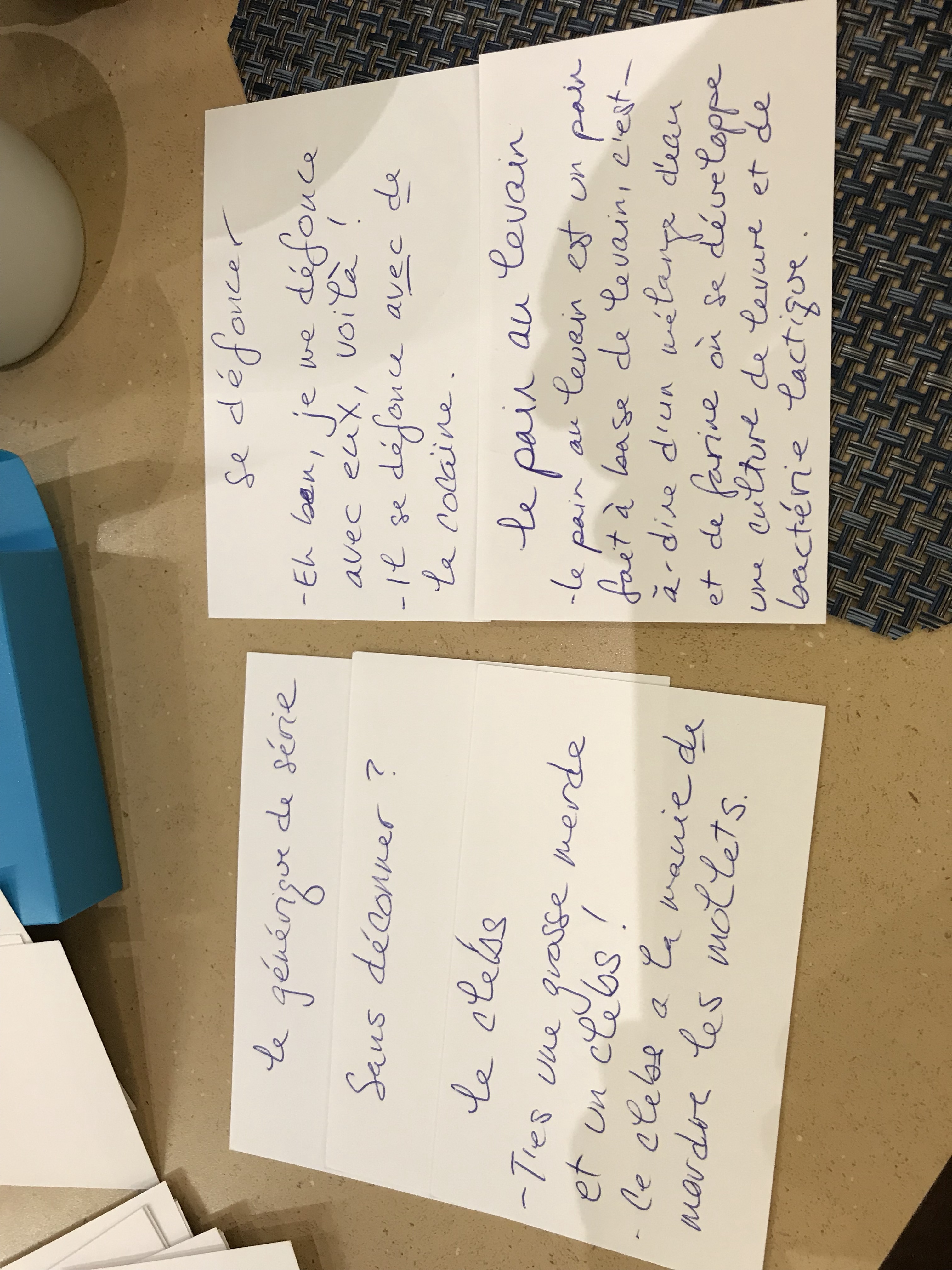
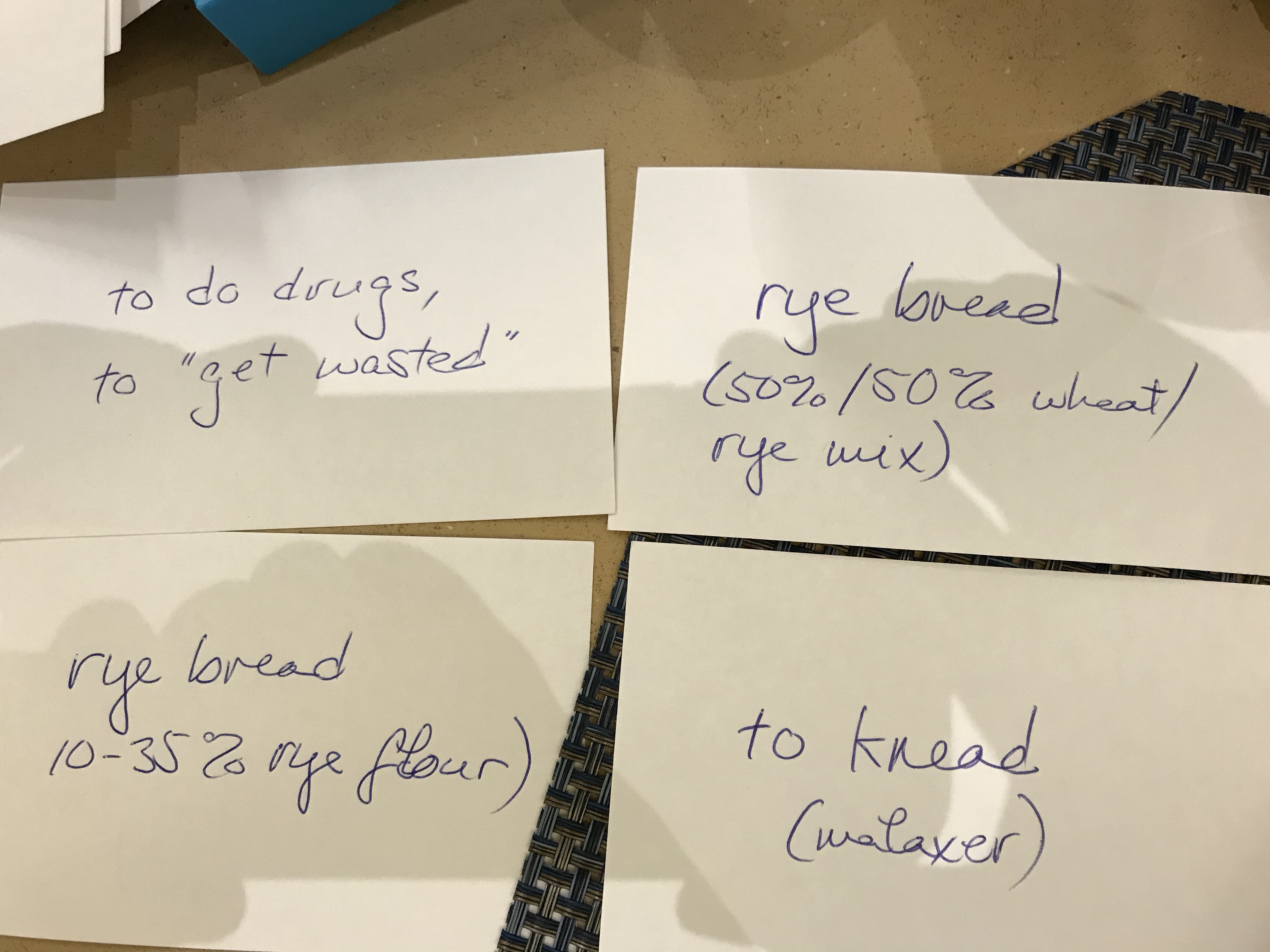
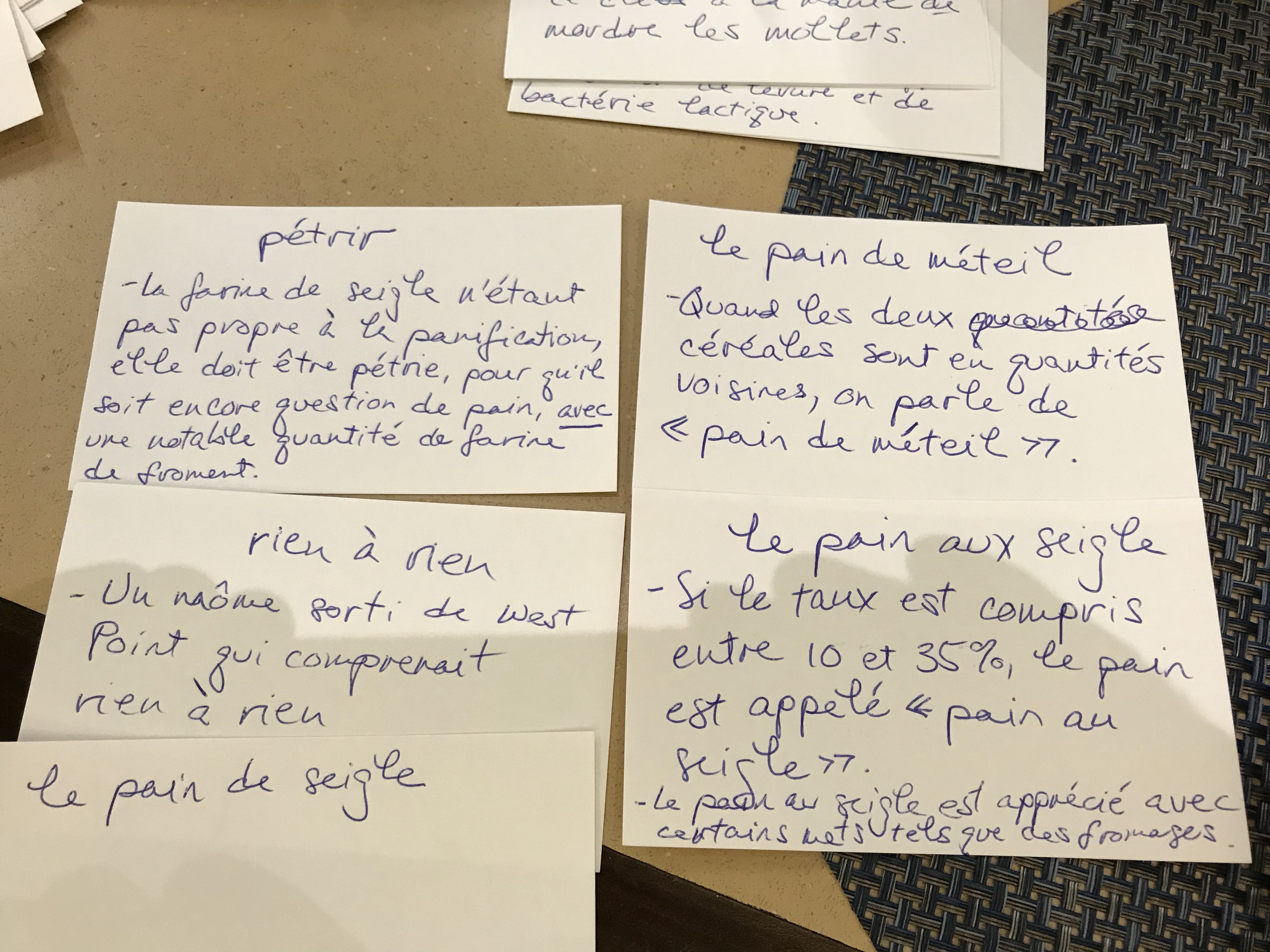
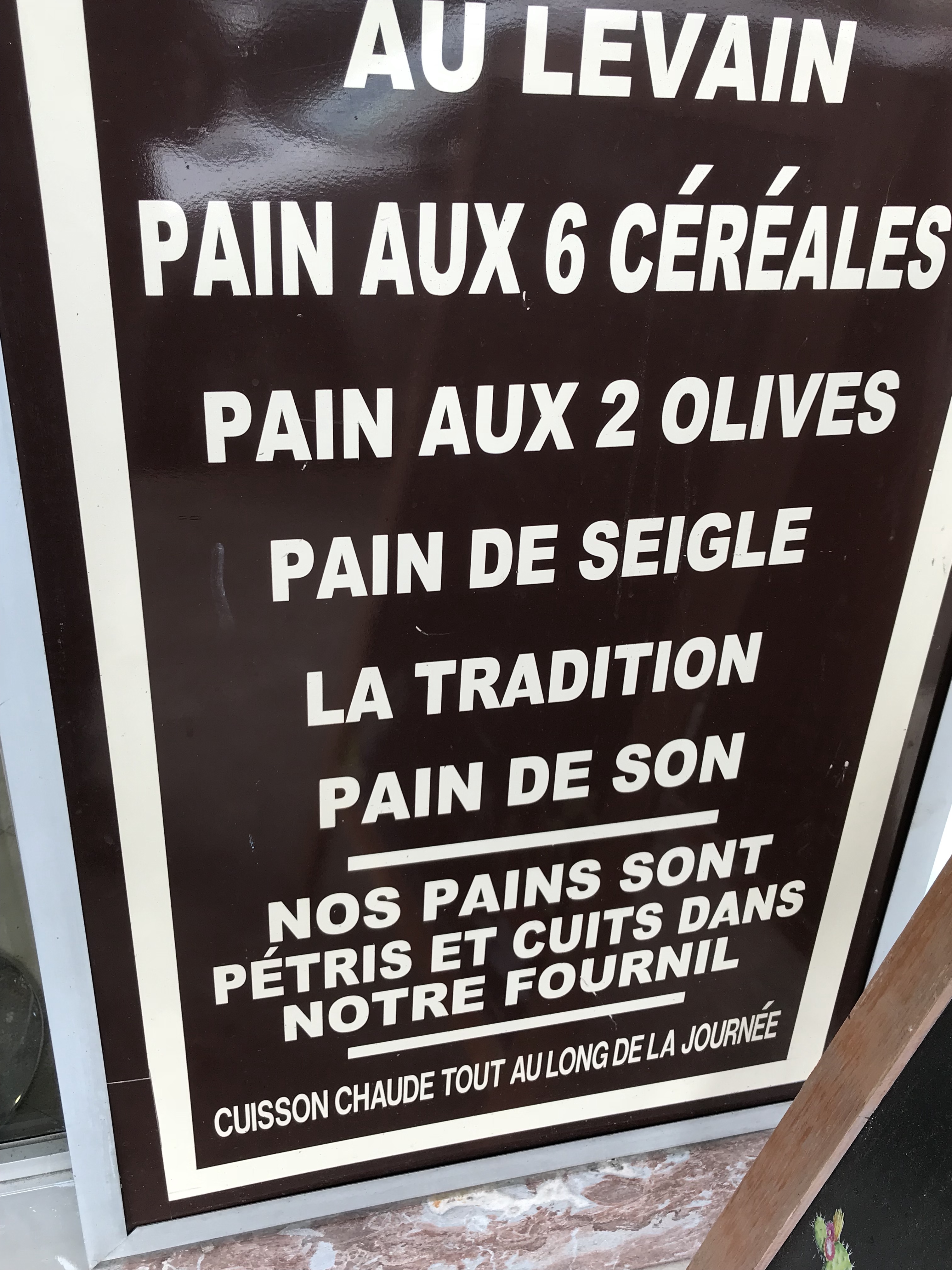
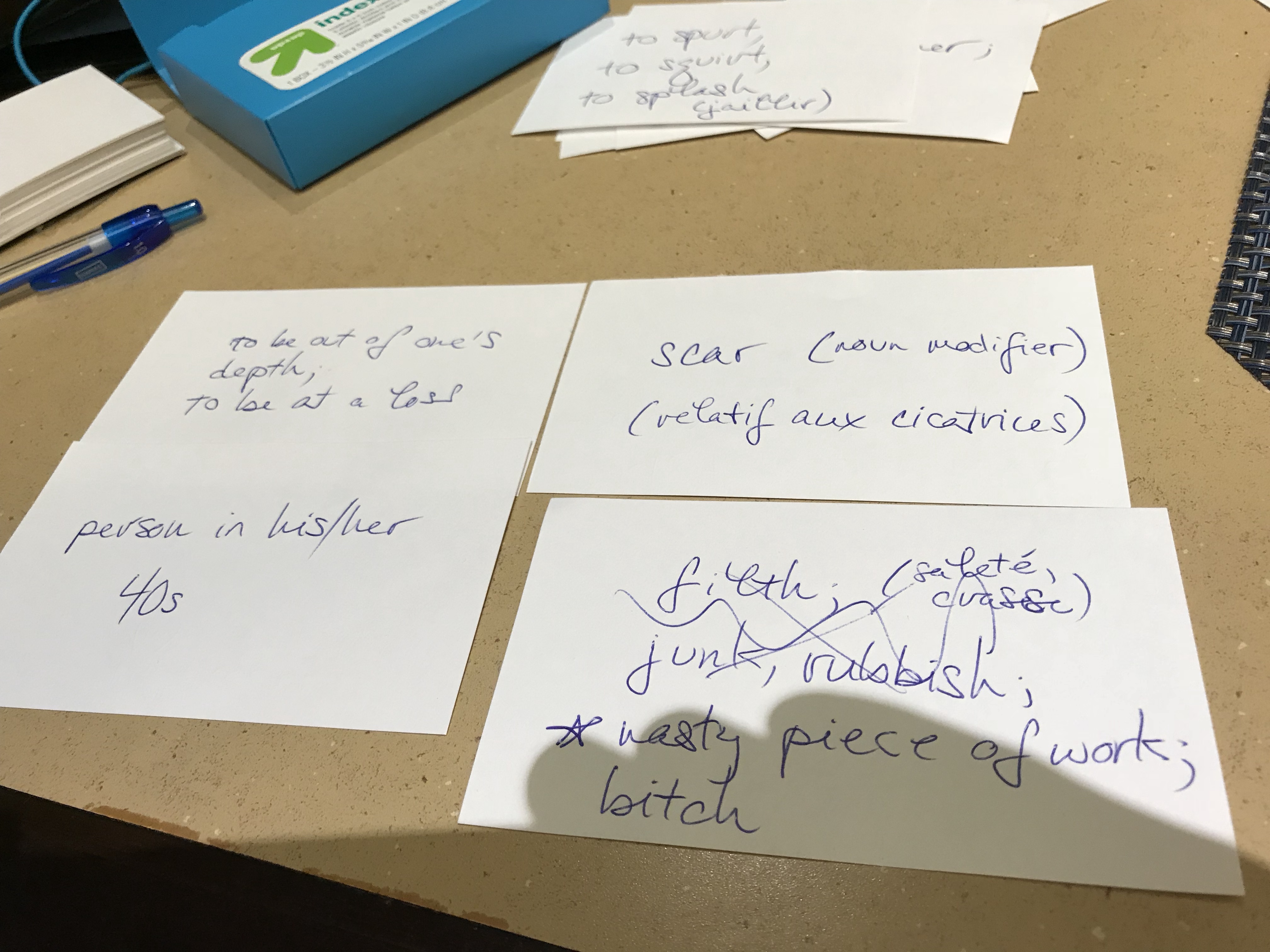
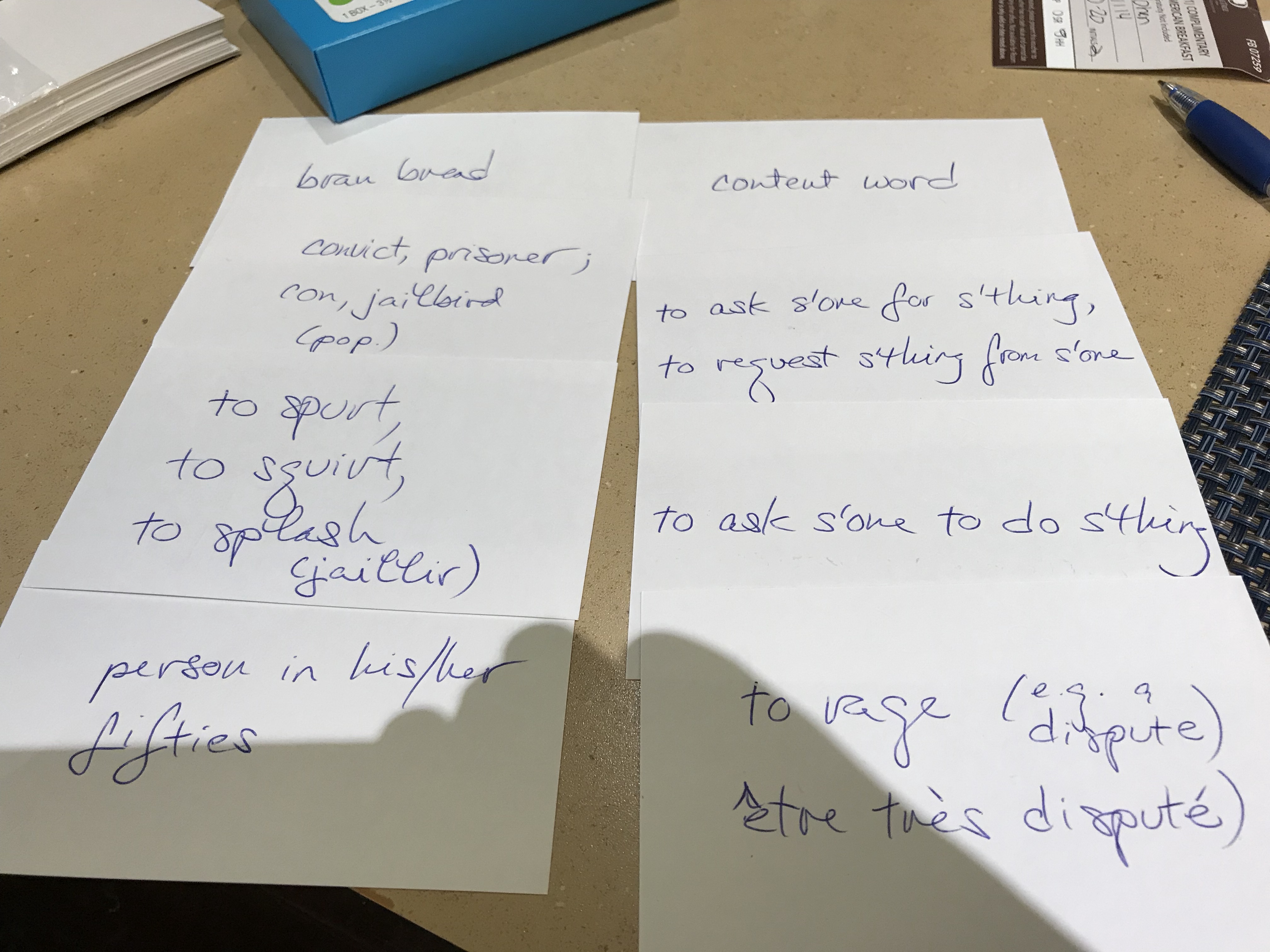
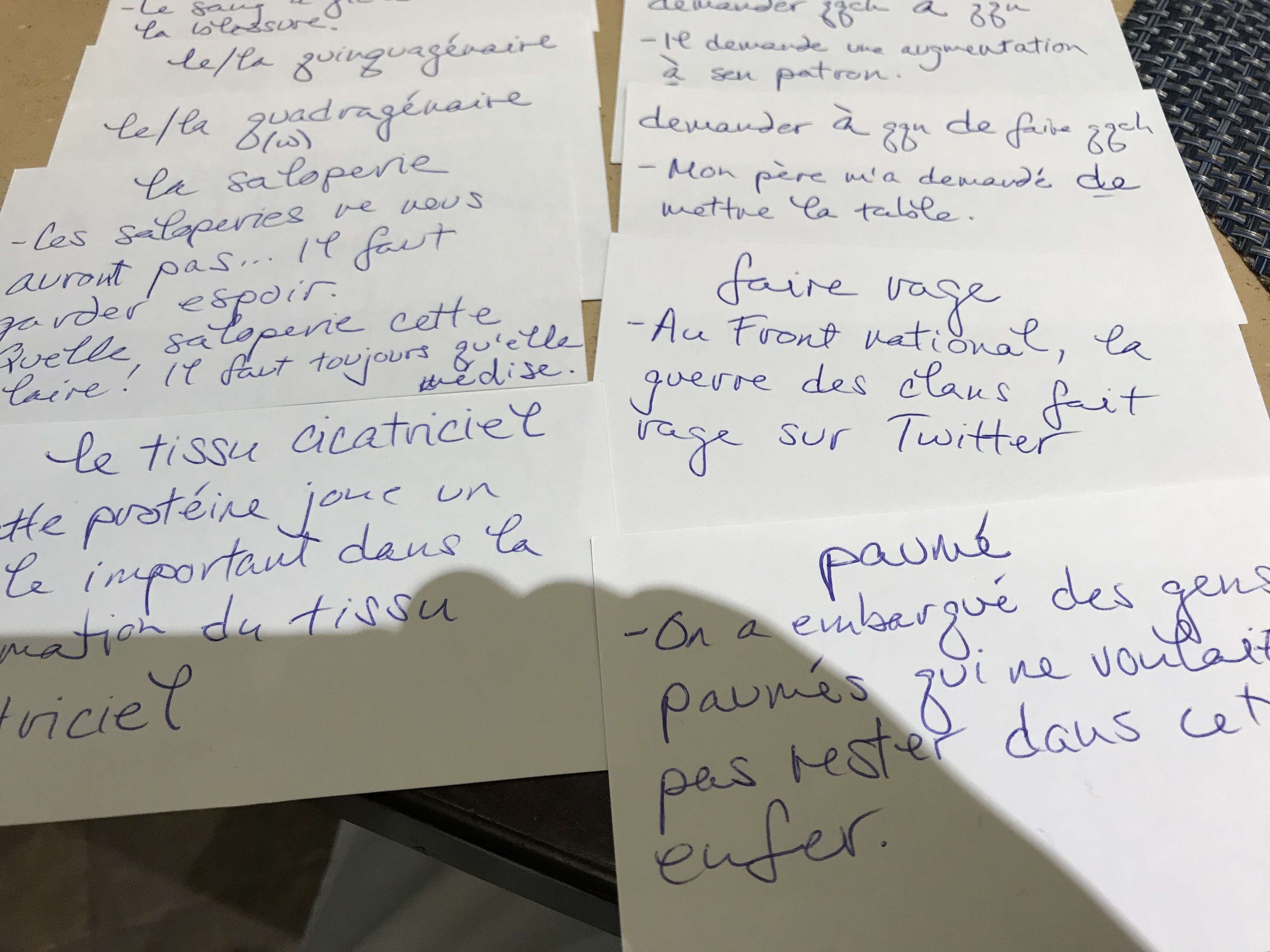
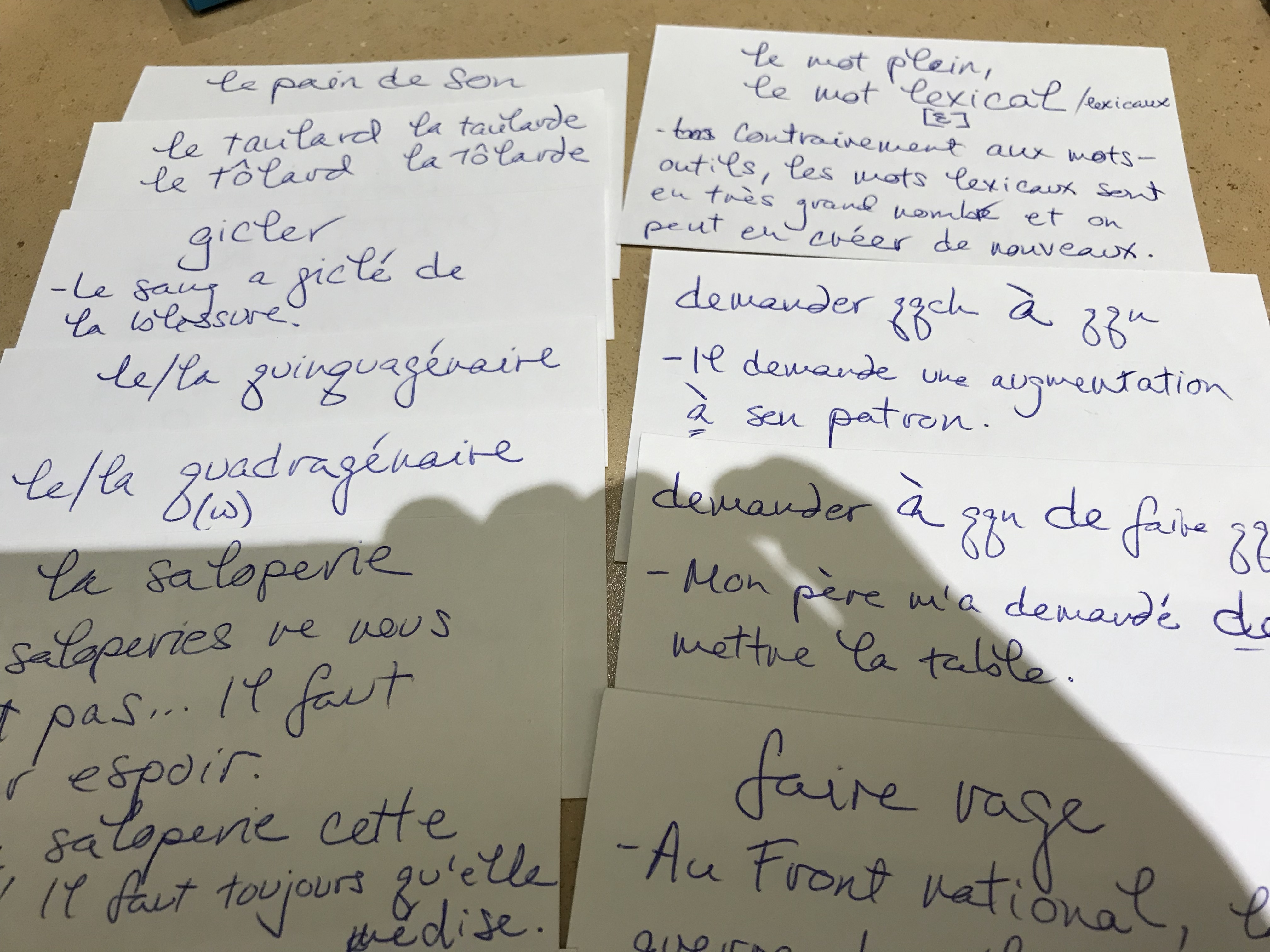
Today’s vocabulary items are brought to you by the Netflix series Marseille (Gérard Depardieu is the coke-snorting mayor of the notorious southern port town–shenanigans ensue) and by the bakery where I usually stop for a coffee, a viennoiserie, and a cigarette before tackling the hill that I have to walk up to get to the lab.  I worry that many or most of the words that I learn from Marseille are words that I probably shouldn’t be using in public, but what’s a monolingual American to do?  The bakery vocabulary brings out some subtleties of rye bread that I never would have imagined.  You’ll notice a couple blanks, as there are a couple of words or expressions that I wasn’t sure how to translate–native speakers, can you help the rest of us out?

…and, yes: I mixed them up!

Ukrainian Humanitarian Resistance

Resisting the russist occupation while keeping our humanity

Languages. Motivation. Education. Travelling

"Je suis féru(e) de langues" is about language learning, study tips and travelling. Join my community!

Curative Power of Medical Data

JCDL 2020 Workshop on Biomedical Natural Language Processing

Crimescribe

Criminal Curiosities

BioNLP

Biomedical natural language processing

Mostly Mammoths

but other things that fascinate me, too

Zygoma

Adventures in natural history collections

Our French Oasis

FAMILY LIFE IN A FRENCH COUNTRY VILLAGE

ACL 2017

PC Chairs Blog

Abby Mullen

A site about history and life

EFL Notes

Random commentary on teaching English as a foreign language

Natural Language Processing

Université Paris-Centrale, Spring 2017

Speak Out in Spanish!

living and loving language

- MIKE STEEDEN -

THE DRIVELLINGS OF TWATTERSLEY FROMAGE