Which TWD character is your classifier? Bias and variance in machine learning

You don’t expect the zombie apocalypse to be relevant to research in computational linguistics–and yet it is; it so, so is.
Spoiler alert: this post about the TV show The Walking Dead–which, I will note, is as popular in France as it is in the US–will tell you what happens to Carol around Season 3 or 4.

In general, it’s the stuff that surprises you that’s interesting, right?  No one ever expects the arctic ground squirrel to have anything to do with computational linguistics–and yet it does: it so, so does.  No one ever expects to be confronted with problems with the relationship between compositionality and the mapping problem over breakfast in a low-rent pancake house–and yet it happens; it so, so happens(Low-rent as an adjective explained in the English notes below.) You don’t expect the zombie apocalypse to be relevant to research in computational linguistics–and yet it is; it so, so is.


large-scale-deep-learning-with-tensorflow-8-638
You probably think that I just make this stuff up. I don’t! Picture source: https://www.slideshare.net/JenAman/large-scale-deep-learning-with-tensorflow

You’ve probably heard of machine learning.  It’s the science/art/tomfoolery of creating computer programs to learn things.  We’re not talking about The Terminator just yet–some of the things that are being done with machine learning, particularly developing self-driving cars, are pretty amazing, but mostly it’s about teaching computers to make choices.  You have a photograph, and you want to know whether or not it’s a picture of a cat–a simple yes/no choice.  You have a prepositional phrase, and you want to know whether it modifies a verb (I saw the man with a telescope–you have a telescope, and using it, you saw some guy) or a noun (I saw the man with a telescope–there is a guy who has a telescope, and you saw him).  Again, the computer program is making a simple two-way choice–the prepositional phrase is either modifying the verb (to see), or it’s modifying the noun (the man).  (The technical term for a two-way choice is a binary decision.)  Conceptually, it’s pretty straightforward.

cat-detector-cpus
Cats keep showing up in these illustrations because the latest-and-greatest thing in machine learning is alleged to have solved all extant problems and made the rest of computer science irrelevant, but the major reported accomplishment so far has been classifying pictures as to whether or not they are pictures of cats.  The “It uses a few CPUSs!” part is a reference to the fact that in order to do this, it requires outlandish amounts of computing resources (a CPU is a “central processing unit”).  Picture source: https://doubleclix.wordpress.com/2013/06/01/deep-learning-next-frontier-01/

When you are trying to create a computer program to do something like this, you need to be able to understand how it goes wrong.  (Generally, seeing how something goes right isn’t that interesting, and not necessarily that useful, either.  It’s the fuck-ups that you need to understand.)  There are two concepts that are useful in thinking your way through this kind of thing, neither of which I’ve really understood–until now.
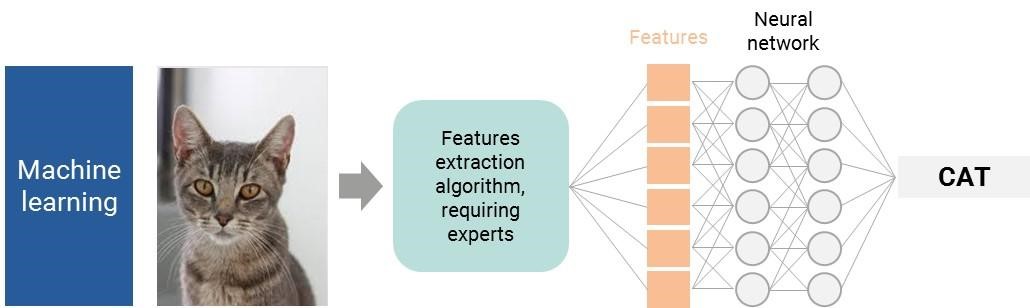
ml-cat
Picture source: http://daco.io/insights/2016/about-deep-learning/

I recently spent a week in Constanta, Romania, teaching at–and attending–the EUROLAN summer school on biomedical natural language processing.  “Natural” language means human language, as opposed to computer languages.  Language processing is getting computer programs to do things with language.  Biomedical language is a somewhat broad term that includes the language that appears in health records, the language of scientific journal articles, and more distant things like social media posts about health.  My colleagues Pierre Zweigenbaum and Eric Gaussier taught a great course on machine learning, and one of the best things that I got out of it was these two concepts: bias and variance.  

Bias means how far, on average, you are from being correct.  If you think about shooting at a target, low bias means that on average, you’re not very far from the center.  Think about these two shooters.  Their patterns are quite different, but in one way, they’re the same: on average, they’re not very far from the center of the target.  How can that be the case for the guy on the right?
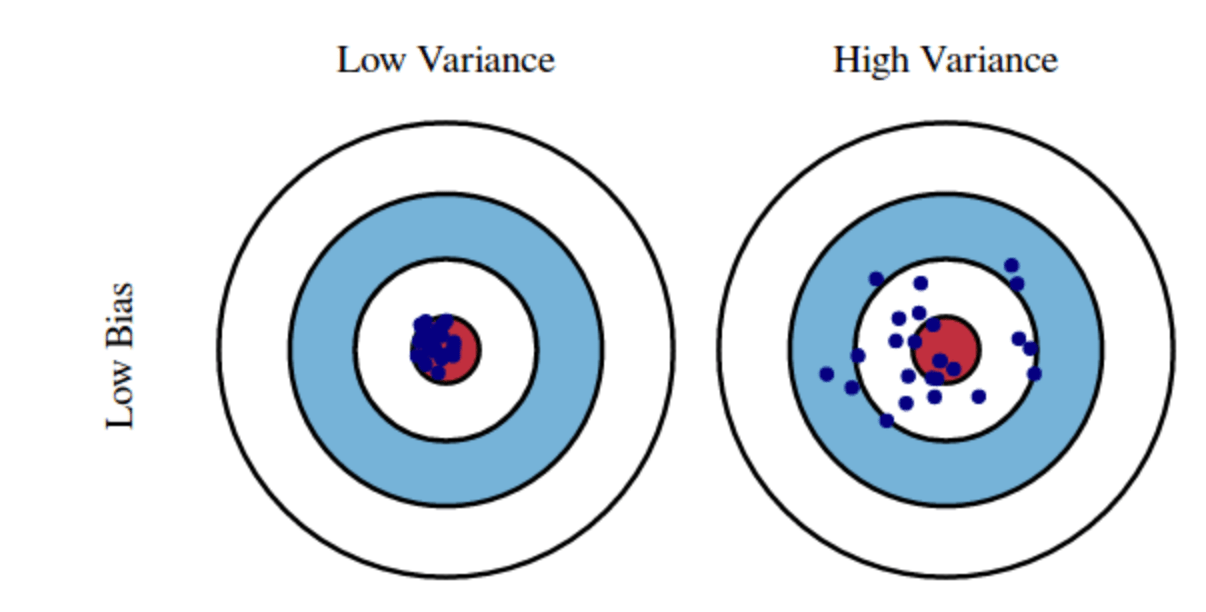
Screen Shot 2017-11-09 at 10.26.24
Picture source: XX

Think about it this way: sometimes he’s a few inches off to the left of the center of the target, and sometimes he’s a few inches off to the right.  Those average out to being in the center.  Sometimes he’s a few inches above the target, and sometimes he’s a few inches below it: those average out to being in the center.  (This is how the Republicans can give exceptionally wealthy households a huge tax cut, and give middle-class households a tiny tax cut, and then claim that the average household gets a nice tax cut.  Cut one guy’s taxes by 1,000,000 dollars and nine guys’ taxes by zero (each), and the average guy gets a tax cut of 100,000 dollars.  One little problem: nobody’s “average.”)  So, he’s a shitty shooter, but on average, he looks good on paper.  These differences in where your shots land are are called variance.  Variance means how much your results differ from each other, on average.  The guy on the right is on average close to the target, but his high variance means that his “average” closeness to the target doesn’t tell you much about where any particular bullet will land.

Thinking about this from the perspective of the zombie apocalypse: variance means how much your results differ from each other, on average, right?  Low variance means that if you fire multiple times, on average there isn’t that much difference in where you hit.  High variance means that if you fire multiple times, there is, on average, a lot of difference between where you hit with those multiple shots.  The guy on the left below (scroll down a bit) has low bias and low variance–he tends to hit in roughly the same area of the target every time that he shoots (low variance), and that area is not very far from the center of the target (low bias).  The guy on the right has low bias, just like the guy on the left–on average, he’s not far off from the center of the target.  But, he has high variance–you never really know where that guy is going to hit.  Sometimes he gets lucky and hits right in the center, but equally often, he’s way the hell off–you just don’t know what to expect from that guy.

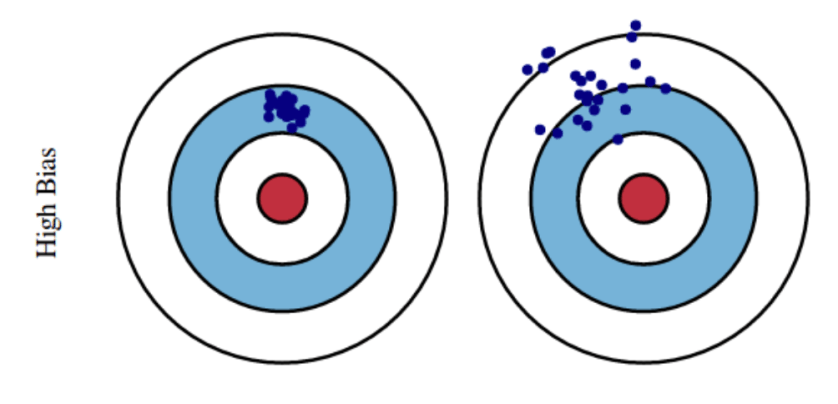
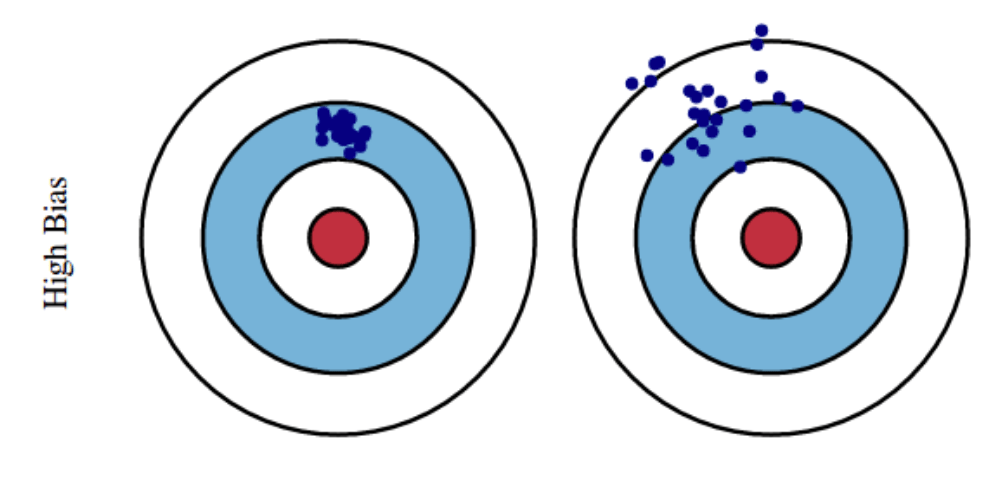
We’ve been talking about variance in the context of two shooters with low bias–two shooters who, on average, are not far off from the center of the target.  Let’s look at the situations of high and low variance in the context of high bias.  See the picture below: on average, both of these guys are relatively far from the center of the target, so we would describe them as having high bias.  But, their patterns are very different: the guy on the left tends to hit somewhere in a small area–he has low variance.  The guy on the right, on the other hand, tends to have quite a bit of variability between shots: he has high variance.  Neither of these guys is exactly “on target,” but there’s a big difference: if you can get the guy on the left to reduce his bias (i.e. get that small area of his close to the center of the target), you’ve got a guy who you would want to have in your post-zombie-apocalypse little band of survivors.  The guy on the right–well, he’s going to get eaten.
Screen Shot 2017-11-09 at 10.39.21
High bias: both of the shooters tend to hit fairly far from the center of the target. The guy on the left has low variance, while the guy on the right has high variance.

A quick detour back to machine learning: suppose that you test your classifier (the computer program that’s making binary choices) with 100 test cases.  You do that ten times.  If it’s got an average accuracy of 90, and its accuracy is always in the range of 88 to 92, you’re going to be very happy–you’ve got low bias (on average, you’re pretty close to 100), and you’ve got low variance–you’re pretty sure what your output is going to be like if you do the test an 11th time.

Abstract things like machine learning are all very well and good for cocktail-party chat (well, if the cocktail party is the reception for the annual meeting of the Association for Computational Linguistics–otherwise, if you start talking about machine learning at a cocktail party, you should not be surprised if that pretty girl/handsome guy that you’re talking to suddenly discovers that they need to freshen their drink/go to the bathroom/leave with somebody other than you.  Learn some social skills, bordel de merde !)  So, let’s refocus this conversation on something that’s actually important: when the zombie apocalypse comes, who will you want to have in your little band of survivors?  And: why? “Who” is easy–you want Rick, Carol, Darryl.  (Some other folks, too, of course–but, these are the obvious choices.)  Why them, though?  Think back to those targets.

promo329185466
Picture source: http://hubwav.com/moral-codes-walking-dead-characters-get-broken/

Low bias, low variance: this is the guy who is always going to hit that zombie right in the center of the forehead.  This is Rick Grimes.  Right in the center of the forehead: that’s low bias.  Always: that’s low variance.

Low bias, high variance: this is the guy who on average will not be far from the target, but any individual shot may hit quite far from the target.  This guy “looks good on paper” (explained in the English notes below) because the average of all shots is nicely on target, but in practice, he doesn’t do you much good.  This guy survives because of everyone else, but doesn’t necessarily contribute very much.  In machine learning research, this is the worst, as far as I’m concerned–people don’t usually report measures of dispersion (numbers that tell you how much their performance varies over the course of multiple attempts to do whatever they’re trying to do), so you can have a system that looks good because the average is on target, even though the actual attempts rarely are.   On The Walking Dead, this is Eugene–typically, he fucks up, but every once in a rare while, he does something brilliantly wonderful.

Screen Shot 2017-11-09 at 10.39.21
High bias: both of the shooters tend to hit fairly far from the center of the target. Picture source: XX
yhp9gl5wtzmv0lt0wnls_10924799_847035102035681_5419345367201271911_n
SPOILER AERT! The Walking Dead’s Carol. She starts out as a meek, mild, battered housewife who can barely summon up the courage to keep her daughter from being sexually abused. Later… Yes, she’s my favorite TWD character. Picture source: https://goo.gl/8D6323

High bias, low variance: this guy doesn’t do exactly what one might hope, but he’s reliable, consistent–although he might not do what you want him to do, you have a pretty good idea of what he’s going to do.  You can make plans that include this guy.  He’s fixable–since he’s already got low variance, if you can get him to shift the center of his pattern to the center of the target, he’s going to become a low bias, low variance guy–another Rick Grimes. This is Daryl, or maybe Carol.

8-1487895983804_1280w
The Walking Dead’s Eugene. Picture source: https://goo.gl/CWsfqm

High bias, high variance: this guy is all over the place–except where you want him.  He could get lucky once in a while, but you have no fucking idea when that will happen, if ever.  This is the preacher.

Which Walking Dead character am I?  Test results show that I am, in fact, Maggie.  I can live with that.


Here are some exercises on applying the ideas of bias and variance to parts of your life that don’t have anything to do (as far as I know) with machine learning.  Scroll down past each question for its answer, and if you think that I got wrong, please straighten me out in the Comments section.  Or, just skip straight to the French and English notes at the end of the post–your zombie apocalypse, your choice.

  1. Your train is supposed to show up at 6 AM.  It is always exactly 30 minutes late.  If we assume that 30 minutes is a lot of time, then the bias is high/low.  Since the train is always late by the same amount of time, the variance is high/low.
introduction-to-deep-learning-dmytro-fishman-technology-stream-16-638
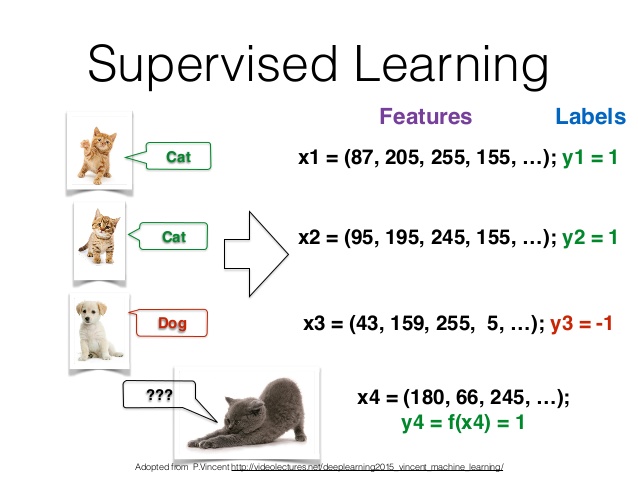
Cat pictures, cat pictures, cat pictures–do they talk of nothing but cat pictures?  ‘Fraid so… Picture source: https://www.slideshare.net/ITARENA/fishman-deep-learning
  1. The bias is high.  Bias is how far off you are, on average, from the target.  We decided that 30 minutes is a lot of time, so the train is always off by a lot, so the bias is high.  On the other hand, the variance is low.  Variance is how consistent the train is, and it is absolutely consistent, since it is always 30 minutes.  Thus: the variance is low.

Your train is supposed to show up at 6 AM.  It is always either exactly 30 minutes early, or 30 minutes late.  More specifically: half of the time it is 30 minutes early, and half of the time it is 30 minutes late.  Assume that 30 minutes is a lot of time: is the bias high or low?  Is the variance high or low?
deep-learning-on-hadoopspark-nextml-5-638
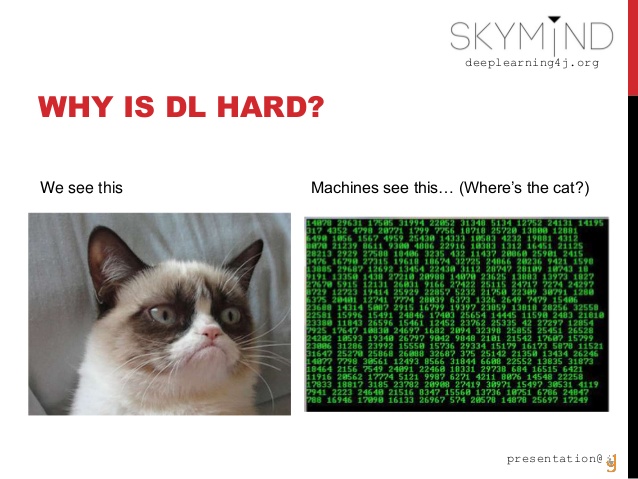
“DL” is “deep learning,” the most popular name for the latest-and-greatest approach to machine learning. I hear that it’s really good at recognizing pictures of cats.  Picture source: https://www.slideshare.net/agibsonccc/deep-learning-on-hadoopspark-galvanize

Since on average, the train is on time–being early half the time and late half the time averages out to always being on time–the bias is low. Zero, in fact.  This gives you some insight into why averages are not that useful if you’re trying to figure out whether or not something operates well. The give-away is the variance—even when something looks fine on average, high variance gives away how shitty it is.

Want to know which Walking Dead character you are?  You have two options:

  1. Take one of the many on-line quizzes available.
  2. Analyze yourself in terms of bias and variance.

English notes

low-rent: “having little prestige; inferior or shoddy” (Google) “low in character, cost, or prestige” (Merriam-Webster)

to look good on paper: “to seem fine in theory, but not perhaps in practice; to appear to be a good plan.” (McGraw-Hill Dictionary of American Idioms and Phrasal Verbs) Often followed by “but…”


French notes

From the French-language Wikipedia article on what’s called in English the bias-variance tradeoff:

En statistique et en apprentissage automatique, le dilemme (ou compromis) biais–variance est le problème de minimiser simultanément deux sources d’erreurs qui empêchent les algorithmes d’apprentissage supervisé de généraliser au-delà de leur échantillon d’apprentissage :

  • Le biais est l’erreur provenant d’hypothèses erronées dans l’algorithme d’apprentissage. Un biais élevé peut être lié à un algorithme qui manque de relations pertinentes entre les données en entrée et les sorties prévues (sous-apprentissage).
  • La variance est l’erreur due à la sensibilité aux petites fluctuations de l’échantillon d’apprentissage. Une variance élevée peut entraîner un surapprentissage, c’est-à-dire modéliser le bruit aléatoire des données d’apprentissage plutôt que les sorties prévues.

 

What computational linguists actually do all day: The debugging edition

We already knew that the patient had the primary, secondary, and tertiary stages of syphilis.

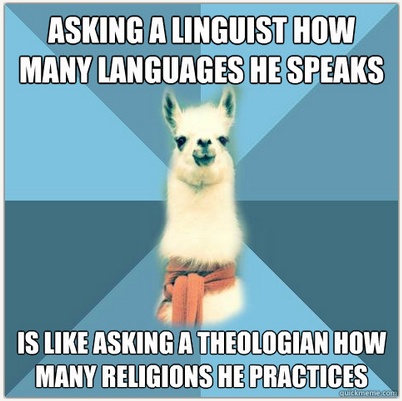
Tell someone you’re a computational linguist, and the next question is almost always this: so, how many languages do you speak?  This annoys the shit out of us, in the same way that it might annoy a public health worker if you asked them how many stages of syphilis they have.  (There are four.  When I was a squid (military slang for “sailor”), one of our cardiologists lost her cool and threw a scalpel.  It stuck in one of my mates’ hands.  We already knew that the patient had the primary, secondary, and tertiary stages of syphilis, so my buddy was one unhappy boy…)

Being asked “how many languages do you speak?” annoys us because it reflects a total absence of knowledge about what we devote our professional lives to.  (This is obviously a little arrogant–why should anyone else bother to find out about what we devote our professional lives to?  That’s our problem, right?  Nonetheless: the millionth time that you get asked, it’s annoying.)  It’s actually easier to explain what linguistics is in French than it is in English, because French has two separate words for things that are both covered by the word language in English:

  • une langue is a particular language, such as French, or English, or Low Dutch.
  • le langage is language as a system, as a concept.
interaction of tone with foot structure
No, I did not just make up “tone-bearing unit.”

Linguists study the second, not the first.  People who call themselves linguists might specialize in vowels, or in words like “the,” or in how people use language both to segregate themselves and to segregate others.  Whatever it is that you do, you’re basing it on data, and the data comes from actual languages, so you might work with any number of them–personally, I wrote a book on a language spoken by about 30,000 people in what is now South Sudan.  The point of that work, though, is to investigate broader questions about langage, more so than to speak another language–that’s a very different thing.  I can tell you a hell of a lot about the finite state automata that describe tone/tone-bearing-unit mappings in that language, but can’t do anything in it beyond exchange polite greetings (and one very impolite leave-taking used only amongst males of the same age group).

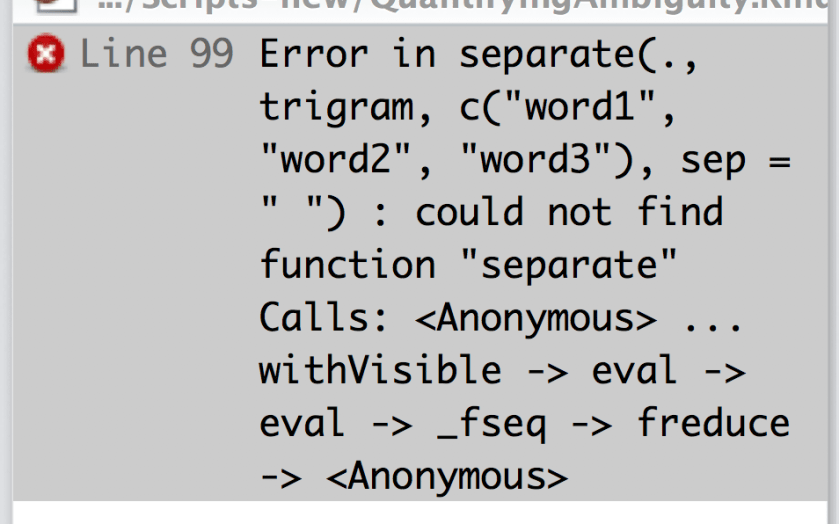
So, if you’re not spending your days sitting around memorizing vocabulary items in three different regional variants of Upper Sorbian, what does a linguist actually do all day?  Here’s a typical morning.  I was trying to do something with trigrams (3-word sequences–approximately the longest sequence of words that you can include in a statistical model of language before it stops doing what you want it to do), when I ran into this:

Screen Shot 2018-03-28 at 04.01.05

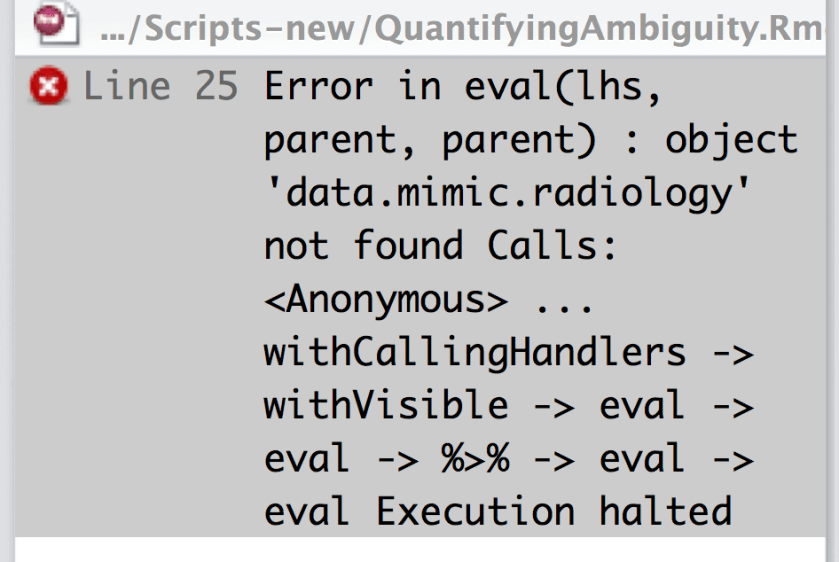
Fixed that one, and then there was a problem with my x-ray reports (my speciality is biomedical languages)…

Screen Shot 2018-03-28 at 03.30.00

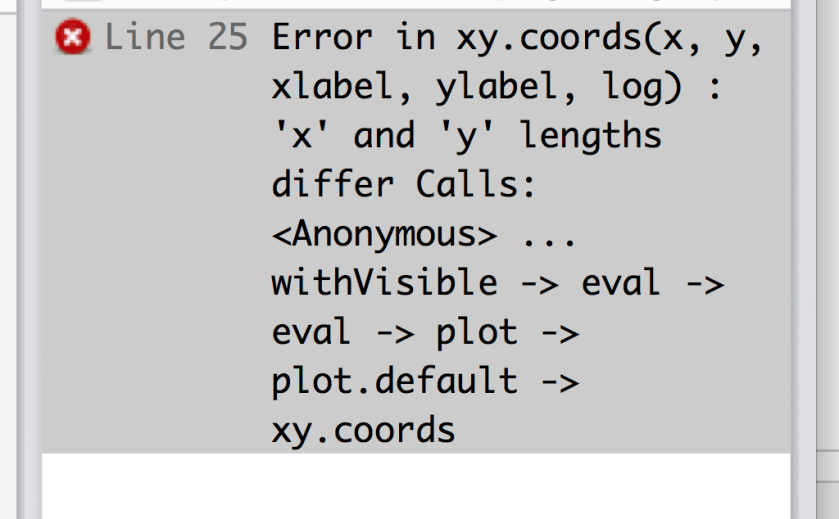
Fixed that one, and then…

Screen Shot 2018-03-28 at 03.26.09

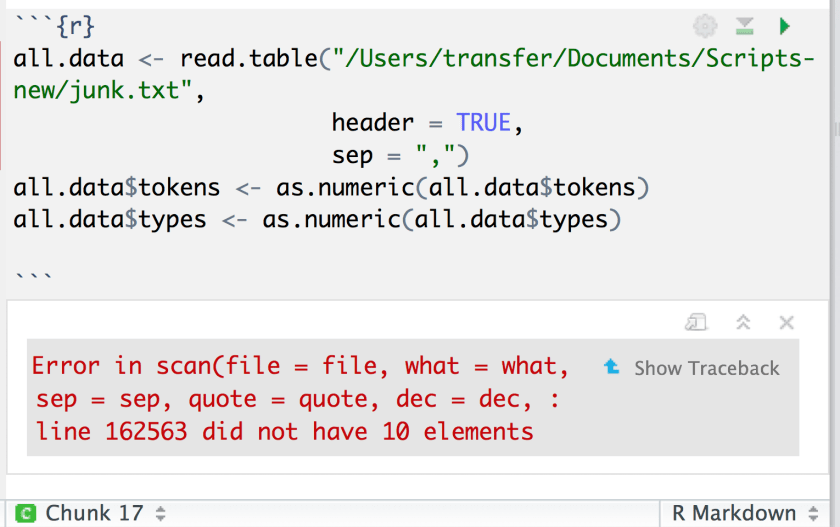
…and your guess may well be better than mine on that one.  God help you if you run into this kind of thing, though…

missingelements
Source: me.

…because that message about not having some number of elements (a) usually takes forever to figure out, and then (b) once you do figure it out, reflects some kind of problem with your data that is going to give you a lot of headaches before you get it fixed.

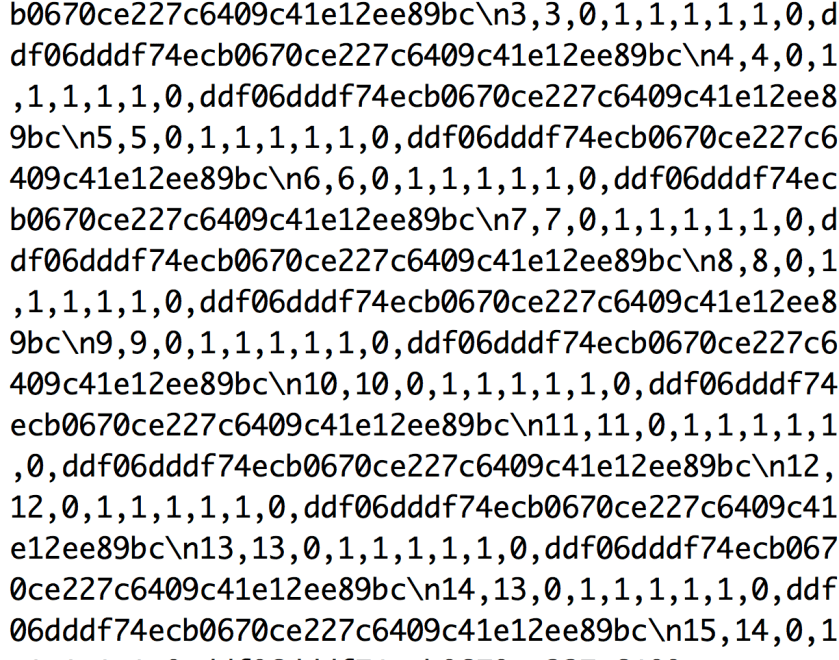
I spend a lot of my day looking at things like this:

screenfullofcrap
Source: me.

.,..which is a bunch of 0s and 1s describing the relationship between word frequency and word rank, plus what goes wrong when your data gets created on an MS-DOS machine, which I will have to fix before I can actually do anything with said data (see the English notes below for what said data means); or this…

filesizes
Source: me.

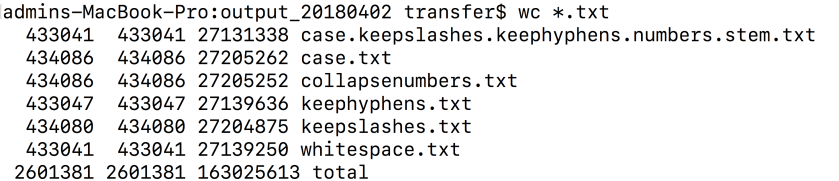
…which tells me some things about the effects of “minor” preprocessing differences on type/token ratios–they’re not actually so minor; or this…

All_terms_lengths
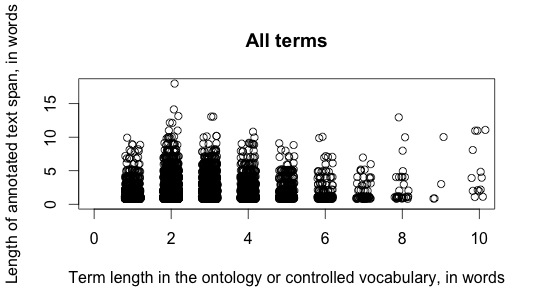
Source: Cohen, K. B., Verspoor, K., Fort, K., Funk, C., Bada, M., Palmer, M., & Hunter, L. E. (2017). The Colorado Richly Annotated Full Text (CRAFT) corpus: Multi-model annotation in the biomedical domain. In Handbook of Linguistic Annotation (pp. 1379-1394). Springer, Dordrecht.

…which tells me that either there are some errors in that data, or there is an enormous amount of variability between the official terminology of the field and the way that said terminology actually shows up in the scientific literature.  (See the leftmost blob–it indicates that there are plenty of cases of one-word terms that show up as more than 5 words in actual articles.  That is certainly possible–disease in which abnormal cells divide without control and can invade nearby tissues is 13 words that together correspond to the single-word term cancerbut, I was surprised to see just how frequent those large discrepancies in lengths were.  In my professional life, I love surprises, but they also suggest that you’d better consider the possibility that there are problems with the data.)

So, yeah: it’s not like I can’t get my hair cut in Japanese, or explain how to do post-surgical hand therapy in Spanish, or piss off a con artist in Turkish (a story for another time)–but, none of those have anything to do with my professional life as a computational linguist.  That’s all about computing, which means computers, and I hate computers.  Ironic, hein?  Life is fucking weird, and I like it that way.


English notes

queneau exercices de figure
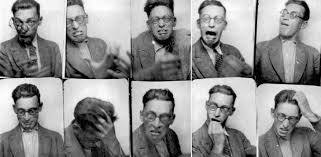
I think this is Queneau, but couldn’t swear to it. Source: it’s all over the place.

said: a shorter way of saying “the aforementioned.”  Both of these are characteristic of written language, more so than of spoken language.  Even in writing, though, it’s pretty bizarre if you’re not a native speaker, which is why I picked it to talk about today.  A French equivalent would be ledit/ladite/lesdites (not sure about that last one–Phil dAnge?), which I have a soft spot for ’cause I learned it in Queneau’s Exercices de style.  

Trying to think of helpful ways to recognize this bizarre usage of said, I went looking for examples of said whose part of speech is adjectival.  Here are some of the things that I found:

  • As such, any dispute that you may have on goods purchased or services availed of should be raised directly with said merchant/s.
  • seemingly endless shopping list to conquer, a shrinking budget with which to do said shopping ~ and let’s face it: our businesses don’t run themselves while we’re visiting relatives.
  • This is a monumental pain in the ass — you don’t exactly trip over Notary Publics in today’s day and age — and I can only assume came from said company having a problem with identity once sometime in the last twelve years, and the president saying “fuck it.”

How it appears in the post:

  • …what goes wrong when your data gets created on an MS-DOS machine, which I will have to fix before I can actually do anything with said data;…
  • Either there are some errors in that data, or there is an enormous amount of variability between the official terminology of the field and the way that said terminology actually shows up in the scientific literature. 

debugging: A technical term in software programming that refers to finding problems in your program.  I used it in the title of today’s post because most of the illustrations that I gave of what I do all day are of irritating problems of one sort or another that I (really did) have to track down in the course of my day.  They don’t tell you in school that tracking down such things are literally about 80% of what any programmer spends their time doing.  Of course, any problem in a computer program is a problem that you created, so you can get irritated about them, but you most certainly cannot take your irritation out on anyone else…

American English listening practice: Mueller’s questions for Trump

A recording with a transcript is a great way to develop your oral comprehension skills. Here’s a link to a story on National Public Radio. It analyzes the recently released questions that the Justice Department wants to ask Donald Trump, the draft-dodging, give-secrets-to-the-Russians asshole who is the president of the United States–for the moment.

What Mueller’s Questions For President Trump Say About His Investigation – https://www.npr.org/607483451

Movement of bodies: the illustrated version

Fields, lexical and otherwise: Henry Reed’s sweetly funny WWII poem “Movement of bodies.”

As National Poetry Month draws to a close, here is more of the gentle humor of Henry Reed.  This version of Movement of bodies, published in 1950, comes from the Sole Arabian Tree web site, where you can find a recording of Henry Reed reading the poem.

If you remember this one from last year: I’ve added some more explanations of the vocabulary, as well as some of your comments!

LESSONS OF THE WAR

III. MOVEMENT OF BODIES
Those of you that have got through the rest, I am going to rapidly
Devote a little time to showing you, those that can master it,
A few ideas about tactics, which must not be confused
With what we call strategy. Tactics is merely
The mechanical movement of bodies, and that is what we mean by it.
Or perhaps I should say: by them.

Strategy, to be quite frank, you will have no hand in.
It is done by those up above, and it merely refers to,
The larger movements over which we have no control.
But tactics are also important, together or single.
You must never forget that, suddenly, in an engagement,
You may find yourself alone.

This brown clay model is a characteristic terrain
Of a simple and typical kind. Its general character
Should be taken in at a glance, and its general character
You can, see at a glance it is somewhat hilly by nature,
With a fair amount of typical vegetation
Disposed at certain parts.

Here at the top of the tray, which we might call the northwards,
Is a wooded headland, with a crown of bushy-topped trees on;
And proceeding downwards or south we take in at a glance
A variety of gorges and knolls and plateaus and basins and saddles,
Somewhat symmetrically put, for easy identification.
And here is our point of attack.

But remember of course it will not be a tray you will fight on,
Nor always by daylight. After a hot day, think of the night
Cooling the desert down, and you still moving over it:
Past a ruined tank or a gun, perhaps, or a dead friend,
In the midst of war, at peace. It might quite well be that.
It isn’t always a tray.

And even this tray is different to what I had thought.
These models are somehow never always the same: for a reason
I do not know how to explain quite. Just as I do not know
Why there is always someone at this particular lesson
Who always starts crying. Now will you kindly
Empty those blinking eyes?

I thank you. I have no wish to seem impatient.
I know it is all very hard, but you would not like,
To take a simple example, to take for example,
This place we have thought of here, you would not like
To find yourself face to face with it, and you not knowing
What there might be inside?

Very well then: suppose this is what you must capture.
It will not be easy, not being very exposed,
Secluded away like it is, and somewhat protected
By a typical formation of what appear to be bushes,
So that you cannot see, as to what is concealed inside,
As to whether it is friend or foe.

And so, a strong feint will be necessary in this, connection.
It will not be a tray, remember. It may be a desert stretch
With nothing in sight, to speak of. I have no wish to be inconsiderate,
But I see there are two of you now, commencing to snivel.
I do not know where such emotional privates can come from.
Try to behave like men.

I thank you. I was saying: a thoughtful deception
Is always somewhat essential in such a case. You can see
That if only the attacker can capture such an emplacement
The rest of the terrain is his: a key-position, and calling
For the most resourceful manoeuvres. But that is what tactics is.
Or I should say rather: are.

Let us begin then and appreciate the situation.
I am thinking especially of the point we have been considering,
Though in a sense everything in the whole of the terrain,
Must be appreciated. I do not know what I have said
To upset so many of you. I know it is a difficult lesson.
Yesterday a man was sick,

But I have never known as many as five in a single intake,
Unable to cope with this lesson. I think you had better
Fall out, all five, and sit at the back of the room,
Being careful not to talk. The rest will close up.
Perhaps it was me saying ‘a dead friend’, earlier on?
Well, some of us live.

And I never know why, whenever we get to tactics,
Men either laugh or cry, though neither is strictly called for.
But perhaps I have started too early with a difficult task?
We will start again, further north, with a simpler problem.
Are you ready? Is everyone paying attention?
Very well then. Here are two hills.


English notes

This poem is full of delightful plays on multiple meanings of words, most of which I’ll skip to focus on the lexical field of geographic terms.  Reed uses a bunch of terms that refer to elements of topography (Merriam-Webster: the art or practice of graphic delineation in detail usually on maps or charts of natural and man-made features of a place or region especially in a way to show their relative positions and elevations) as metaphors for a woman’s body.  Many of these are terms that a typical native speaker (including myself) wouldn’t necessarily be able to define specifically, although I would guess that most people would at least know that they refer to elements of a terrain, and might even be able to group them into two classes: ones that refer to elevations (high points), and ones that refer to depressions (Merriam-Webster: a place or part that is lower than the surrounding area :  a depressed place or part :  hollow ).  I’ll split them out in that way, then follow them with a few miscellaneous terms.  (All links to Merriam-Webster are to the definition for that word.)  For a reminder, here’s a paragraph from near the beginning of the poem:

Here at the top of the tray, which we might call the northwards,
Is a wooded headland, with a crown of bushy-topped trees on;
And proceeding downwards or south we take in at a glance
A variety of gorges and knolls and plateaus and basins and saddles,
Somewhat symmetrically put, for easy identification.
And here is our point of attack.

Elevations

bond1
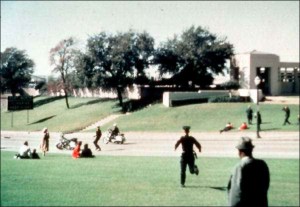
The famous “grassy knoll.” I got this off of a JFK assassination conspiracy theory website, but have no idea to whom it should actually be credited.

knoll: Merriam-Webstera small round hill :  mound.  The term grassy knolla small hill covered with grass, is closely associated with the assassination of President John F. Kennedy, particularly with conspiracy theories about it.

headland: Merriam-Webstera point of usually high land jutting out into a body of water :  promontory

plateau: Merriam-Webster: a usually extensive land area having a relatively level surface raised sharply above adjacent land on at least one side :  tableland

Depressions

palouse-river-gorge
The Palouse River Gorge. Picture source: https://goo.gl/zkU7CN

gorge: Merriam-Webstera narrow passage through land; especially :  a narrow steep-walled canyon or part of a canyon

basin: Merriam-Webstera large or small depression in the surface of the land or in the ocean floor.  As I speak a bit of French, it’s difficult not to make the association here with le bassin, the pelvis.

b5_1211
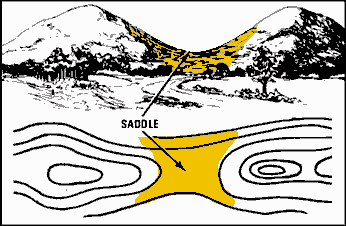
Picture source: armystudyguide.com, https://goo.gl/SNBe4g

saddle: Merriam-Webstera ridge connecting two higher elevations; a pass in a mountain range.  In English, this has the same connections with sex as it does in French: J’en ai-t-y connu des lanciers, // Des dragons et des cuirassiers // Qui me montraient à me tenir en selle // A Grenelle!

Phil d’Ange points out that…

A few notes on some English/French topographical terms : “plateau” and “gorge” are exactly the same and have the same meanings . “Basin” is just one of the common English misspellings, here for “bassin” . But “un bassin” is also used in topography, not only to mean the pelvis, and is applied to large depressions . In France you have “le bassin parisien” and “le bassin aquitain”, rather wide surfaces . On the other hand we have nothing like a saddle in topography . “Une selle” is never used in that way, and I’d add that it is not related to sex either, except in specific occasions like the old song you quote . There are other words associated to horse riding that are common about sexual activities : monter, chevaucher, etc…

Others

wooded: Merriam-Webstercovered with growing trees

engagement: In the context of the poem, the most obvious meaning is the military one of a hostile contact between enemy forces (Merriam-Webster).  Presumably Reed is also playing here on the more commonly-used meaning of a commitment to marriage (my best guess on all of the crying trainees).

You must never forget that, suddenly, in an engagement,
You may find yourself alone.

The French cognate has a much wider range of uses/meanings than the American English word.  As Phil d’Ange puts it:

A word about “engagement, a French word that has the same meanings : military and commitment to any activity with a moral virtue : social, political, humanitary causes and for some weird reason to marriage (I guess it can be a humanitary cause in some cases) . Seriously “un engagement” is also a promise, a commitment to any act, moral or not : “Il a pris l’engagement de réparer ma voiture avant lundi”, “… l’engagement de me prêter 1000 €” . And it also means hiring an employee . “Engager” a housemaid, an accountant, a bodyguard ( that’s my daily life ha ha ) .

The situation seems to be different in the United Kingdom, where the range of meanings/uses of engagement is closer to that of French.  Osyth put it this way:

We use engage in that way too …. I would ‘engage’ a butler or a garage to fix my car and I might be ‘engaged’ to do a piece of work for a magazine. When a couple is preparing for marriage they are ‘engaged’ which makes it alarming or appropriate depending on your feelings about the marital state (or more likely your own experience) that we also engage in combat!

tactics versus strategy: tactics are short-term–a tactical nuclear weapon is one that you would use on the battlefield.  (Not very fun to think about, is it?  When I tell people that some aspects of the peacetime military seem kinda silly and they ask me for examples, I always tell them about our “what to do in case of nearby nuclear weapon explosion” drills.)  In contrast, strategic nuclear weapons are meant for the bigger picture–the stuff that you would use to hammer the other guy’s country in such a way that he becomes unable to continue fighting at all.  My tactics in my professional life mostly consist of making schedules to ensure that I don’t miss deadlines, while my strategy is the set of papers that I plan to publish in the next few years.  From the poem:

Strategy, to be quite frank, you will have no hand in.
It is done by those up above, and it merely refers to,
The larger movements over which we have no control.
But tactics are also important, together or single.
You must never forget that, suddenly, in an engagement,
You may find yourself alone.

to be at peace:  “Calm and serene. My daughter was miserable all week, but she’s at peace now that her tests are over.”  (TheFreeDictionary.com)

How Reed uses it in the poem (quite brilliantly):

After a hot day, think of the night
Cooling the desert down, and you still moving over it:
Past a ruined tank or a gun, perhaps, or a dead friend,
In the midst of war, at peace.

to fall out: in a military context, the most common meaning of this is  to leave one’s place in the ranks (Merriam-Webster).   From the Military.com web site:

Fall out

The command is “Fall Out.” On the command, you may relax in a standing position or break ranks (move a few steps out of formation). You must remain in the immediate area, and return to the formation on the command “Fall In.” Moderate speech is permitted.

How it appears in the poem:

                                              I think you had better
Fall out, all five, and sit at the back of the room

Judging distances: the illustrated version

More wistful beauty from Henry Reed’s WWII poetry.

I can remember it like it was yesterday: being a teen-ager, barely turned 18 (at the time, you could enlist at 17, and I did), lying in my bunk on a guided missile cruiser off of the coast of someplace or other.  Thinking: if only I could go back and finish high school…  National Poetry Month is not National Poetry Month without Henry Reed’s wistful beauty.  His meditation on time and the way that some times can be much farther away — or closer — than others in Judging Distances always takes me back to my misguided youth and that rack (bunk) on the USS Biddle.  I got this version of the poem from the Sole Arabian Tree web site; at the bottom of their page, you can find a link to a recording of it.  After the text, you’ll find a couple of notes on the vocabulary.

LESSONS OF THE WAR, by Henry Reed 

Published 1943

II. JUDGING DISTANCES

Not only how far away, but the way that you say it
Is very important. Perhaps you may never get
The knack of judging a distance, but at least you know
How to report on a landscape: the central sector,
The right of the arc and that, which we had last Tuesday,
And at least you know

That maps are of time, not place, so far as the army
Happens to be concerned—the reason being,
Is one which need not delay us. Again, you know
There are three kinds of tree, three only, the fir and the poplar,
And those which have bushy tops to; and lastly
That things only seem to be things.

A barn is not called a barn, to put it more plainly,
Or a field in the distance, where sheep may be safely grazing.
You must never be over-sure. You must say, when reporting:
At five o’clock in the central sector is a dozen
Of what appear to be animals; whatever you do,
Don’t call the bleeders sheep.

I am sure that’s quite clear; and suppose, for the sake of example,
The one at the end, asleep, endeavors to tell us
What he sees over there to the west, and how far away,
After first having come to attention. There to the west,
On the fields of summer the sun and the shadows bestow
Vestments of purple and gold.

The still white dwellings are like a mirage in the heat,
And under the swaying elms a man and a woman
Lie gently together. Which is, perhaps, only to say
That there is a row of houses to the left of the arc,
And that under some poplars a pair of what appear to be humans
Appear to be loving.

Well that, for an answer, is what we rightly call
Moderately satisfactory only, the reason being,
Is that two things have been omitted, and those are very important.
The human beings, now: in what direction are they,
And how far away, would you say? And do not forget
There may be dead ground in between.

There may be dead ground in between; and I may not have got
The knack of judging a distance; I will only venture
A guess that perhaps between me and the apparent lovers,
(Who, incidentally, appear by now to have finished,)
At seven o’clock from the houses, is roughly a distance
Of about one year and a half.


English notes

knack: “an ability, talent, or special skill needed to do something” (Merriam-Webster).  You “have” a (or the) knack “for” doing something, after you “get” a (or the) knack “for” doing it–you learn it.   Merriam-Webster gives a list of synonyms for knack: 

aptitude, bent, endowment, faculty, flair, genius, gift, head, talent

…and then gives a wonderful discussion of them that does a nice job of making the point that there aren’t really any synonyms:

giftfacultyaptitudebenttalentgeniusknack mean a special ability for doing something. gift often implies special favor by God or nature.

    • the gift of singing beautifully

faculty applies to an innate or less often acquired ability for a particular accomplishment or function.

    • faculty for remembering names

aptitude implies a natural liking for some activity and the likelihood of success in it.

    • a mechanicalaptitude

bent is nearly equal to aptitude but it stresses inclination perhaps more than specific ability.

    • a family with an artistic bent

talent suggests a marked natural ability that needs to be developed.

    • has enough talent to succeed

geniussuggests impressive inborn creative ability.

    • has no greatgenius for poetry

knack implies a comparatively minor but special ability making for ease and dexterity in performance.

    • the knack of getting along


Knack appears in the poem twice–in the beginning:

Perhaps you may never get
The knack of judging a distance, but at least you know
How to report on a landscape

…and then in those stunning last lines:

                                                          I may not have got
The knack of judging a distance; I will only venture
A guess that perhaps between me and the apparent lovers,
(Who, incidentally, appear by now to have finished,)
At seven o’clock from the houses, is roughly a distance
Of about one year and a half.

better-barn_istock-thinkstock
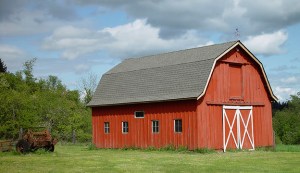
American barns are stereotypically red. Why? I have no idea. Picture source: https://www.hobbyfarms.com/build-a-better-barn-for-your-farm-3/

barn: “a building used for storing grain and hay and for housing farm animals” (Merriam-Webster)  Merriam-Webster gives an obscure definition of barn that I have never, ever come across before: a unit of area equal to 10−24 square centimeters that is used in nuclear physics for measuring cross section.

As broad as a barn door is an analogy used to describe something that is very wide.  The most common thing to describe as being broad as a barn door is someone’s ass, and that’s not typically a compliment.  Looking for examples on the Sketch Engine web site, I see very few uses of broad as a barn door that are not negative.  (You’ll also see big as a barn door and wide as a barn door.  Why miss the opportunity for some alliteration?)

  • I had my first look at the boom horse Hay List . He’s built like a tank with a backside as big as a barn door.
  •  And since security companies advise against “unsubscribing” from spam, since to most spammers, this merely means the address is active, the hole in the law is as wide as a barn door.
  • I have sent you a cheque for what you asked, you are very modest in your request for which I like you all the better; a Colonist would have opened his mouth as wide as a barn door.
  • Now, for Europe, this means we have to absolutely cancel the EU Treaties from Maastricht to Lisbon, we have to return to national currencies, and we have to establish, simultaneously, a global Glass-Steagall Act, and I mean the real Glass-Steagall as Franklin D. Roosevelt imposed it, and not some watered-down versions like the Vickers Commission ring-fencing, or Volcker Rule, which leave holes for banking speculation as big as a barn door.
  • But the chain remained tangled, and amid all kinds of mocking advice we drifted down upon and fouled the Ghost, whose bowsprit poked square through our mainsail and ripped a hole in it as big as a barn door.

I love that the drill instructor tells the new recruits not to call a barn a barn, but doesn’t tell them what they should call it:

A barn is not called a barn, to put it more plainly,
Or a field in the distance, where sheep may be safely grazing.


gkvp0cz
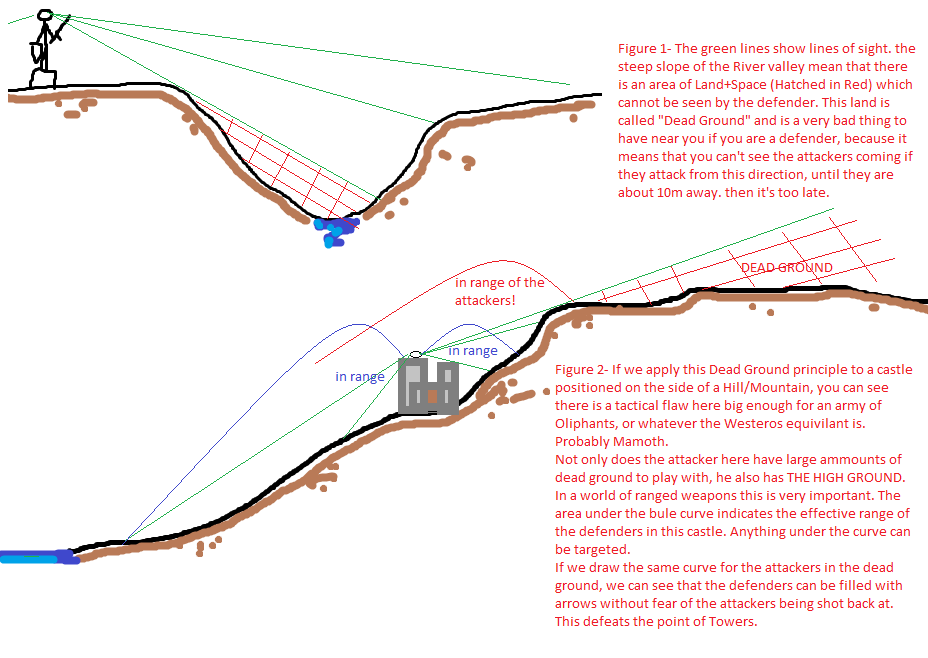
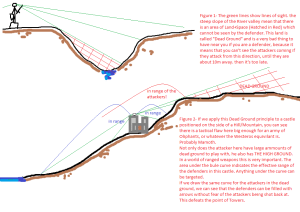
This illustration seems to come from a forum about a computer game or something. Nonetheless: it’s a pretty good illustration of dead ground! Picture source: https://goo.gl/5rWBHB

dead ground: technically, this is space that cannot be observed.  Tracing back through references, it seems to have come from a term for describing parts of the base of a castle’s fortifying walls that were sheltered from fire by the defenders, and therefore were weak points vulnerable to attack.  Here’s one Quora writer’s definition of it:

Dead Ground is when the observer is unable to resolve keeping eyes on over an intermediate part of the stretch of ground being observed. The observer may be interchanged with detection equipment and includes areas of surveillance which are obscured from a clear alarm signature (environmental distortion from clear auditory reception) or trigger reception (automatic pixel motion detection) by the way the observer is angled. Dead ground exists in hidden embankments and undulating paths, roads or desert open areas with heat waves rising and obscuring or creating distorted imagery.

Some examples from the enTenTen corpus, searched via the Sketch Engine web site:

  • Small valleys and dead ground permitted the enemy to approach without being observed.
  • Bravo started firing at the antiaircraft gun with small-arms, this almost proved fatal, as their target immediately cut loose in retaliation, luckily for Bravo they were in dead ground , and the hail of fire passed harmlessly overhead , as the Swapo gunners could not depress their gun sufficiently, yet it was a sobering experience.

“Dead ground” shows up twice in the poem, both towards the aforementioned stunning last lines:

The human beings, now: in what direction are they,
And how far away, would you say? And do not forget
There may be dead ground in between.

There may be dead ground in between; and I may not have got
The knack of judging a distance; I will only venture
A guess that perhaps between me and the apparent lovers,
(Who, incidentally, appear by now to have finished,)
At seven o’clock from the houses, is roughly a distance
Of about one year and a half.

Loving a woman with a broken nose

Like loving a woman with a broken nose, you may well find lovelier lovelies.  But never a lovely so real.  — Nelson Algren

Like loving a woman with a broken nose, you may well find lovelier lovelies.  But never a lovely so real.  — Nelson Algren, Chicago: City on the Make (1951)

I have never managed to translate these lines from Nelson Algren’s (book-length) prose poem Chicago: City on the Make to French to my satisfaction.  The problem comes from the fact that lovely can (and usually is) an adjective, but can also be — super-rarely, I suspect — a noun.  Hmmm–not unlike belle in French, maybe?  Native speaker Phil d’Ange came up with this classical couplet:

To keep the rhyme but also to have the same number of syllables, a must in French classical poetry, I made two 12-foot verses (the top of classicism, what we call “des alexandrins”, 12 foot verses with “la césure à l’hémistiche” i.e. a natural pause right in the middle, after 6 feet) that keep the meaning and the rhyme.

“Peut-être verras-tu un jour belles plus belles
Mais jamais ne verras de belle plus réelle” .


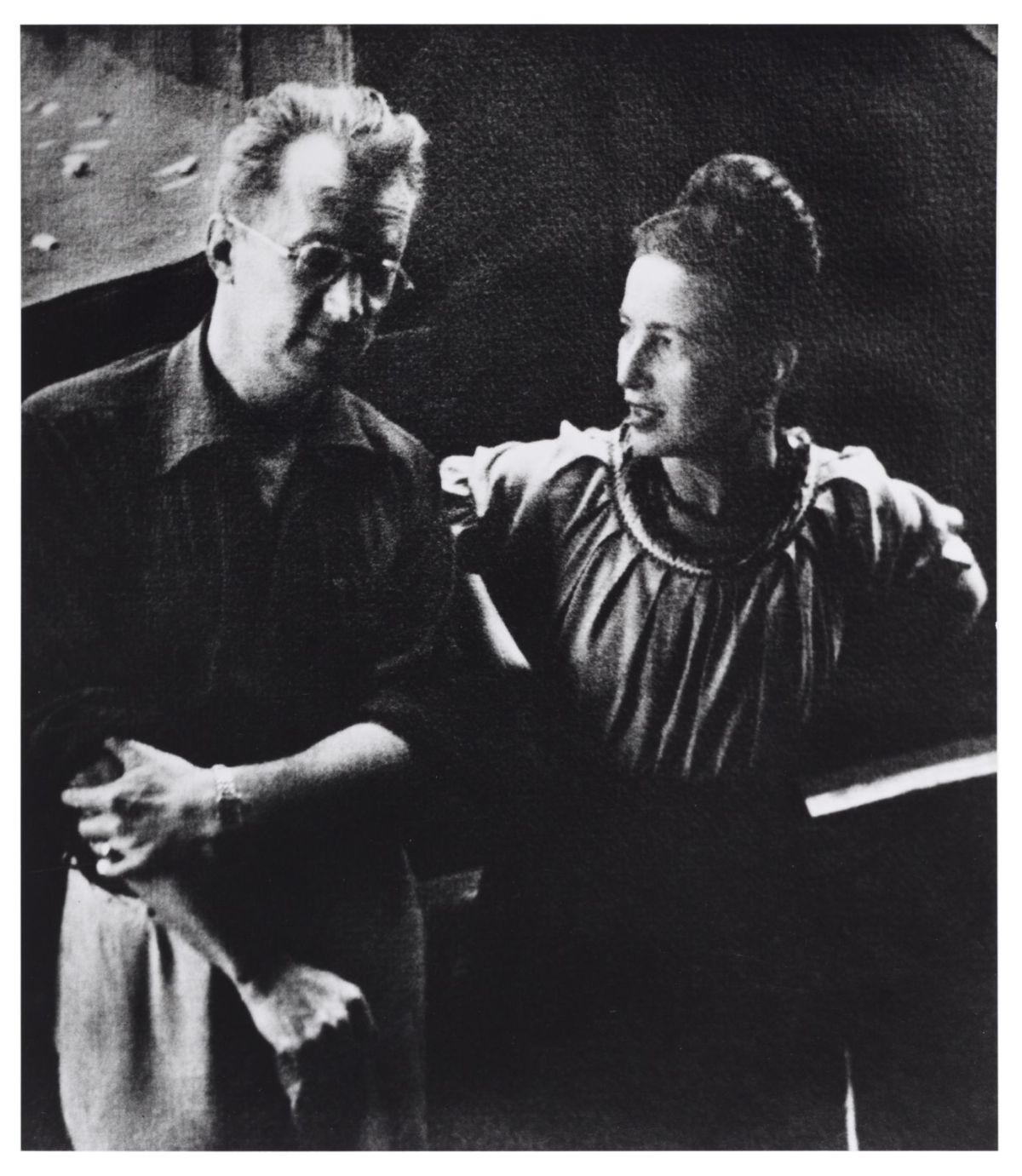
Nelson was talking here about Chicago, but Chicago was not his only love: Simone de Beauvoir was another.  The end of their relationship is typically portrayed as her leaving him to return to Jean-Paul Sartre, but I am not entirely convinced.  Here is an excerpt from a letter that she wrote to him in 1950, when he had pulled back from her, dissatisfied with the relationship.

I am not sad. Rather stunned, very far away from myself, not really believing you are now so far, so far, you so near. I want to tell you only two things before leaving, and then I’ll not speak about it any more, I promise. First, I hope so much, I want and need so much to see you again, some day. But, remember, please, I shall never more ask to see you — not from any pride since I have none with you, as you know, but our meeting will mean something only when you wish it. So, I’ll wait. When you’ll wish it, just tell. I shall not assume that you love me anew, not even that you have to sleep with me, and we have not to stay together such a long time — just as you feel, and when you feel. But know that I’ll always long for your asking me. No, I cannot think that I shall not see you again. I have lost your love and it was (it is) painful, but shall not lose you. Anyhow, you gave me so much, Nelson, what you gave me meant so much, that you could never take it back. And then your tenderness and friendship were so precious to me that I can still feel warm and happy and harshly grateful when I look at you inside me. I do hope this tenderness and friendship will never, never desert me. As for me, it is baffling to say so and I feel ashamed, but it is the only true truth: I just love as much as I did when I landed into your disappointed arms, that means with my whole self and all my dirty heart; I cannot do less. But that will not bother you, honey, and don’t make writing letters of any kind a duty, just write when you feel like it, knowing every time it will make me very happy.

Well, all words seem silly. You seem so near, so near, let me come near to you, too. And let me, as in the past times, let me be in my own heart forever.

Your own Simone


In lieu of English (or French) notes, here’s some linguistics geekery to ruin your day (or, at a minimum, Algren’s poetry).

In this post, I introduced an intuition without actually backing it up:

The problem comes from the fact that lovely can (and usually is) an adjective, but can also be — super-rarely, I suspect — a noun.

How could one know whether or not it’s the case that it’s quite rare for lovely to be an adjective?  Data, data, data.

I went to the Sketch Engine web site, where one can find all manner of corpora (pre-analyzed sets of linguistic data), as well as a nice interface for searching them.  (No, they don’t pay me to shill for them–I pay a pretty penny for access to the site, which I use in my actual research.)  I picked a corpus (the singular of corpora) called the enTenTen13 corpus.  It contains a bit under 20 billion words of English from various and sundry sources, mostly scraped off of the web.  The analysis that’s been done on this data consisted of using a computer program to “tag” the lexical categories (parts of speech to those civilians amongst you) of all of the words in it.

With that data, and a tool that will let me specify the part of speech for which I’m looking, I can do two separate searches:

  • lovely as an adjective
  • lovely as a noun

Why two searches?  I wanted to know whether it’s rare for lovely to be a noun, so why didn’t I just search for lovely as a noun?  Because numbers by themselves aren’t really meaningful: to know if a number–in this case, the frequency of lovely occurring as a noun–is large or small (why didn’t I say big or little?  see previous posts about how there aren’t really any synonyms), I need to compare it to something else–in this case, to the frequency of some other word/lexical category.  Which word, with which lexical category?  Well, lovely as an adjective makes as much sense as anything else, so I did that.  

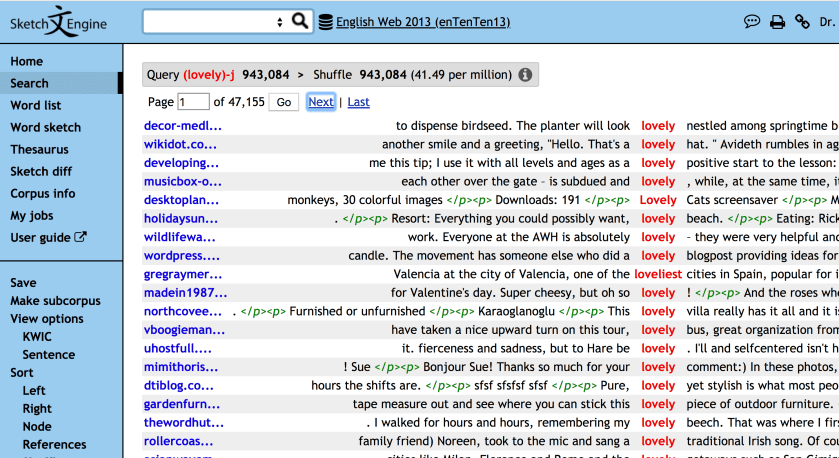
Here’s what I got when I searched for lovely as an adjective.  Notice that in the upper-left corner of the white-background panel, it says Query (lovely)-j: the “j” means adjective (for reasons that we need not get into, but it’s obvious enough to someone in the field that the Sketch Engine folks clearly didn’t see any need to explain it).  You may be wondering: what about lovelier or loveliest?  Gotcha covered–I actually did the search not for the “word” lovely, but for the “lemma” lovely, which means that the program is also looking for loveliest (you can see that it found an example of that, about halfway down the list)–and Lovely, Lovelier, and any other form with capital letters (and found one, 5 down from the top).  The program found 943,084 tokens of lovely (or, more precisely, of the lemma lovely); we don’t know whether 943,084 is a lot or a little (remember the Best Movie Line Ever: 5 inches is a lot of snow, and it’s a TREMENDOUS amount of rain, but it’s not very much dick), but pas de souci, Sketch Engine does the math to convert that into a frequency: 41.49 occurrences per million words (see the gray bar (or grey if you’re a Brit) at the top of the white panel.

Screen Shot 2018-04-23 at 11.25.08

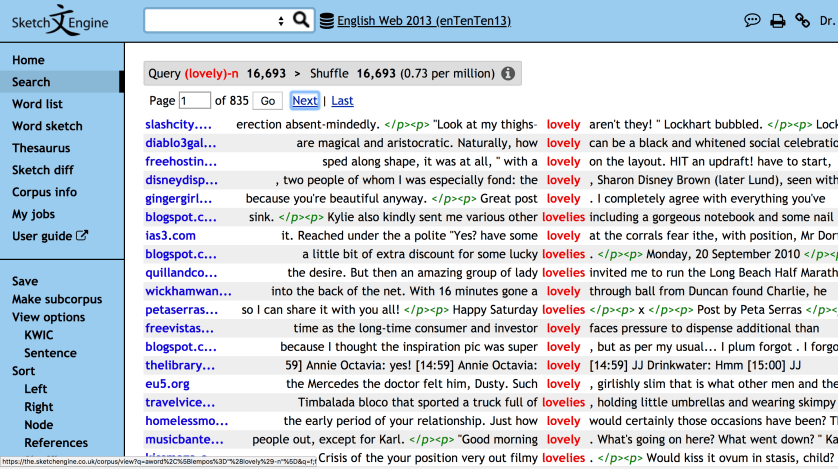
With a frequency for lovely as an adjective to which I can now compare the frequency of lovely as a noun, I did another search.  This time, I looked for the lemma lovely, but as a noun.  6th from the top, you’ll see it pluralized–Kylie also kindly sent me various other lovelies including a gorgeous notebook… …and if you’re pluralized and in you’re in English, then you’re not an adjective.  The frequency of lovely as a noun?  Sketch Engine tells me that it’s 0.73 times per million words.

Screen Shot 2018-04-23 at 11.26.34

So, I get the following frequencies:

  • lovely as an adjective: 41.49 occurrences per million words
  • lovely as a noun: 0.73 occurrences per million words

41.49 is about 42 times 0.73, so indeed, lovely as a noun seems to be pretty fucking rare: my intuition has been supported by the quantitative data.


Now, I know what you’re thinking: Zipf, your computer program sucks–a LOT of the times that it thought that lovely was a noun, it was ACTUALLY an adjective:

  • Look at my thighs–lovely aren’t they!  (first line)
  • Naturally, how lovely can be a black and whitened celebration… (second line)

Point number one: it’s not that it sucks–it’s that it makes mistakes.  If there is a computer program that works with language and does not make mistakes, I have never heard of it, and a priori wouldn’t believe it if someone said that one existed.  The question is: what kinds of mistakes does it make, and what can we learn from them?

  1. It’s making a frequent mistake of thinking that the adjective is a verb.  It doesn’t have to be that way, right?  It could have been the other way around.
  2. The mistake that we saw in (1) is a general one: it is too often judging the word to belong to the category to which it belongs most frequently.  This is the typical pattern with any computer program that does things with language: when something is ambiguous, computer programs tend to be biased towards the most common “interpretation.”
  3. Therefore, when we look at the frequency of lovely as a noun, we know that it’s probably an over-estimate.  Doesn’t have to be that way, right?  We could just as well have gotten an under-estimate.  But, since we’re looking at the less-frequent category here, and the program tends to erroneously assign the more-frequent category, we know that we should adjust our estimate of the frequency of lovely as a noun downwards.

Implicit in all three of these observations: in general, we are not getting frequencies of things–we are getting estimates of frequencies, where the difference between the estimate and the truth is affected by a lot of things, including how well the sample represents the world as a whole, the errors in our measuring instruments (in this case, the program that assigned the lexical categories, etc.

…and now, having undoubtedly sucked all of the joy out of Algren’s wonderful words–they’ve stuck with me since I was a teenager, but I’ve probably ruined them for you forever–I will head down to the Office française de l’immigration et de l’intégration–OFII, as we expats call it–to get my carte de séjour, and leave you to curse me.  Feel free to post your own poems–it is, after all, National Poetry Month…

My last assclown

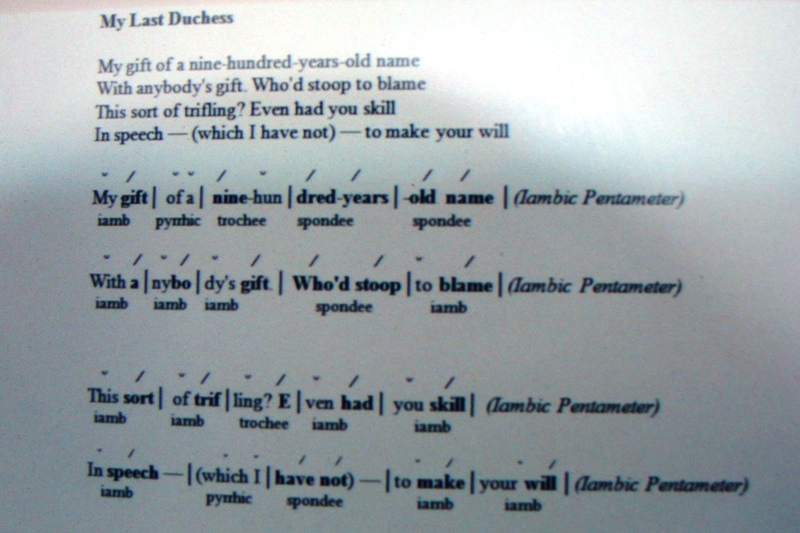
Since we have a thin-skinned assclown, a man-baby who rages in response to tweets, in the White House, I propose Robert Browning’s “My Last Duchess” for today’s National Poetry Month treat.

The chestnuts are blooming in the Place Cambronne.  At this time of year, I stop there on my way home from work (on my way to work, I study vocabulary, and don’t notice them), and rejoice in the knowledge that they will survive even the zombie apocalypse.  Of course, blooming chestnut trees means National Poetry Month; since we have a thin-skinned assclown–a man-baby who rages in response to tweets and threatens the press when he doesn’t like their reporting–a bigot who accuses judges of not being impartial on the basis of their parents’ national origin–an immoral villain who equates white supremacists and neo-Nazis with the people who stand up to them–with his fingers on the most powerful nuclear arsenal in the world, I propose a timely bit of Robert Browning.  Follow this link if you’d like to hear a pretty good recording thereof.  The poem is pretty disturbing in and of itself, and all the more so with Trump in the presidency.  I gave commands;  then all smiles stopped together. There she stands  as if alive….Notice Neptune, though…thought a rarity, which Claus of Innsbruck cast in bronze for me!  (Rough translation: I had her killed.  Hey, look at this great thing that I have!)

The poem was published in 1842, and some of the language bears explication.  I’ll give you the modern and/or non-poetic equivalents of some of the verbs:

  • will’t: “will it”  Will’t please you sit and look at her?
  • durst: “dared”  And seemed as they would ask me, if they durst, //
    How such a glance came there;
  • ’twas: “it was”  Sir, ’twas not // Her husband’s presence only, called that spot // Of joy into the Duchess’ cheek;
  • whate’er: “whatever”  she liked whate’er // She looked on, and her looks went everywhere.
  •  whene’ever: “whenever”  Oh, sir, she smiled, no doubt, // Whene’er I passed her;

…and the English notes explain some of the words that I used in writing this post.

My Last Duchess

Robert Browning

That’s my last Duchess painted on the wall,
Looking as if she were alive. I call
That piece a wonder, now; Fra Pandolf’s hands
Worked busily a day, and there she stands.
Will’t please you sit and look at her? I said
“Fra Pandolf” by design, for never read
Strangers like you that pictured countenance,
The depth and passion of its earnest glance,
But to myself they turned (since none puts by
The curtain I have drawn for you, but I)
And seemed as they would ask me, if they durst,
How such a glance came there; so, not the first
Are you to turn and ask thus. Sir, ’twas not
Her husband’s presence only, called that spot
Of joy into the Duchess’ cheek; perhaps
Fra Pandolf chanced to say, “Her mantle laps
Over my lady’s wrist too much,” or “Paint
Must never hope to reproduce the faint
Half-flush that dies along her throat.” Such stuff
Was courtesy, she thought, and cause enough
For calling up that spot of joy. She had
A heart—how shall I say?— too soon made glad,
Too easily impressed; she liked whate’er
She looked on, and her looks went everywhere.
Sir, ’twas all one! My favour at her breast,
The dropping of the daylight in the West,
The bough of cherries some officious fool
Broke in the orchard for her, the white mule
She rode with round the terrace—all and each
Would draw from her alike the approving speech,
Or blush, at least. She thanked men—good! but thanked
Somehow—I know not how—as if she ranked
My gift of a nine-hundred-years-old name
With anybody’s gift. Who’d stoop to blame
This sort of trifling? Even had you skill
In speech—which I have not—to make your will
Quite clear to such an one, and say, “Just this
Or that in you disgusts me; here you miss,
Or there exceed the mark”—and if she let
Herself be lessoned so, nor plainly set
Her wits to yours, forsooth, and made excuse—
E’en then would be some stooping; and I choose
Never to stoop. Oh, sir, she smiled, no doubt,
Whene’er I passed her; but who passed without
Much the same smile? This grew; I gave commands;
Then all smiles stopped together. There she stands
As if alive. Will’t please you rise? We’ll meet
The company below, then. I repeat,
The Count your master’s known munificence
Is ample warrant that no just pretense
Of mine for dowry will be disallowed;
Though his fair daughter’s self, as I avowed
At starting, is my object. Nay, we’ll go
Together down, sir. Notice Neptune, though,
Taming a sea-horse, thought a rarity,
Which Claus of Innsbruck cast in bronze for me!

Want a French translation of this poem?  See the Wikipédia page here.


English notes

assclown: “someone who, wrongly, thinks his actions are clever, funny, or worthwhile.”  ““someone who seeks an audience’s enjoyment while being slow to understand how it views him.”  A specific kind of asshole, defined as “A person counts as an asshole, when and only when, he systematically allows himself to enjoy special advantages in interpersonal relations out of an entrenched sense of entitlement that immunizes him against the complaints of other people.”  Sources: John Kelly on the Strong Language blog, and Aaron James, in his book Assholes: a theory of Donald Trump.

Fra: “used as a title equivalent to brother preceding the name of an Italian monk or friar” (Merriam-Webster).  My best guess is that it’s used here to suggest that the Duke things that the painter was overly familiar (brother) with his wife, and/or that his wife was overly familiar with the painter.

familiar: a word with at least two parts of speech (adjective, of course, but also noun).  In the poem, it’s used with the meaning of informal, friendly; it can also mean something well-known (the familiar works of Shakespeare).

Naming of parts: the illustrated version

Japonica
Glistens like coral in all of the neighboring gardens,
And to-day we have naming of parts.

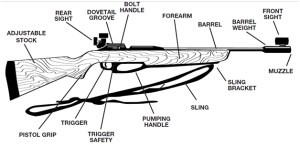
basic_rifle_parts
Picture source: https://goo.gl/b9U0dY

It’s National Poetry Month, and that means Henry Reed’s achingly beautiful and super-funny Naming of parts.  Getting the humor might require having spent some time in the military, which I did; getting the vocabulary certainly does, as it’s full of technical terms for rifle-parts.  I originally found the version that I give here, with its nice links to some of the difficult vocabularyon the Sole Arabia Tree web site.  For this year, I’ve added some additional vocabulary notes here.  Go to the Sole Arabia Tree page for a recording of Henry Reed reading the poem.

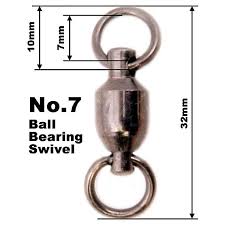
swivel
Picture source: https://goo.gl/YpZJPA

swivel: “a device joining two parts so that one or both can pivot freely”(Merriam-Webster) . The poem mentions several kinds of swivels on the British-Army-issue rifle of World War II: the upper sling swivel, the lower sling swivel, and the piling swivel.

sling: “a device (as a rope or chain) by which something is lifted or carried” (Merriam-Webster).  See the picture of a rifle above.

easily: the adverbial form of easy.  It never appears in the poem–I add it here for the benefit of the non-native speakers whose English is good enough to be puzzled by these lines in the poem:

You can do it quite easy

If you have any strength in your thumb.

Yes, that sounds weird, and you should say You can do it quite easily if you have any strength in your thumb.  Does Reed use it here to imply something about the level of education of the drill instructor?  Is it a dialectal variant in the United Kingdom?  Was it current at the time that he wrote the poem, published in 1942?  I have no clue.  I do, however, find quite striking the parallel that Lieutenant Colonel Edward Ledford (US Army) draws between the drill instructor’s deadpan “which in your case you have not got,” sometimes interpreted as prefiguring how slaughtered these kids were going to be later, part because of shortages of equipment, and notorious my-kids-won’t-go-to-war-but-let’s-send-yours Donald Rumsfeld’s dismissal of the concerns of actual American soldiers at the beginning of Bush’s Iraq War:

The scene is in Kuwait. The setting is a less and less endearing and more and more trite town-hall meeting. Soldiers are gathered around. They will move north into Iraq the next day. The soldiers, we soon discover, apparently aren’t feeling real dulce-et-decorum-est-pro-patri-mori.

Playing the role of leader, Donald Rumsfeld places himself among them. He opens the floor to questions and comments. Specialist Thomas Wilson raises his hand. He is called upon.

Wilson: A lot of us are getting ready to move north relatively soon. Our vehicles are not armored. We’re digging pieces of rusted scrap metal and compromised ballistic glass that’s already been shot up.. picking the best out of this scrap to put on our vehicles to take into combat.

Rumsfeld [in a scientific, theoretical, detached tone]: As you know, you go to war with the Army you have. They’re not the Army you might want or wish to have at a later time. [brightening, as if realizing something] If you think about it, you can have all the armor in the world on a tank and a tank can be blown up.

A female Soldier asks a next question, but the audience cannot hear it

Rumsfeld: It is something you prefer not to have to use, obviously, in a perfect world. It’s been used as little as possible.

Lieutenant Colonel Ledford continues his critique of Rumsfeld’s dismissive (and later seen to be deadly, both for us and for Iraqi civilians) words by rewriting them in the style of Naming of parts:

As you know, you go
to war

with the Army you have.

They’re not the Army
you might want

or wish to have
at a later time.

If you think
about it,
you can have
all the armor
in the world
on a tank
and a tank
can be blown
up.

It is something
you prefer not to have to use,
obviously,
in
a perfect world.

It’s been used

as little as possible.

For the rest of Lieutenant Colonel Ledford’s thoughts on the poem, see this web page.


LESSONS OF THE WAR

To Alan Michell

Vixi duellis nuper idoneus
Et militavi non sine gloria

I. NAMING OF PARTS

To-day we have naming of parts. Yesterday,
We had daily cleaning. And to-morrow morning,
We shall have what to do after firing. But to-day,
To-day we have naming of parts. Japonica
Glistens like coral in all of the neighboring gardens,
And to-day we have naming of parts.

This is the lower sling swivel. And this
Is the upper sling swivel, whose use you will see,
When you are given your slings. And this is the piling swivel,
Which in your case you have not got. The branches
Hold in the gardens their silent, eloquent gestures,
Which in our case we have not got.

This is the safety-catch, which is always released
With an easy flick of the thumb. And please do not let me
See anyone using his finger. You can do it quite easy
If you have any strength in your thumb. The blossoms
Are fragile and motionless, never letting anyone see
Any of them using their finger.

And this you can see is the bolt. The purpose of this
Is to open the breech, as you see. We can slide it
Rapidly backwards and forwards: we call this
Easing the spring. And rapidly backwards and forwards
The early bees are assaulting and fumbling the flowers:
They call it easing the Spring.

They call it easing the Spring: it is perfectly easy
If you have any strength in your thumb: like the bolt,
And the breech, and the cocking-piece, and the point of balance,
Which in our case we have not got; and the almond-blossom
Silent in all of the gardens and the bees going backwards and forwards,
For to-day we have naming of parts.

Death’s second self

Trigger warning: vulgar reference to reproductive anatomy.  Oh, and here’s an analysis of vocabulary in Shakespeare’s Sonnet 73, “That time of year thou mayst in me behold.”

Trigger warning: vulgar reference to reproductive anatomy.  Oh, and National Poetry Month continues with Shakespeare’s Sonnet 73, That time of year thou mayst in me behold.

Thanksgiving Day is a purely American holiday.  OK: it’s a harvest holiday, and practically everybody has a harvest holiday.  But, it’s ours, and we love it.  An American who is not with family and friends on Thanksgiving Day is a lonely American; les Amerloques will travel amazing distances and spend enormous amounts of money just to spend the last Thursday in November with their families, and then head back to wherever they normally are 48 hours later.

I studied literature and linguistics at a college in a little town in rural Virginia.  Nobody was from there, so essentially the entire student body left to go home for the holiday.  Thanksgiving Day is the last Thursday in November (I know I already mentioned that, but it seems weird enough to be worth repeating), and you have to leave a couple days before that to get home–but, when, exactly, can you leave?  The college’s rule was this: classes ended at noon on Tuesday, and then you could do as you wished.

Classes ended at noon, and I had a class at 11.  I was going nowhere, and I was a more-than-obsessive student, so you can bet your ass that I was there at 11.  (You can bet your ass that explained in the English notes below.)  Me–and the professor.  And nobody else.


If I were that professor today, I would just take that student out for a cup of coffee and make them teach me about logarithms, I suppose.  But, I’m a fat old bald guy who will be retired in the blink of an eye (English notes, don’t worry), and my professor was a young guy in need of tenure.  He shrugged his shoulders–and taught me.

No, he didn’t lecture: I sat at a desk, he sat on the desk, and he taught me how to do a “close reading” of a poem.  There must be a technical definition of close reading–my understanding of it is: look up every fucking word.  Do that, and you are likely to be surprised at the connections that you see, the networks of words, the multiple champs lexicaux in the poem–maybe one was obvious to you, but there are probably more than that, and noticing them is part of the pleasure of the whole thing.  (Taking pleasure in analyzing a poem to death might be another one of those reasons that I get divorced so often.)


The latest and greatest thing in literary studies is “distant reading.”  It’s called that precisely to draw the clearest possible contrast with “close reading.”  The idea behind distant reading is that you don’t actually read anything–rather, you use a computer to analyze entire literatures.  As Franco Moretti, the godfather of this stuff, puts it: you can read one book, and then another, and then another, for the rest of your life–at the end, all that you will know is those books.  If you want to understand literature, then you have to look at giant collections of it.  People who do distant reading do what I do with biomedical texts, except they write their papers about things like this:

“The Emotions of London”, written by Ryan Heuser, Franco Moretti, and Erik Steiner, inaugurates a new field of work for the Literary Lab — that of literary and cultural geography. Working on a corpus of 5,000 novels, and covering the two centuries from 1700 to 1900, this pamphlet charts the uneven development of social spaces and fictional structures, bringing to light the long-term connection between emotion and class in narrative representations of London.  Stanford Literary Lab

…rather than stuff like this, as I do:

Prior knowledge of the distributional characteristics of linguistic phenomena can be useful for a variety of language processing tasks. This paper describes the distribution of negation in two types of biomedical texts: scientific journal articles and progress notes. Two types of negation are examined: explicit negation at the syntactic level and affixal negation at the sub-word level. The data show that the distribution of negation is significantly different in the two document types, with explicit negation more frequent in the clinical documents than in the scientific publications and affixal negation more frequent in the journal articles at the type level and token levels.

I’ll leave it to you to decide which is the more interesting.  Or, don’t choose–immerse yourself in both.  Whatever–it’s all fun.

Today, we’ll go closer to the close reading end of the continuum with Shakespeare’s Sonnet 73–an appropriate one for a fat old bald guy such as myself, as it speaks of love at the end of life.  (Obviously, it would be even more appropriate if I could ever get a second date–alas.)  The target in our sights: the words Death’s second self, which have always puzzled me.  (For context: I took three semesters of Shakespeare in college, and I mostly wrote my papers about linguistic aspects of the Bard, so things in his work don’t usually perplex me for decades, like Death’ second self has.)  That second self is pretty goddamn opaque to a native speaker of English–today.  It is an old term that has a meaning of its own:

second self: one who associates so closely with a person as to assume that person’s mode of behavior, personality, beliefs, etc.  (Dictionary.com)

Now, you have to realize: linguists approach dictionaries with more than a little bit of suspicion.  Make it an on-line dictionary of unclear provenance, and my antennae really go up: is this a justifiable definition, or did whoever wrote it base it entirely on their interpretation of its appearance in Shakespeare’s sonnet?

I can’t know what was in the definition writer’s head–hell, I can’t even tell you what’s in any of my many ex-wives’ heads (see previous mentions on this blog of how often I get divorced).  Honestly, most of the time I’m not even sure what’s in my head.  But, I can look at some data–that’s what linguists do, right?  (That’s a bit of sarcasm, but I’m wandering way too far off the track of National Poetry Month already.)   Off I go to the Sketch Engine web site, purveyor of fine linguistic corpora and the tools for searching them, where I find the English Historical Books Collectioncontaining 826,000,000 words of text from English books published between 1473 and 1820.  A search for second self shows me that the phrase occurs at a rate of 0.04 times per million words, and gives me examples like this:

  • …one correspondent to him, suitable both to his nature and necessity, one altogether like to him in shape and constitution, disposition and affection, a second self …
  • THERE is the Relation of Trustees to those that trust them: for he who trusteth another doth thereby create a very near and intimate Relation to him; so far forth as he trusteth him, he putteth his case into his hands, and depositeth his Interest in his Disposal, and thereby createth him his Proxy, or his second self.
  • God is the most Pure, Simple, Uncompounded Being; and if God, who has no parts, and cannot be divided into any, begets a Son, he must Communicate his Whole, Undivided Nature to him: For to beget a Son, is to Communicate his own Nature to him; and if he have no parts, he cannot Communicate a part, but must Communicate the Whole; that is, he must Communicate his whole self, and be a second self in his Son.

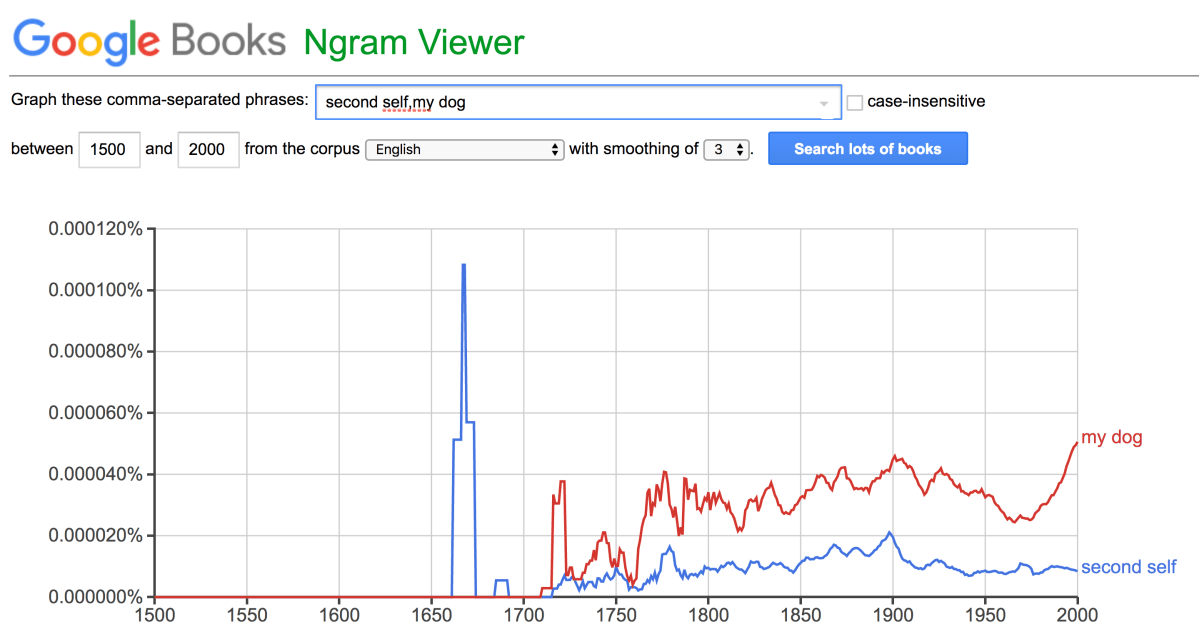
So: I don’t know how the lexicographer came up with their definition, but it looks pretty consistent with the data that I found.  How common was it, actually?  I did a search for it in Google Books between the years 1500 and 2000.  You’ll see a graph of the output at the end of this post.  Why did I also search for my dog?  Because numbers in isolation mean nothing–in order to know whether a number is large or small, you have to compare it to something else.  (The best movie line ever: 5 inches is a lot of snow, and it’s a TREMENDOUS amount of rain, but it’s not very much dick.)  So, I picked a phrase that isn’t necessarily very frequent (relatively speaking), but isn’t exactly weird, either.

…And with that fabulous line from the incredible film L.I.E.I’ll leave you with Shakespeare’s Sonnet 73.  Scroll down past the graph that follows it for the English notes, and I hope that your second self (should you have one) is every bit as nice as you are.

Sonnet 73

William Shakespeare

That time of year thou mayst in me behold
When yellow leaves, or none, or few, do hang
Upon those boughs which shake against the cold,
Bare ruined choirs, where late the sweet birds sang.
In me thou see’st the twilight of such day
As after sunset fadeth in the west;
Which by and by black night doth take away,
Death’s second self, that seals up all in rest.
In me thou see’st the glowing of such fire,
That on the ashes of his youth doth lie,
As the deathbed whereon it must expire,
Consumed with that which it was nourished by.
This thou perceiv’st, which makes thy love more strong,
To love that well which thou must leave ere long.


https://books.google.com/ngrams/interactive_chart?content=second+self%2Cmy+dog&year_start=1500&year_end=2000&corpus=15&smoothing=3&share=&direct_url=t1%3B%2Csecond%20self%3B%2Cc0%3B.t1%3B%2Cmy%20dog%3B%2Cc0
That spike centered around 1670 or so?  Could be real, but you would want to verify it–things like that in any kind of graph tend to reflect either some event that it should be very easy to track down, or a problem with the data itself.


English notes

you can bet your ass that…You can believe that it is absolutely true that…”  This is quite vulgar–don’t say it in front of my grandmother.  Some examples:

  • If someone is trying to kill me and/or my loved ones, you can bet your ass that I’ll take him out first.
  • #1 Rule … If it sounds like a good deal and is widely advertised, you can bet your ass that you are not the first person to call, and if its such a marvelous deal how come its still for sale?
  • Oh and you can bet your ass that neither one of them will be in a good mood at 6:00 when I wake them.
  • Sadly, Ted, if you examine his statements, then see that he specializes in benefits & employment law, you can bet your ass that his clients are vicious capitalist pigs, who love his union- & employee-busting ways.

(Examples from the enTenTen13 corpus–19.7 billion words of written English, searched via the Sketch Engine web site.)   How I used it in the post:  I was going nowhere, and I was a more-than-obsessive student, so you can bet your ass that I was there at 11. 

you bet your ass: this is basically a very emphatic (and vulgar–don’t say it in front of my grandmother) way of saying “yes.”

  • Am I using a bunch of recycled selfies? You bet your ass I am (Twitter)
  • Not even gonna lie, I ordered chinese food yesterday night and while I was eating I found a pinkie nail sized piece of plastic in it. Was I grossed out? Yeah. Did I keep eating? YOU BET YOUR ASS (Twitter)
  • Me, depressed? You bet your ass (Twitter)
  • Just got offered a trip to Florida so I can lay by the pool&drink at our family friend’s new house and be bait to get his son and college buddies there to help move furniture… You bet your ass I said yes (Twitter)

in the blink of an eye: very fast, very quickly, immediately.

  • One wrong turn in an Ikea and you can go from bathrooms to bedroom furniture in the blink of an eye, losing the other members of your party just as quickly.
  • Now, with the advent of social media, you can turn to a quarter million people and get their opinion in the blink of an eye–as long as you have sophisticated tools like NetBase’s to automatically analyze all that chatter so quickly.
  • But if they didn’t go along with her every whim, or worse, wanted to stop the relationship, she would go from singing their praises to trash-talking everything about them in the blink of an eye.

How I used it in the post: But, I’m a fat old bald guy who will be retired in the blink of an eye, and my professor was a young guy in need of tenure.  

We Real Cool, with controversy

We jazz June. We die soon.

National Poetry Month continues.  Today: Gwendolyn Brooks’s We real cool, probably known to anyone of my generation who went to high school (lycée) in the United States.

What has always impressed me about this poem: it has you thinking in seconds flat.  (This expression explained in the English notes below.)  You know what it’s about, you know that it’s telling a very short story, you know that it’s not a happy story–and yet: you couldn’t really say what most of this poem actually means.  (I say that as a native speaker of the language in which the poem is written–and one with a literature degree, too.)  The lines

           We
Jazz June.

…have been particularly controversial, allegedly leading it to have been banned by some districts (I haven’t been able to verify that, sorry)–to jazz can be interpreted as to fuck.  

We Real Cool
The Pool Players / Seven at the Golden Shovel
by Gwendolyn Brooks
We real cool. We
Left School. We

Lurk late. We
Strike straight. We

Sing sin. We
Thin gin. We

Jazz June. We
Die soon.

Scroll down past the video of Gwendolyn Brooks reading We real cool for the English notes.


English notes

in seconds flat: very quickly, very fast.  Some examples, courtesy of Twitter:


How I used it in the post: What has always impressed me about this poem: it has you thinking in seconds flat.

Ukrainian Humanitarian Resistance

Resisting the russist occupation while keeping our humanity

Languages. Motivation. Education. Travelling

"Je suis féru(e) de langues" is about language learning, study tips and travelling. Join my community!

Curative Power of Medical Data

JCDL 2020 Workshop on Biomedical Natural Language Processing

Crimescribe

Criminal Curiosities

BioNLP

Biomedical natural language processing

Mostly Mammoths

but other things that fascinate me, too

Zygoma

Adventures in natural history collections

Our French Oasis

FAMILY LIFE IN A FRENCH COUNTRY VILLAGE

ACL 2017

PC Chairs Blog

Abby Mullen

A site about history and life

EFL Notes

Random commentary on teaching English as a foreign language

Natural Language Processing

Université Paris-Centrale, Spring 2017

Speak Out in Spanish!

living and loving language

- MIKE STEEDEN -

THE DRIVELLINGS OF TWATTERSLEY FROMAGE