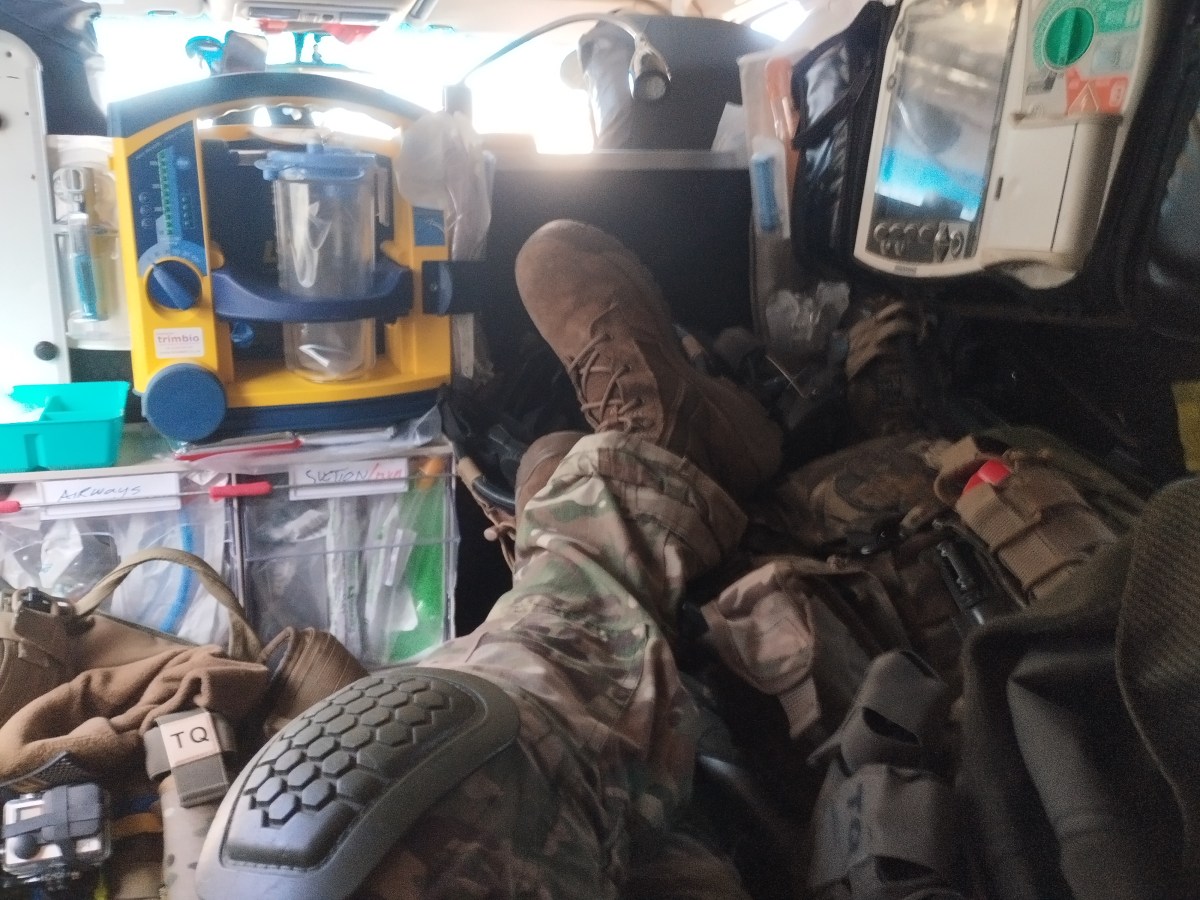
As a combat medic, I ask you not to buy this tourniquet

Tourniquets are life-saving. Some more so than others…

As I write this (not long after the ruzzian missile and drone attacks on Ukraine of Chrismas 2024 and New Year’s Day 2025), there are many brands and styles of tourniquets available on the market. I am a combat medic (військовий парамедик) in Ukraine, so donors often ask me which kind to buy. This letter to a friend and supporter in the United States is the answer. The executive summary: do buy the Dnipro Gen 2 or the CAT Gen 7. Don’t buy the SOF-T or the Sich. If you’re just looking to learn some new English vocabulary, you will find it in the English notes section at the end of the post. You will also find donation information there, if you would like to support our work.

Hello, my dear! You asked me what kind of tourniquets to buy for our boys and girls at the front. Thank you for asking. People like to buy tourniquets, and I get it– it is obvious, and I think obvious on a visceral level, that they are life-saving. 

There are two good options for tourniquets, and one that isn’t terrible. I will tell you the two good options:

  1. The CAT (Combat Application Tourniquet) Gen 7, by North American Rescue. These typically sell for $30-35 retail, or $22 with a humanitarian discount from the manufacturer.
  2. The Dnipro Gen 2, by a Ukrainian manufacturer. These go for $22 retail, or $14 in bulk. 

They are both excellent tourniquets. I carry the Dnipro Gen 2 for my own personal tourniquets. You might hear people complain about the first generation. The second generation is great–as I said, it’s what I carry for my own use. The retail prices are obviously hugely different, with the Dnipro Gen 2 being significantly less expensive. The Dnipro Gen 2 has an additional advantage: you don’t have to shlep them from the US.

The option that isn’t terrible is to buy the shittiest models that you can find. We call them “Chinese tourniquets,” which is probably unfair to China–I think the North American Rescue CATs are made in China, too. Amazon is currently selling a pack of eight of these things for $23. What you have to be aware of is that we only use them for training. For training, we really like them! The reason that we like them for training is that you can tell people that their quality is so poor that they should never, ever carry them until you’re blue in the face, but it mostly doesn’t get through. On the other hand, if they see a few of them break in a training course, they get it. So, on the medical logistics chat, you will see messages like this: “Anyone have Chinese tourniquets, the shittier the better? I need them for a training course.” So, it’s not a bad idea to bring a few of these. But, personally, I only bring them if I have a bit of space to fill in a duffle bag, and a bit of my weight allowance to spare. 

Let me tell you about a couple of other kinds of tourniquets on the market. I most definitely do *not* recommend spending any money on them. They are variants on the same design, called a SOF-T (I think it stands for “Special Operations Forces Tourniquet”). Rather than using a pair of “wings” to hold the windlass (rod) in place, SOF-Ts have a metal clip at one end that you flip over the end of the windless, locking it in place at the tip of the clip. They will most certainly stop bleeding, and with that clip and a strip of duct tape, that windlass is never going to be dislodged. But, there are three problems with them, and the third is a really big one. 

  1. They are really hard to put on with one hand. It is crucial to be able to put on a tourniquet with one hand–including with your non-dominant hand–if you have a serious wound in your own arm, and you have to put on your own tourniquet yourself. It’s possible to self-apply these, but it’s pretty tough to do so even when you’re not bleeding to death in the dark. In contrast, the CAT/Dnipro design does not have that problem.
  2. When put on over winter clothing, SOF-T-style tourniquets are more likely not to achieve adequate compression pressure than they are to achieve it, and they have a tendency to slip off of winter clothing. The CAT/Dnipro design is much less likely to do this. (Here’s a link to a paper on the topic of tourniquet use over winter clothing.)
  3. Most people are not trained to use them.

#3 is by far the biggest of these problems. There must be dozens of thousands of people in UA who have been trained to use the North American Rescue CAT/Dnipro Gen 2-style tourniquets. (One humanitarian group claims to have trained over 100,000 people themselves.) In the US, there is a popular course called Stop The Bleed, in which anyone and everyone can get trained to use the NAR/Dnipro-style tourniquet. (If you haven’t taken that course: it’s the minimum that ANYONE should have before coming to UA.) But, it would be rare for a training course to include using the SOF-T design–personally, I have never taken such a course, and I have never heard of anyone teaching one. To me, it seems like absolute foolishness to distribute a tourniquet that the statistical equivalent of no one knows how to use, when there are excellent tourniquets that many thousands of people have been trained to use.

The issue of the SOF-T style of tourniquet comes up here a lot because there is a competing Ukrainian-made product called the Sich tourniquet. It is of the SOF-T design, and it is aggressively marketed/advertised. As a medic, I ask you not to spend donated money on Sich tourniquets–see issues 1-3 above.

Finally, a few words on colors. Tourniquets are typically available in three colors: black, orange, and blue. They work identically, and are of identical quality–only the color differs. Black is meant for situations where you don’t want to be seen, so they are what we carry. In contrast, orange is meant for when you want to be seen. The orange tourniquets are intended for civilian use. In a civilian context, they’re great, because when you get a casualty to the hospital, it is easy to see that there’s a tourniquet in place, so even if the fact that the person has had a tourniquet placed gets lost in the communicative shuffle of turn-over to hospital personnel, the very visible color brings it to the staff’s attention. Finally, blue is for training. In this context, the purpose of the color is simply to remind you that it’s one of your training tourniquets, and no one should be carrying it. (Tourniquets are single-use items, so you need separate TQs for training and for actual use. I don’t have any blue ones, so I mark mine with a Sharpie as тренування (training)). 

​Regards, and thank you for all that you do to keep us alive and kicking during this war of ruzzian aggression, 

​Your friend Zipf


English notes

turnstile: this is a thing that is used to control access to an area. You will see them in subway stations, train stations, etc. You pay, a set of bars turns, and you can walk through the thing to get where you are going. I bring it up here because it is far and away the most common translation error that I see in Ukraine (Far and away explained in the English notes). To wit: the Ukrainian word турнікет, pronounced much like the English word tourniquet, is often translated as turnstile. So, you will often see requests like this in the medical logistics chat group: Need 10 turnstiles for a recon platoon. To an English speaker, this is uninterpretable.

There is a perfectly good reason for this common translation mistake: the Ukrainian word турнікет most properly means turnstile. There is a natively Ukrainian word for tourniquet: джгут (unpronounceable in English–it’s something like the English word jute, but with an h inserted after the j.) However, the word джгут is now used primarily to refer to the constricting band that a medic puts on your arm when drawing blood or starting an IV, while турнікет is used to refer to the tourniquets that we use to control massive hemorrhage. For the many readers of this blog who don’t speak French, I will point out that tourniquet means turnstile in French, too. Turnstile in Spanish is torniquete, in Czech it’s turniket–English is the oddball here.)

far and away: this means “by a large amount.” Merriam-Webster gives this definition for it: by a considerable margin. As far as I know, it functions as an adverb and appears with an adjectival phrase. Here are some examples of its use:

  • A return of ruzzian troops to their own homes would be far and away the easiest way to end the war in Ukraine.
  • putin’s assumption that Russian speakers identify as ruzzians and would welcome his invasion of Ukraine was far and away his greatest mistake. Instead, tens of thousands of them rushed to join the Armed Forces and protect Ukraine.
  • ruzzia’s utter disregard for the lives of its own troops has always been, and remains today, far and away its most powerful weapon. In contrast, Ukrainians’ intelligence is far and away its most powerful weapon.

to wit: this phrase introduces a specification of something more general. Merriam-Webster defines it as that is to say or namely. Here is an example of it in use, with an analysis of the generality and the specification:

  • A tug-of-war over Ukrainian identity (and history) has taken place in some fashion between Kyiv and Moscow since Ukraine’s independence in 1991 — and in earnest since Russia’s 2014 invasion. Nevertheless, this contest has intensified dramatically since the start of the Kremlin’s “special military operation.” To wit, Moscow has intentionally targeted Ukrainian schools, according to Ukrainian sources, in order to hit “soft targets” and disrupt education in Ukraine.(Paraphrased for clarity from an article by Ilan Berman.)
  • The general statement: the fight over Ukrainian identity has intensified since the start of the full-scale invasion in February 2022. The specification: To wit, Moscow has intentionally targeted Ukrainian schools.

My name is Kevin Bretonnel Cohen. I am a combat medic (військовий парамедик) in Ukraine. If you would like to support the Ukrainian Humanitarian Resistance non-governmental organization (501(c)3, EIN 99-4530777), PayPal to kevin.cohen@gmail.com works fine, as does Zelle to 303-916-2417. If you use PayPal, please be sure to choose the friends and family option, so that your donation does not get deducted from my Social Security check. However you choose to help, please be sure to add a message with your contact information, so that I can thank you!

All views expressed in this post are my own.
Spoken English future tense, plus IFAK vocabulary

The English future tense is easy to produce, but difficult to understand. Practice it here with the vocabulary of Individual First Aid Kits!

The future tense in English can be produced in two ways:

  1. With will. For example: I will bring you a tourniquet.
  2. With going to. For example: I am going to bring you a tourniquet.

Simple, right? Not in the spoken language. When these are said, many contractions are used. These are common ways of saying the future tense:

  1. I’ll bring you a tourniquet.
  2. He’ll bring you a tourniquet.
  3. Kevin’ll bring you a tourniquet.
  4. I’m goin’ to bring you a tourniquet.
  5. Kevin’s goin’ to bring you a tourniquet.
  6. I’m gonna bring you a tourniquet.
  7. Kevin’s gonna bring you a tourniquet.

In our exercises, we will use vocabulary related to the contents of an IFAK (аптечка):

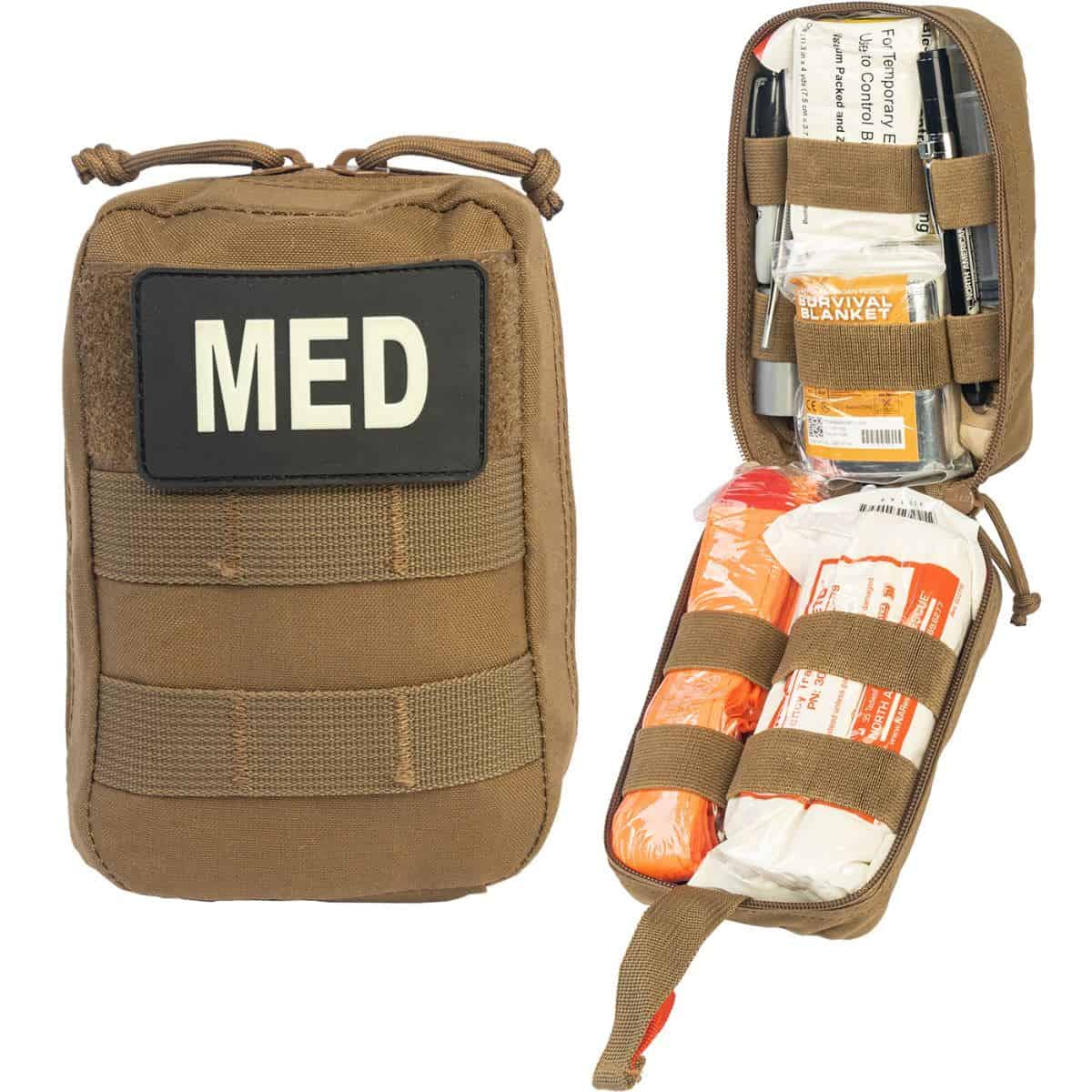
  • підсумок: Pouch
  • турнікет: Tourniquet. Also called TQ. The tourniquets that we use in combat are called CATs or CAT tourniquetsCAT stands for Combat Application Tourniquet.
  • Гемостатична марля: Hemostatic gauze. Also called Combat Gauze or Quik Clot. (Quik is normally spelled quick.)
  • Повітропровід назофарингеальний: Nasopharyngeal airway. Also called NPA.
  • Пов’язка оклюзійна вентильована: Chest seal
  • Голка декомпресійна: Chest decompression needle or decompression needle
  • Ізраїльський бинт: Israeli bandage, or Israeli, or pressure bandage
  • Марля: Compressed gauze, or Z-folded gauze, or Z-fold gauze. Also sterile gauze, or just gauze.
  • Термоковдра: Space blanket or Mylar blanket or rescue blanket
  • Шапочка для душу: Shower cap
  • Скоч: Duct tape (sounds like “duck tape”)
  • Ножиці для розрізання одягу: Scissors or shears or trauma shears

Our work in Ukraine is possible only because of the generous support of people like you. If you would like to support my work here, PayPal to kevin.cohen@gmail.com works great. So does Zelle to 303-916-2417. If you use PayPal, please pick the “friends and family” option, so that it doesn’t get deducted from my Social Security check. 🙂 And if I don’t know you personally–please, please, please add a message with your contact information, so that I can thank you!

IFAK vocabulary, and how to ask for things in English

Objectives:

  1. Know vocabulary for the contents of an IFAK (аптечка)
  2. Understand phrases for asking someone to bring you something
  3. Be able to ask someone to bring you something

There are many ways to ask someone to bring you something. You should understand a few of them, and you should be able to use at least one of them.

Here are a few structures for asking someone to bring you something. In the examples, we will ask someone to bring us a tourniquet.

  1. Bring me a tourniquet.
  2. Get me a tourniquet.
  3. Give me a tourniquet.
  4. Hand me a tourniquet.
  5. Gimme a tourniquet. Gimme is a spoken form of “give me.”

We can also use the words would you and could you to make a request. These requests look like questions. For example:

  1. Would you bring me a tourniquet?
  2. Could you get me a tourniquet?
  3. Give me a tourniquet, would you?
  4. Would you hand me a tourniquet?
  5. Could you give me a tourniquet?

We could even use expressions like where is… pronounced where’s…

  1. Where’s a tourniquet?

Now let’s look at the vocabulary of things in an IFAK (Individual First Aid Kit).

підсумок: Pouch

турнікет: Tourniquet. Also called TQ. The tourniquets that we use in combat are called CATs or CAT tourniquets. CAT stands for Combat Application Tourniquet.

Гемостатична марля: Hemostatic gauze. Also called Combat Gauze or Quik Clot. (Quik is normally spelled quick.)

Повітропровід назофарингеальний: Nasopharyngeal airway. Also called NPA.

Пов’язка оклюзійна вентильована: Chest seal

Голка декомпресійна: Chest decompression needle or decompression needle

Ізраїльський бинт: Israeli bandage, or Israeli, or pressure bandage

Марля: Compressed gauze, or Z-folded gauze, or Z-fold gauze. Also sterile gauze, or just gauze.

Термоковдра: Space blanket or Mylar blanket or rescue blanket

Шапочка для душу: Shower cap

Скоч: Duct tape (sounds like “duck tape”)

Ножиці для розрізання одягу: Scissors or shears or trauma shears

Our work in Ukraine is possible only because of the generous support of people like you. If you would like to support my work here, PayPal to kevin.cohen@gmail.com works great. So does Zelle to 303-916-2417. If you use PayPal, please pick the “friends and family” option, so that it doesn’t get deducted from my Social Security check. 🙂 And if I don’t know you personally–please, please, please add a message with your contact information, so that I can thank you!

Ukraine Notebook: Driver’s daily checklist

Roads near the areas of combat in Ukraine have typically been heavily damaged by shelling, tracked vehicles, and the like, and are hell on the vans that extraction teams rely on. If you do not take care of yours, it will not be able to take care of you–or of the civilians for whose lives you are responsible…

Many foreign volunteers in Ukraine spend their time doing “hot extractions:” evacuation of civilians from the front line. That means driving into an area under fire, quickly loading little old grandmas into your vehicle, and getting out of there–fast. The typical crew will include a driver, a navigator, and a medic, and each of them has a crucial role to play in getting everyone to safety. The following list will help you make sure that your vehicle contains everything that you need. Following the list, you will find the rationale for each item, as well as explanations of obscure words (replacing our usual English notes). The driver should go through this list daily, and the team leader should verify that you did so. Have something to add? Tell us about it in the Comments section.

Daily vehicle checklist

  • Oil and fluids checked
  • Tires checked
  • Battery expiration date checked
  • Lights and turn signals checked
  • Spare tire air pressure checked
  • Jack in place
  • Medical bag in place
  • Tool kit in place
  • Crew snacks and water
  • Water for civilians
  • Radio present
  • Litter present (it’s not what you think–see below, or this video)
  • Phone cables present
  • Powerbank present
  • Fire extinguisher present
  • Jumper cables present
  • Blankets present

Problems noted: Here you should document anything that you need to take care of before departing on a mission.

Roads near the areas of combat in Ukraine have typically been heavily damaged by shelling, tracked vehicles (tanks, armored personnel carriers, etc.), and the like, and are hell on the vans that extraction teams rely on. If you do not take care of yours, it will not be able to take care of you–or of the civilians for whose lives you are responsible… Hence this checklist. Here are explanations of some of the words that appear on the list.

Spare tire: This is the extra tire that you will use if your tire is damaged. “Spare” means an extra thing that you have in case you need it. “Spare tire” is also a slang word for the fat hanging off of the waist of a man. (On a woman, it’s a “muffin top.”)

Jack: This is the mechanical device that you use to raise a vehicle in order to change a flat tire. This video will help you learn this obscure English word.

Medical bag: This is an easily identifiable bag containing more than you carry in your individual first aid kit (IFAK). In my group, the medical bags include everything that goes in our IFAKs, plus a splint, eye covers, a windlass for improvising junctional tourniquets, a radiation monitor, trauma scissors, and extra gauze. Lots of extra gauze.

Litter: This is a device for carrying an injured person, or more often, an old person who cannot walk. Speed is of the essence if you want to avoid Russian artillery figuring out exactly where you are, so anyone with limited mobility needs to be moved by you, not hobble along at their own speed. This video will help you learn this obscure meaning of the word litter.

Want to support our work in Ukraine? You can send donations directly to me via PayPal using my email address, if you know me. Otherwise, I recommend these three groups. One of them is mine, and the others I have worked with very closely. Please mention that you came to them via me/the Zipf’s Law blog.
Base UA/База ЮА is a Ukrainian organization that does hot extractions, sets up mobile medical clinics, and runs tactical medicine courses and an art camp for refugee children in the beautiful Carpathian mountains. With our comrades from the US and Germany, we have evacuated thousands of civilians from Luhansk and Donetsk in the Donbas region.
Community Self Help is a Ukrainian organization that has worked with refugees from the Donbas region since the start of the Russian invasion in 2014 providing mental health care. Since the current phase of the war started in February 2022, they have also provided medical supplies, documented war crimes, and fought back against Russian propaganda and disinformation.
Global Augmentation is an American and Irish organization that sends volunteers to Ukraine (and has a group about to leave for Turkey for search and rescue operations). Global Augmentation folks are drivers, navigators, medics, trainers, and all-around fearless guys and gals. (And yes, that’s my picture on the web site.)

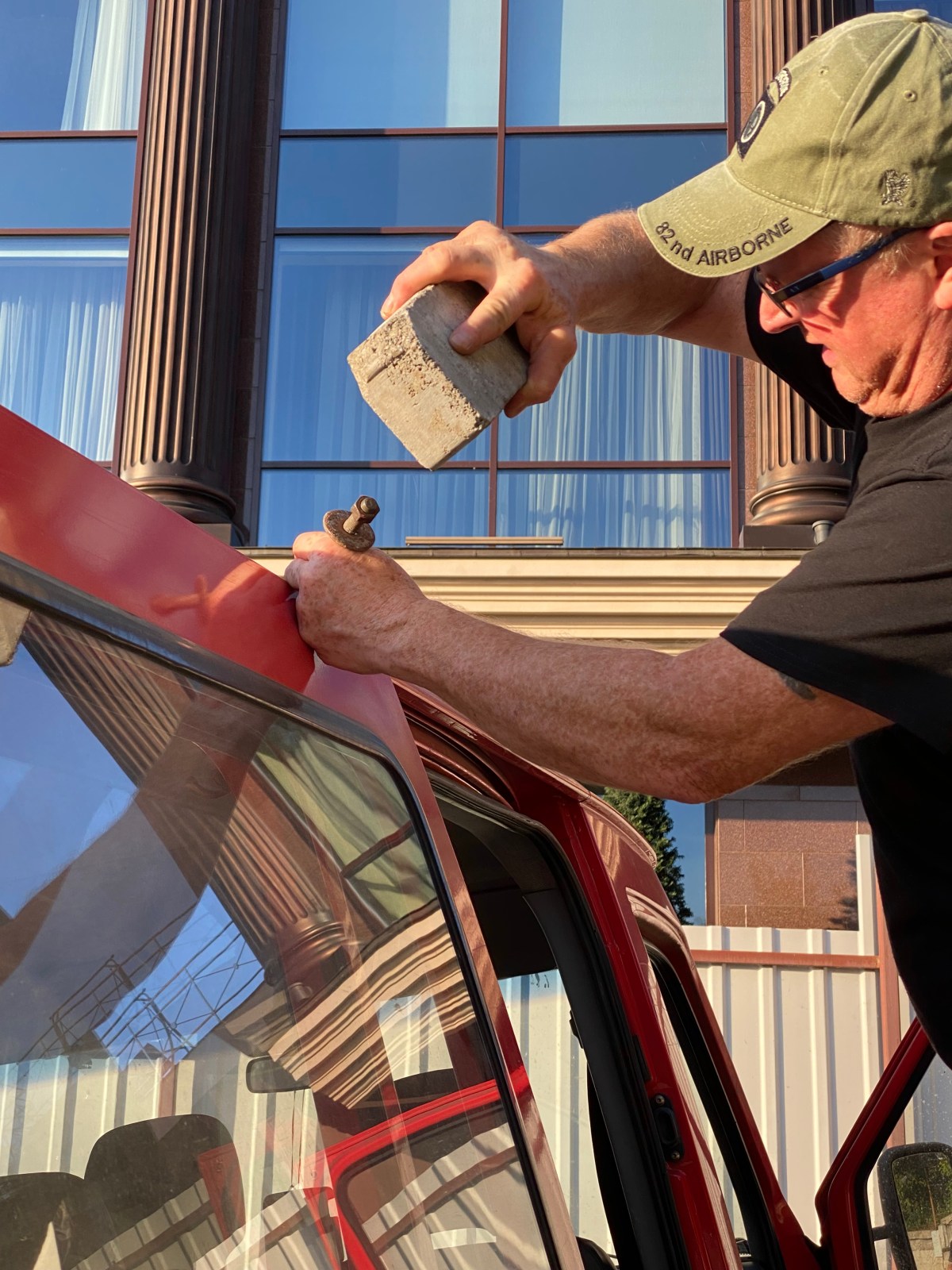
Photo: Paul Wall, an American veteran paratrooper, a thinker, and a man of courage, fixes a vehicle in Kyiv before leaving for a month in Bakhmut

Ukraine Notebook: Abandon ship protocol

On January 6th, 2023, two British volunteers, Andrew Bagshaw and Christopher Parry, went missing near Soledar in the Donetsk region of Ukraine. As I write this, in late January 2023, there have been no verified sightings of them, and they are presumed dead or captured. Their vehicle was found soon after their disappearance–locked. Presumably they had to abandon it and head out on foot. You should prepare and practice for this situation. The protocol that I am suggesting for you here is based on the US Navy’s procedure for abandoning a sinking ship. Air crew members: if you can add something, please tell us about it in the comments.

  1. Count to ensure that everyone is present or accounted for.
  2. Check that all survival equipment is on someone’s back or in their pockets: BOB, medical bag, communication tools, escape route maps, water and food.
  3. Destroy all sensitive information.
  4. Consider destroying or disabling the vehicle.
  5. Notify someone.

Everyone present or accounted for: “everyone” means all team members and any passengers. Passengers are most often civilians who are being evacuated from the front (with attendant communication problems related to lack of a shared language), but may also be journalists (who can present their own set of challenges). If you must leave behind bodies, note their location. Take their passport, wallet, telephone, and any other personal effects or useful items (for example, individual first aid kit (IFAK), helmet, body armor, water). Consider leaving identification of some kind with them, or writing identifying information (including nationality so that the appropriate embassy can be contacted) on their clothes or body. Also consider taking a lock of their hair, some bloody clothing, or a cheek swab for later DNA matching. (Back in the day, American medics took fingerprints of bodies that would be buried overseas. See below for a link to an article on digital collection of fingerprints–no pun intended…)

Bug-out bag (“BOB”): this is an easily carryable container, typically a small- or medium-sized backpack, containing everything that you would want to have with you if you had to abandon your home (or office, or vehicle) in an emergency. You can find plenty of advice elsewhere on what a BOB should contain. Customize it for your operating environment, and update it as that changes, as the weather changes, as your crew size changes, etc.

Medical bag: this contains more things than one would have in an individual first aid kit (IFAK, or аптечка). Ours have the usual things, plus a splint, extra bandaging materials, and a radiation monitor.

Destroy all sensitive information: Destroy information on evacuees you have picked up or were on the way to pick up. Delete from your phone/destroy paper maps that show your safehouse, checkpoints, military units, humanitarian centers, routes… You should have left for your day’s mission with a separate map that shows the area that you would have to walk through to reach safety, and nothing else.

Destroying or disabling the vehicle: Even a vehicle that no longer runs is a valuable source of spare parts for the enemy in a war where logistics has been a/the major struggle for both sides. It also might contain sensitive information that you missed when you left it. I don’t know shit (to “not know shit” means to not know anything at all) about destroying vehicles–if you do, dear reader, please tell us about it in the Comments section. (In the Navy, you place explosive charges in relevant places so that the ship is guaranteed to go down.)

Notify someone: Tell them who is with you, where you are, and where you are heading.


The British reporter Tom Mutch knew one of the two missing British volunteers. He describes them as brave guys doing life-saving work–and as under-equipped and ill-prepared for working in a combat zone. You do not have to be ill-prepared. Practice this protocol before you need it. Andrew Bagshaw and Christopher Parry: I hope we see you again some day.

Want to support my work as a medic in Ukraine? If you know me, you can send money to me via PayPal using my email address. $2.99 will buy a pack of gauze, $20 will buy a pair of tactical glasses, $30 will buy a tourniquet, $125 will buy an individual first aid kit, $400 will buy a medical bag, $800 will buy a set of body armor. If you don’t know me, you can donate through any of these organizations. I work with all of them, and they’re all quite good.
baseua.org
globalaugmentation.org/
communityselfhelp.org/


Bryan T. Johnson & John A. J. M. Riemen (2019) Digital capture of fingerprints
in a disaster victim identification setting: a review and case study
, Forensic Sciences Research, 4:4,
293-302, DOI: 10.1080/20961790.2018.1521327

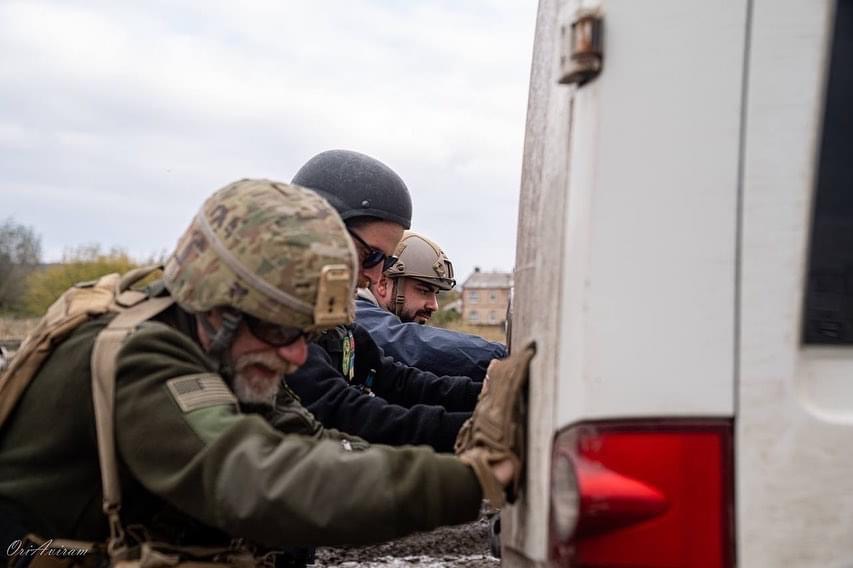
Picture at top of page: van stuck in the mud in the middle of an artillery duel, east side of Bakhmut. Photo by Ori Aviram.

Ukraine Notebook: What medications to bring when you volunteer

Bring these medications to Ukraine when you come to volunteer and your contribution will be even bigger.

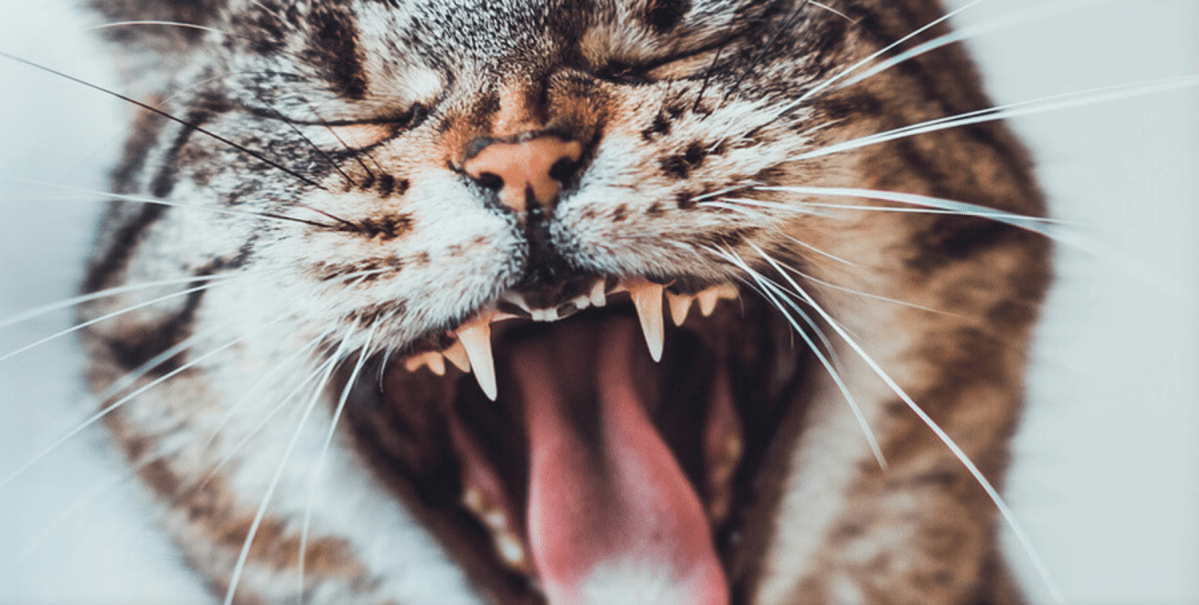
  1. Moxifloxacin is what an American combat medic will give you if you have a penetrating wound. I have no idea how to find it in Ukraine, but your doctor can give you a prescription for it. I was very, very happy to have some with me here when a frightened cat sunk a fang very, very deep into my arm. (I was also very, very happy to have clear ballistic glasses with me when I was trying to get her out from under a bathtub while she was trying to scratch me to death, but that’s a topic for a post about ballistic glasses, right? Fang explained in the English notes at the end of the post.)
  2. Do not bring aspirin or ibuprofen. US Department of Defense guidelines say not to take them for a week before entering a war zone. And, yes: since Putin deliberately targets civilian targets of no military value, all of Ukraine is a war zone.
  3. Meloxicam is what an American combat medic will give you for any battlefield injury. See above regarding the situation in Ukraine.
  4. Acetaminophen (sold in the US as Tylenol or in generic form) is the third thing that an American medic will give you if you are injured.
  5. The antidiarrheal medication of your choice. You shouldn’t travel ANYWHERE without this anyway.
  6. All medications that you normally take. Bring more than you think you will need. All problems in Ukraine are supply chain problems, so do not assume that you will be able to buy ANYTHING wherever it is that you happen to find yourself. Yes, I do understand that it is difficult to get more than your allotted quantity of prescription medications in the US, since your insurance company rations your health care.

Want to help the situation in Ukraine? Base UA/База ЮА is an excellent organization doing evacuation of civilians from the front lines (and a bunch of other stuff). I vouch for them completely. Send PayPal contributions to donate@baseua.org, and please mention that you found us through the Zipf’s Law blog.

Photo source: https://www.purina.co.uk/articles/cats/health/dental/looking-after-cat-teeth

English notes

fang: “A fang is a long, pointed tooth.” (Wikipedia) Fang often occurs with the verbs to bare and to sink into. Examples from Sketch Engine, purveyor of fine linguistic corpora and tools for searching them:

  1. He sank his fangs into her shoulder.
  2. Spike longed to sink his fangs into Xander’s hot flesh.
  3. “Then you deserve this,” he said as he sunk his fangs into the man’s throat and drank hungrily.
  4. Sink those fangs into one of our mini milk chocolate caskets.
  5. How I used it in the post: A frightened cat sunk a fang very, very deep into my arm.

To bare means to uncover completely:

  1. He raised his lips, baring his fangs.
  2. His ears lay back and his fangs were bared.
  3. But a beaten dog will bare its fangs eventually.

Ukraine: The Russian army against a bunch of grandmothers

This feels less to me like a war of one country against another than of the Russian army versus a bunch of defenseless grandmothers…

This message from a friend who is volunteering as a medic in Ukraine showed up in my Inbox the other day…

Yes, I’ve been in Ukraine since the beginning of May. I’m a medic, as I was in the Navy. You asked about my safety. “Safe” is a very relative concept… When I’m not in the field, my morning routine consists of making a cup of coffee, grabbing a pack of cigarettes, and then sitting on the balcony to watch the morning rocket attack on my entirely residential neighborhood. I say “morning rocket attack” because there has been one almost every day since I got here. Probably sounds horrifying, but since the only people carrying guns around here are soldiers, I actually feel safer in the city than I do in the US.  When I’m in the field, it’s a different story. I mostly do evacuations of civilians from the front. The Russians enthusiastically shell refugee collection points and clearly marked emergency vehicles, and evacuating civilians from the front means going to refugee collection points in clearly marked emergency vehicles. As it happens, I have a relatively high tolerance for danger, so although it’s certainly not “safe,” that’s fine. What’s not OK is that because the Russians hit those places and vehicles so hard, and by this point a large proportion of the people who have not yet left the front are old folks, this feels less to me like a war of one country against another than of the Russian army versus a bunch of defenseless grandmothers…

English notes

in the field: In a military context, this means being out doing whatever it is that you do. Examples:

  • Your service member is headed out into the field and it looks like the entire military gear issuing office is located in your living room. No matter what their training mission might be, they will want to prepare and pack a few things for the field that will make things a little bit easier while they are “work camping.” These are things that have been suggested by actual service members who have been in the field for countless hours, days, weeks, and even months. Source: 35 things every service member needs for the field, from the Daily Mom web site.
  • A good razor with a shave gel that protects throughout the day is key for a service member who is shaving in the field. Source: the Daily Mom web site.

/

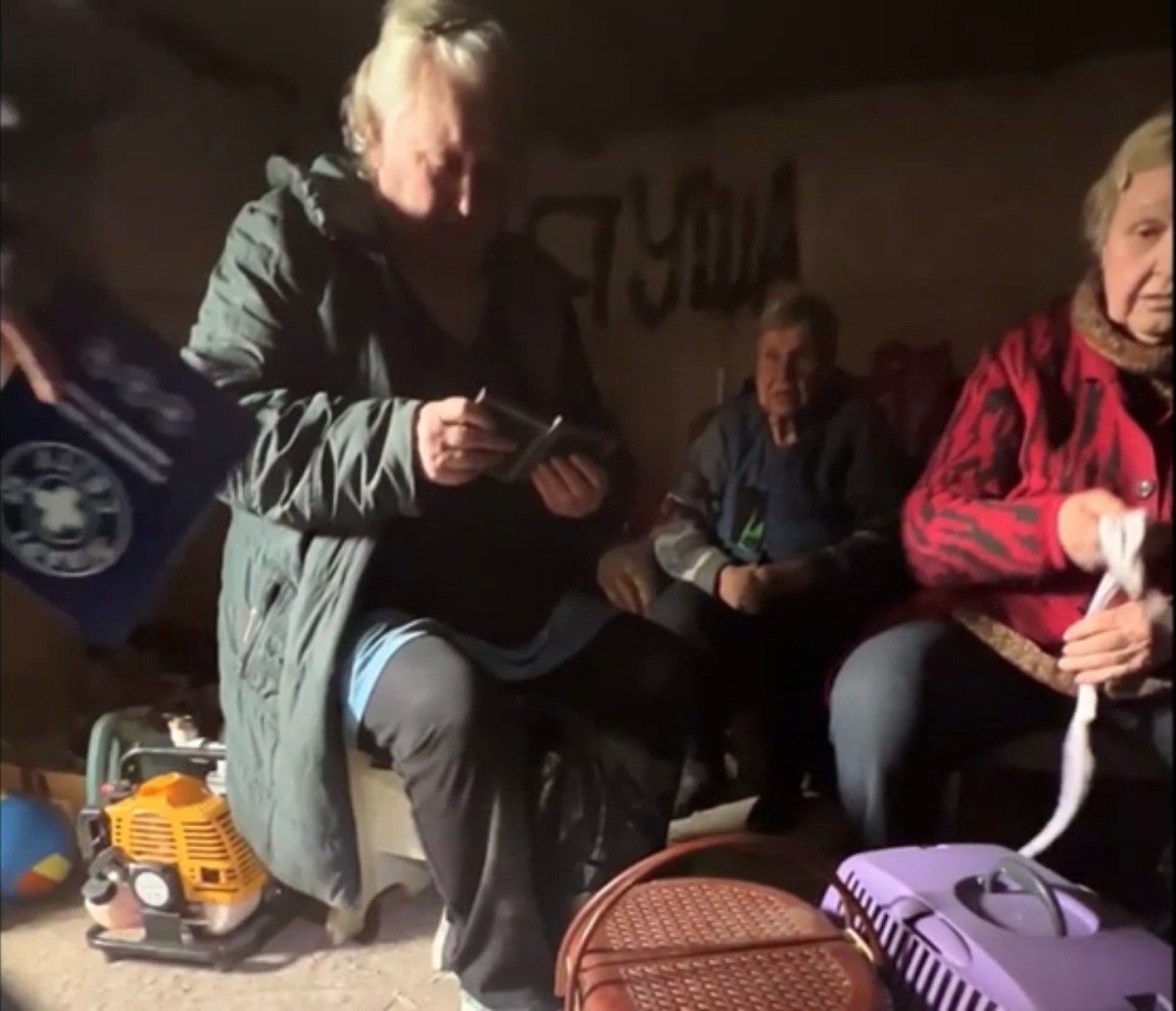
The picture at the top of this post shows old women sheltering in the basement of the refugee collection point in Lysychansk, in the Donbass region, during an artillery strike. My friend spent the attack outside, listening to debris bounce off of his helmet with every hit. The Russians eventually flattened the collection point.
The picture is a screen shot from this video by documentary filmmaker Marharyta Kurbanova, a member of my friend’s team.

Heading childhood anxiety off at the pass

Untreated anxiety in children is associated with all sorts of bad things later in life. The good news is, if you do treat it, it can usually clear up.

Untreated anxiety in children is associated with all sorts of bad things later in life–mood disorders, alcohol and drug abuse, suicidality, underachievement in school, and low earning potential. The good news is, if you do treat it, it can usually clear up.

It’s usually easier to prevent something than it is to treat it, so it would be great if we could predict which kids are likely to develop chronic problems with anxiety, and head it off at the pass. That might actually be plausible, since anxiety has a trajectory of development. As Strawn et al. put it, “…the adolescent with panic and generalized anxiety disorders was once a boy with separation anxiety disorder and…a toddler with extreme shyness…”

But, how would one do that prediction?

(If you’re mainly here to improve your English, you will find an explanation of head it off at the pass in the English notes at the end of this post.)

I am a happy practitioner of the write-about-what-you-don’t-know approach to scribbling. Right at this moment I am realizing that I don’t know very much about the development of anxiety in children and adolescents. So, I am reading the paper Research Review: Pediatric anxiety disorders–what have we learnt in the last 10 years?, by Jeffrey Strawn, John Walkup, and a bunch of other folks. It describes a number of risk factors for the development of a variety of anxiety disorders. The risk factors fall into categories of cognitive bias, behavioral tendencies, family environment, parental disorders, substance abuse, and environmental exposure.

When I’m trying to understand a new disease, I sometimes play this game: walk into a restaurant, look around, and pick out the person most likely to suffer from it. (At my advanced age, that is often me, but that’s another story.) For the kinds of risk factors that are related to pediatric and adolescent anxiety disorders, that’s not really an option, so instead, I’m trying something different: I’m writing about some kids who I would expect (based on my limited knowledge) to develop anxiety–or not. So, here’s what we’re gonna do today: we’ll look at my little vignettes, say for each one whether we think the kid is at high risk or low risk of developing an anxiety disorder, and then explain why. I have written these vignettes in the style of the notes that a physician (doctor) writes when they examine a patient. That’s why it sounds odd. (We’ll talk about some of those oddities in the English notes.) Ready? C’est parti.

John is a 5y3m-old male with an uneventful medical history. He is referred to the psychiatry clinic because of bursts of tears and screaming when dropped off at school, persisting into the third week of the school year. He is in his third foster home since his mother was hospitalized for anxiety and depression six months ago.

Reminder: this is not the story of a real child. I have made it up myself for educational purposes.

Likely outcome? John is at high risk of developing an anxiety disorder. His behavior at school–not wanting to be dropped off even after three weeks from the beginning of the academic year–is a kind of behavioral inhibition, and behavioral inhibition is a risk factor for later development of anxiety disorders. Childhood separation events are, too, and John has experienced these multiple times–first with the long and continuing hospitalization of his mother, and then due to repeated changes of foster care placements. Having a parent with an anxiety disorder or depression also increases a child’s risk of developing an anxiety disorder, and John’s mother has both of those–that’s why she’s been hospitalized for so long.

Mary is an 8 year old healthy-appearing female. She is referred to the environmental health clinic after routine screening at her school suggested a high probability of lead and mercury exposure.

Mary lives with her paternal grandmother since her mother was imprisoned for sale of controlled substances and child endangerment and her father died in an automobile accident soon after. The grandmother seems quite controlling, but reports that she has changed household routines in response to Mary’s fear of sleeping alone.

Reminder: this is not the story of a real child. I have made it up myself for educational purposes.

Probable outcome? Mary is at high risk of developing an anxiety disorder. Exposure to environmental contaminants increase a child’s likelihood of developing subsequent problems with anxiety. Like John, she has experienced multiple separation events, with her mother being sent to prison and her father dying soon after. Over-controlling parenting, such as she is getting from her grandmother, also increases the risk of developing an anxiety disorder. “Family accommodation,” or changes made to group behavior in response to a child’s early anxiety symptoms, also increase the likelihood of developing an anxiety disorder, so despite the use of “but” in the example, this is not a good thing for this kid.

Harry is a cheerful, outgoing adolescent who presents in the Emergency Department with exquisite point tenderness in the right femoral area after a fall experienced while practicing his newly-discovered passion for rock-climbing. His father died in Iraq when John was six months old. His mother remarried two years later, and she reports that John has been close to his stepfather ever since. He denies alcohol, drug, or tobacco use.

Reminder: this is not the story of a real child. I have made it up myself for educational purposes.

What does the future hold? Harry is at low risk of developing an anxiety disorder. He clearly does not have a fear of trying new things, and is not shy. Although he lost his father, it happened so early in his life that he probably did not experience it as a separation event–recall that his father was deployed to Iraq–and he has always had a close relationship with his stepfather. The lack of alcohol, drug, or tobacco use is relevant in that these kinds of substance abuse (and I say that as someone who cheerfully enjoys fine American tobacco products) are often associated with anxiety disorders.


English notes

To head something off at the pass: to take action in order to prevent something from happening. This is a cowboy thing: a pass is a narrow path at a low point in a mountain range that lets you get through the mountains without having to climb them. You can prevent someone from getting somewhere that they’re trying to go if they have to go through a pass to get there–they’re narrow, and therefore easy to block. Some examples of the use of this expression:

  • Dilbert tries to head off criticism of Trump at the pass by defining it as coming from some “other side.” (Source: Twitter)
  • The apologists for Trump & Trumpies sure managed to tone down his rhetoric & head off his bigotry at the pass, didn’t they. (Source: Twitter)

How I used it in the post: It’s usually easier to prevent something than it is to treat it, so it would be great if we could predict which kids are likely to develop chronic problems with anxiety, and head it off at the pass.

Now let’s look at some of the odd aspects of medical English:

to refer to: in this sense, to refer someone to a treatment facility is to send them to that facility for consultation by a specialist. Your insurance company will usually require you to have a referral from your primary care provider for this kind of thing. How I used it in the post:

  • He is referred to the psychiatry clinic because of bursts of tears and screaming when dropped off at school
  • She is referred to the environmental health clinic after routine screening at her school

to present with something: this expression is used to describe a patient’s state when first meeting with a health care provider. How I used it in the post:

Harry is a cheerful, outgoing adolescent who presents in the Emergency Department with exquisite point tenderness in the right femoral area after a fall experienced while practicing his newly-discovered passion for rock-climbing.

Burstiness in language and the liberation of Paris

In which language displays interesting statistical properties, some people get fired, and I learn a few words about the Army.

Twenty-plus years ago, I got my first job as an actual, card-carrying linguist, working for a company that did things with big collections of linguistic data, using them to improve computer programs that did speech recognition, i.e. figuring out what words a person is saying.

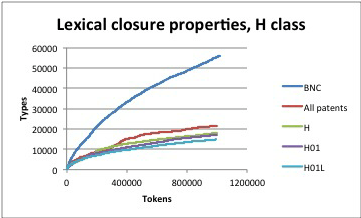
One fine day the people that gave us the vast majority of our income sent their big-collection-of-linguistic-data specialist to visit us. We demonstrated to him the computer program that we had built to answer the question how can you tell when a big collection of linguistic data is big enough? We pointed out how to spot the tell-tale sign on a graph that means “it’s big enough.” “Oh, that just means that linguistic data is bursty.”

The blue line shows a big collection of linguistic data that is not nearly big enough. The other lines show big collections of linguistic data that are big enough. The telltale sign: a line that has gotten flat. Picture source: Irina Temnikova, Negacy Hailu, Galia Angelova, and K. Bretonnel Cohen. “Measuring closure properties of patent sublanguages.” In Proceedings of the International Conference Recent Advances in Natural Language Processing RANLP 2013, pp. 659-666. 2013.

What did he mean by “bursty?” We had a guess, but weren’t exactly sure, and given that his company paid us a lot of money and he was their expert, my boss thought it best not to push back. A few months later, they declined to renew our contract, and our owner laid everyone off and went away to do something else. Was it because we didn’t push back on the big-collection-of-linguistic-data expert’s dismissiveness? Probably not–our little company committed far bigger errors, and on a sadly regular basis. Whatever–the job market for computational linguists was not terrible in those days (it’s pretty wonderful now), and I found my second job as an actual, card-carrying linguist pretty quickly. But: burstiness is pretty important, and it continues to bump into my life today, in various and sundry ways, some of which will be of interest to readers of this blog.

What burstiness means: per Wikipedia,

In statisticsburstiness is the intermittent increases and decreases in activity or frequency of an event.

Wikipedia, Burstiness

In plain English: burstiness is present when something doesn’t happen for long periods of time, but then happens a lot, and then goes back to not happening very often. Some things that have this characteristic: hurricanes, and pandemics. Statisticians care about burstiness because bursty things are difficult to characterize with normal statistics, so you have to come up with new techniques to work with them; people like disaster planners and public health experts care about those statistics because it is difficult to predict, and therefore to plan for, things that have weird statistical properties.


From a computational linguist’s perspective, burstiness is important because in big collections of language, you don’t see new words very often, but when you do, sometimes you see a lot of them at once. If you’re trying to do something like build a dictionary for a computer program, you typically do that by finding all of the words in a big collection of linguistic data. But, how do you know when your collection of linguistic data is big enough? See above; the problem is that if you kept growing the collection, you know that there will be bursts of new words, but you can’t keep growing your collection forever–at some point, you have to stop and work with what you have at hand.


Many of our dear fellow readers are engaged in learning a language that they don’t already speak. I am one of them–if you have been reading this blog for a few years, you have followed my feeble attempts to learn la langue de Molière, also known as “French.” By now I know the language well enough that I can pick up a book in it and not have to turn to a dictionary very often. But, when I do, it typically happens like this…


Right at this moment, I’m reading Paris brûle-t-il ?, “Is Paris burning?,” the work of reference on the liberation of Paris. I typically get through about three pages before I have to look up a word. But, then this morning, I’m reading about the French 2nd Armored Division rolling from Normandy to Paris when I come across this sentence. I had to look up all of the words in bold face:

Glissant en silence sur leurs six roues de caoutchouc, les automitrailleuses des spahis à calots rouges, “chiens de chasse” de la division, ouvraient la marche.

Dominique Lapierre and Larry Collins, Paris brûle-t-il ?, published by Robert Laffont in 1964.
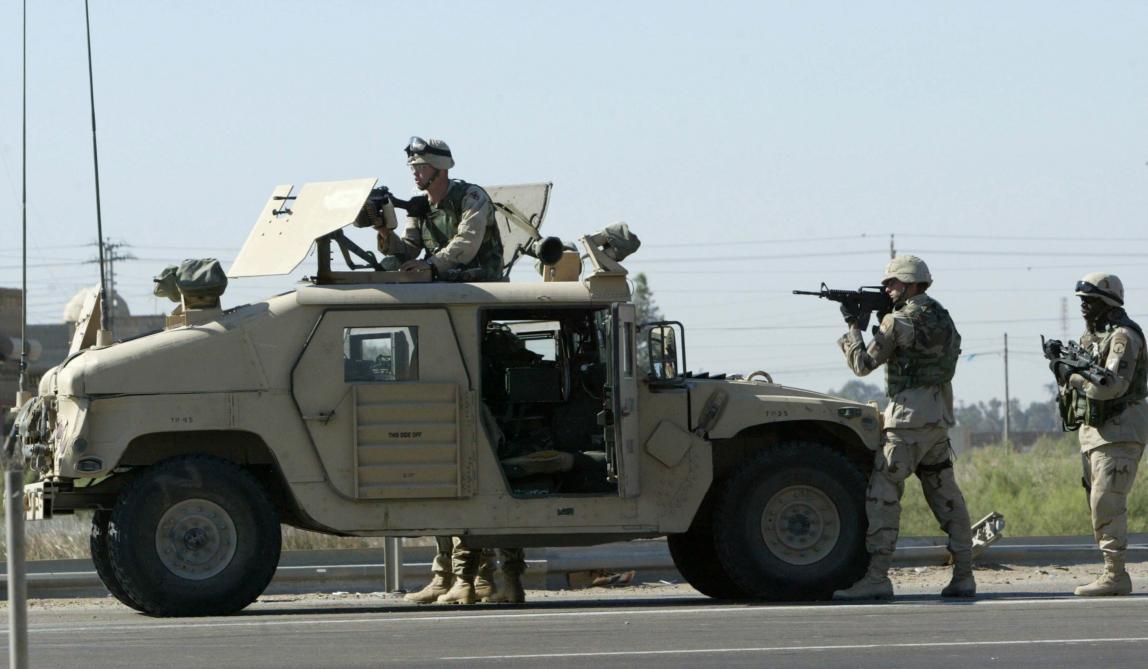
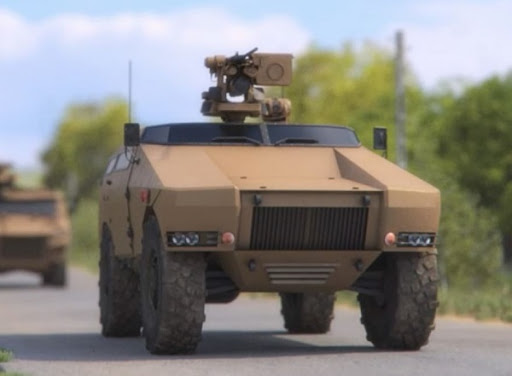
  • l’automitrailleuse: a light armored vehicle.
  • le spahi: native cavalry trooper of the Maghreb.
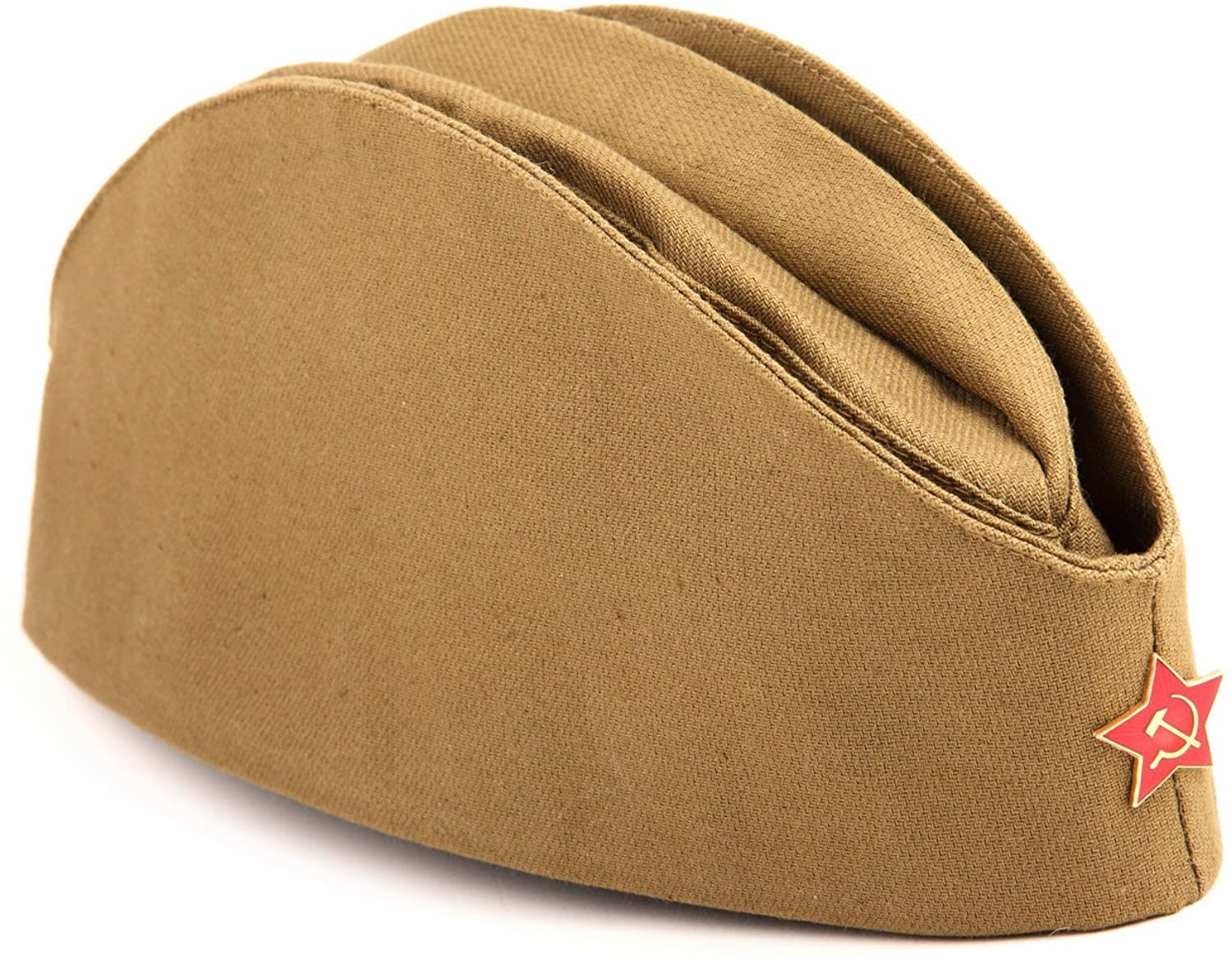
  • le calot: garrison cap in English; when I was in the Navy, we called them “cunt caps.” A calot has no brim or visor, and therefore can be folded flat and tucked under the epaulet of a military jacket.
A Russian garrison cap, or calot in French, pilotka in Russian.

After that, it was back to my normal rate: about one word every three pages. That certainly counts as “not very often,” and is pretty good for a non-native speaker. To then jump to three words in a single sentence, and then go back to my base rate of one word every three pages, is a good example of burstiness. Once again, we see why one might right a blog like this one–a blog about the statistical properties of language and their implications for people who are trying to learn one. What happened to the dismissive big-collections-of-linguistic-data expert? I don’t know for a fact, but I do know that people who are dismissive of the opinions of others don’t typically have much professional success. Personally, I took what I learned from the experience of working at a failed software start-up to do a better job of being a computational linguist, and have had a wonderfully fun time with it. Want to try a career in computational linguistics yourself? Start here if you are not a graduate student, or here if you are, and I hope you have as much fun with it as I have!

French notes:

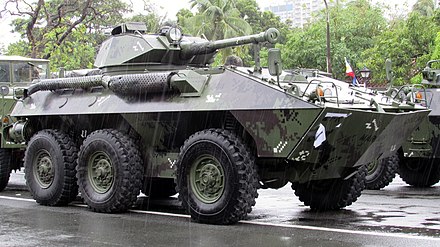
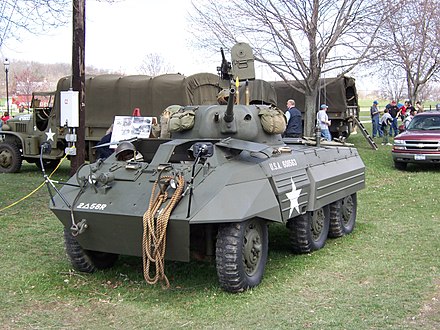
Despite what its name would lead one to think, an automitrailleuse does not necessarily carry a machine gun. Here some pictures of modern automitrailleuses. You’ll notice that some of them look a lot like tanks. The salient differences are that (1) they weigh less, and (2) they have wheels, not treads.

How we’re sounding stupid today: On the propriety of examples

My first language is (American) English, but I speak French well enough that if I want French people to believe that I’m an American, I have to convince them of it. Comparing and contrasting French and American political appartenances helps, as does my ability to explain the difference between felonies and misdemeanors and how they affect the length of your prison sentence. Why it doesn’t occur to me to just speak English with them, I couldn’t tell you–I’ll have to try it some time…

My ability to speak French well doesn’t mean that I don’t make absolutely stupid mistakes, though. Case in point: propreté and propriété. One means “cleanliness” and one means “property,” but if I need to say either “cleanliness” or “property” in French, which of those two words propreté and propriété will come out of my mouth is pretty random. How random? I’d guess a 50/50 chance for either of them. So, how often do I say the right/wrong word? Let’s figure it out.

First, we have to make some assumptions. Assumption #1: the probability of me needing to say cleanliness and the probability of me needing to say property are equal. If we don’t make that assumption, then we have to adjust the calculation of how often I say the wrong word to account for how often each of those two words get said. By me. In French. Complicated? Yes. Hence: Assumption #1.

Assumption #2: the probability of me saying the right word and the wrong word are equal. Otherwise, we have to adjust our calculations of how often I say the wrong word to account for different probabilities for each. By me. In French. Complicated? Yes. Hence: Assumption #1, and Assumption #2.


With those assumptions in place, let’s figure out the possible outcomes in a situation where I need to say one of those words: “cleanliness:”

  1. I need to say “cleanliness” and I say propreté (the right word)
  2. I need to say “cleanliness” and I say propriété (the wrong word)

We have two possible outcomes (that’s the technical term), so the probability of either of them is 1/2, or 0.50, or 50%.

It works the same way if I need to say “property”–there are two outcomes:

  1. I need to say “property” and I say propreté (the wrong word)
  2. I need to say “property” and I say propriété (the right word)

Back to our original question: how often do I say the right/wrong word? Well… we need to change the question. To wit: to know how often I say the right/wrong word, we would need to know the probability of me saying every word that I say, and calculate the probabilities of me getting them right/wrong.

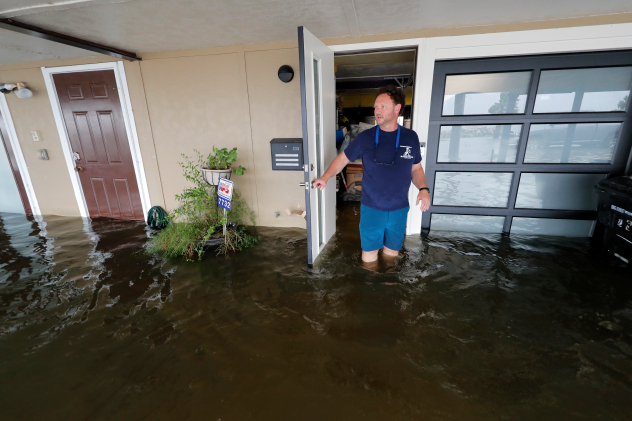
However: I don’t give a fuck about that. What seems funny to me about the fact that I am equally as likely to fuck up the words cleanliness and property is that they’re so fucking…common. I mean, I don’t have a problem with the vocabulary for talking about, say, why we have the Electoral College or why Beaux Arts Victorian houses aren’t built any more, but I can’t talk about the fact that if my little corner of New Orleans gets flooded in the next couple days, I am going to have some hot, sweaty, bug-infested work ahead of me as soon as I can get a plane ticket back there. Yes, friends and family: I am safe and sound in Colorado.


Note to self: propreté is pretty close to propre, “clean”–maybe that can help me remember? And for practice (just in case writing this blog post wasn’t enough), here are some sentences to practice with, courtesy of the Sketch Engine web site, your home for fine linguistic corpora and the tools for searching them. Scroll down for the answers:

  1. Je suis en train de vendre ma ______.
  2. Il y a des efforts à faire concernant la ______ de la piscine.
  3. Comment conserver la ______ d’une salle de bain ?
  4. Dans les années 60, on a étudié les ______ de trous noirs.
  5.  La couleur blanche est rattachée généralement à la pureté et à la ______ .
  6. Balai vapeur hyper polyvalent – pour plus de ______ dans la maison !
  7. Ton corps même n’est pas ta ______ ; comment pourrais-tu posséder le Tao ? (See Taoist scripture for an explanation.)
  8. Les jeux vidéo ne sont pas la ______ exclusive de ces hommes blancs cishétéros.
  9. Les oreilles : vérifiez régulièrement la ______ des oreilles de votre chien.
  10. Actuellement la ______ appartient à la commune.
  11. Tous les jeux flash présent sur le site restent la ______ de leurs auteurs respectifs.
  12. Votre langue, cher monsieur Walder, est révélatrice de l’état de ______ du sexe de votre femme, point barre.
  13. Les sanitaires sont d’une ______ immaculée et il y a même des machines à laver.
  14. …les métaphores qui transposent certaines ______ d’une catégorie à une autre : “l’homme est un loup pour l’homme”…
  15. Entretien des trottoirs : Chaque Soiséen est responsable de l’état de ______ du trottoir qui borde sa ______.
  16. Nettoyage: Les frais de nettoyage (50,00 Euros) vous seront rendus à la fin de votre séjour selon l’état de ______ de la ______.
  17. Un matériau aux multiples ______ – résistance, ultra______ – et qui s’adaptent aux dimensions de vos projets.
  18. Il n’a cependant pas les ______ ou la ______ du biométhane naturel.

Picture source: https://www.accuweather.com/en/weather-news/how-a-hurricanes-dirty-side-factors-into-the-storm-surge-it-produces/801756. Scroll down for the answers to the exercise!

  1. Je suis en train de vendre ma propriété.
  2. Il y a des efforts à faire concernant la propreté de la piscine.
  3. Comment conserver la propreté d’une salle de bain ?
  4. Dans les années 60, on a étudié les propriétés de trous noirs.
  5.  La couleur blanche est rattachée généralement à la pureté et à la propreté .
  6. Balai vapeur hyper polyvalent – pour plus de propreté dans la maison !
  7. Ton corps même n’est pas ta propriété ; comment pourrais-tu posséder le Tao ? (See Taoist scripture for an explanation.)
  8. Les jeux vidéo ne sont pas la propriété exclusive de ces hommes blancs cishétéros.
  9. Les oreilles : vérifiez régulièrement la propreté des oreilles de votre chien.
  10. Actuellement la propriété appartient à la commune.
  11. Tous les jeux flash présent sur le site restent la propriété de leurs auteurs respectifs.
  12. Votre langue, cher monsieur Walder, est révélatrice de l’état de propreté du sexe de votre femme, point barre.
  13. Les sanitaires sont d’une propreté immaculée et il y a même des machines à laver.
  14. …les métaphores qui transposent certaines propriétés d’une catégorie à une autre : “l’homme est un loup pour l’homme”…
  15. Entretien des trottoirs : Chaque Soiséen est responsable de l’état de propreté du trottoir qui borde sa propriété.
  16. Nettoyage: Les frais de nettoyage (50,00 Euros) vous seront rendus à la fin de votre séjour selon l’état de propreté de la propriété.
  17. Un matériau aux multiples propriétés – résistance, ultrapropreté – et qui s’adaptent aux dimensions de vos projets.
  18. Il n’a cependant pas les propriétés ou la propreté du biométhane naturel.

English notes: In my defense, a big part of my problem, I would guess, comes from the fact that English has the word propriety. The Merriam-Webster web site gives these synonyms for it: decencydecorumform. Examples:

  1. Zipf, I’m not sure about the propriety of that example about the cleanliness of Mr. Walder’s tongue.
  2. President Obama was the very *model* of propriety. Never once did he say or do anything to make America ashamed of him. (Source: Twitter)
  3. Even inside the nation’s prominent law firms preparing to help President Trump wage a legal war challenging the results of the election, concerns are intensifying about the propriety and wisdom of working for Trump, the New York Times reports. (Source: a tweet from the San Francisco Chronicle)
Ukrainian Humanitarian Resistance

Resisting the russist occupation while keeping our humanity

Languages. Motivation. Education. Travelling

"Je suis féru(e) de langues" is about language learning, study tips and travelling. Join my community!

Curative Power of Medical Data

JCDL 2020 Workshop on Biomedical Natural Language Processing

Crimescribe

Criminal Curiosities

BioNLP

Biomedical natural language processing

Mostly Mammoths

but other things that fascinate me, too

Zygoma

Adventures in natural history collections

Our French Oasis

FAMILY LIFE IN A FRENCH COUNTRY VILLAGE

ACL 2017

PC Chairs Blog

Abby Mullen

A site about history and life

EFL Notes

Random commentary on teaching English as a foreign language

Natural Language Processing

Université Paris-Centrale, Spring 2017

Speak Out in Spanish!

living and loving language

- MIKE STEEDEN -

THE DRIVELLINGS OF TWATTERSLEY FROMAGE