I live in the most boring neighborhood in Paris, but that doesn’t mean there’s nothing going on.
My little street, Christmas Eve or so.
The 15th arrondissement, where I live when I’m in France, is so boring that it typically doesn’t show up in guidebooks for tourists. A friend, Paris born and raised, once said this to me about the 15th: the rest of us don’t even think about it.
And yet: one of the things that makes Paris what it is to me is that anywhere you go, there’s a story. This morning on the way to the metro, I heard music and turned to see a taxi driver waiting at the stand–playing an electric guitar in the driver’s seat. Further down the block from my apartment is a little park. There used to be a château there, but after the revolution of 1789 it got turned into a gunpowder factory, and early one morning, it blew up. There were surprisingly few casualties–about a hundred–but they say that people found bits of clothes and body parts across the Seine in what is now the 16th.
Continue down the street and you get to the Dupleix metro station. It’s on the number 6 line, which follows one of the old city walls, and right outside the exit of the metro station was, for a long time, the place where you got taken to face the firing squad.
Turn left and you’ll soon find the rue du Commerce on your right. The famous British author George Orwell washed dishes there before he became a famous British author–if you are a Parisophile and you haven’t read his book about that time of his life, Down and out in Paris and London, you really should. And, although it would be tough to get further from an haute couture neighborhood than mine, this morning I was treated to the sight of a little old lady coming down the street in a full-length leopard skin coat. Matching high-heeled leopard skin boots. Oh–and matching leopard skin shopping bag.
Indeed, there’s a story everywhere you go in this city, and sometimes that story is personal. The 16th arrondissement (where the body parts landed when the gunpowder factory blew up in the 15th) really is the most boring arrondissement in Paris, but I never mind going there, because it’s where my grandfather lived.
I edited just a bit what my Paris-born-and-raised friend said. What she really said was this: people who live in the 15th love it, but the rest of us don’t even think about it. She’s definitely right about one thing–those of us who live here love it.
English notes (French notes follow)
To show up: to appear. Usually the subject is a human:
Party at my place Saturday night! Show up at 8…means that you should arrive at my house at 8.
Fifty percent of life is just showing up…means something like a lot of what it takes in life is to just try. (A Robin Williams quote, I think.)
…but the subject doesn’t have to be human, by any means:
My dog ran off last night, but thank God, he showed up on the back porch this morning, smelling like a garbage dump and looking pretty pleased with himself.
I was freaked because I lost my wallet, but then it showed up on my desk.
How it was used in the post: The 15th arrondissement, where I live when I’m in France, is so boring that it typically doesn’t show up in guidebooks for tourists.
to be born and raised somewhere: to be completely native to a place, because of having been born there and also having grown up there. You can use it with a normal sentence structure:
I don’t understand how someone can be born and raised In Pennsylvania but hate the steelers.
(The Steelers are the football team of the city of Pittsburgh, in Pennsylvania. In reality, the Eagles are the best football team in Pennsylvania, of course.)
The north trash. I thank God everyday that I was born and raised in the south.
(“GF” is girlfriend. Oakland is a city in California.)
How it was used in the post: I edited just a bit what my Paris-born-and-raised friend said. What she really said was this: people who live in the 15th love it, but the rest of us don’t even think about it. She’s definitely right about one thing–those of us who live here love it.
French notes:
le parigot/la parigote:Parisian. Pejorative. I wear it with pride.
très 16e:“very 16th”–in English, we would probably say “bouge,” or “boozh,” or something.
If you go to PubMed/MEDLINE, the US National Library of Medicine’s giant repository of (and search engine for) biomedical publications, and look around for papers on language and suicide, you won’t find that much on what you’re probably expecting: research on the language of suicidal people. What you will find is papers on how we talk about suicide.
The major issue has to do with the ways that we refer to the act of suicide. In English, your basic options are:
to commit suicide
to kill oneself
to take one’s own life
to do oneself in
to die by one’s own hand
The problem is that first one: to commit suicide. People who work in the field of suicide in any capacity–prevention, treatment, research, whatever–aren’t very fond of it. The reason: it stigmatizes the act. In English, things that you commit are bad.
Now, you’re thinking: commit isn’t always bad, right? You can commit to doing something, commit to someone, commit something to memory. No question! But, we’re seeing two very different linguistic phenomena here. The bad commit has a very specific kind of structure: it’s what we call a light verb.
Light verbs are a special kind of verb. They don’t have very much meaning by themselves. Rather, they occur with some other verb, and it’s that verb that gives the expression its meaning. For example: in English, the verb to take can be a light verb. (It isn’t always a light verb–but, there are many times when it is.) Here are some English-language expressions in which to take is a light verb:
to take a bath
to take a beating
to take a break
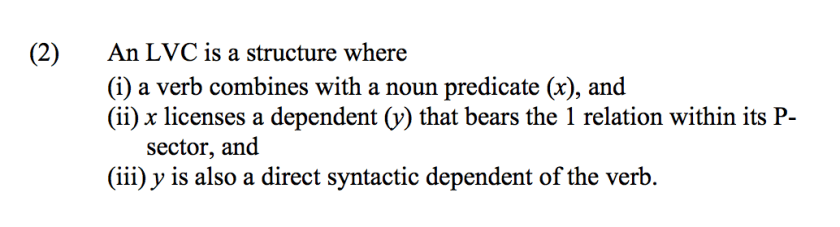
What does to take mean in to take a bath, to take a beating, and to take a break? I suggest to you that it doesn’t mean very much at all. Rather, it’s bath, beating, and break that contain the meanings of those expressions. (I’ve put a technical definition at the end of the page, if you are into that kinda thing.)
Light verb constructions are not a rare phenomenon. Here are a bunch more expressions in English that are what we call light verb constructions (that means the light verb plus whatever it is that it combines with–in English, typically a noun) in which the light verb is take:
to take a breather
to take a bus/taxi/shuttle/plane/train
to take a dump
to take a gander (at)
to take a minute
to take a pee
to take a piss
to take a shit
to take a vacation
to take a walk
to take pity (on)
…and, it’s not like take is the only light verb in English. In fact, we have several. Some examples:
to make a decision, to make an offer, to make haste, to make peepee
to give a shit, to give (someone) a hand, to give a damn, to give a fuck, to give birth (plus some obscene ones that I’m leaving out)
to get dressed, to get ready, to get angry/mad, to get nasty, to get drunk, to get high, to get sober
to do battle, to do business, to do your business (yes, those are different)
to have a ball, to have a blast, to have fun, to have a good time, to have a headache, to have mercy, to have sex, to take a piss
to take action, to take a seat, to take one’s time, to take note, to take notes (yes, those are different), to take a look (at)
With that data in hand, we can see the difference between the commit of to commit suicide and the non-bad senses of commit in to commit to memory, to commit to a person, to commit to a deadline… none of those have that verb + noun structure. They’re all commit + tosomething.
Some more (or less) useful light verb constructions in French: faire la vaisselle: to do the dishes faire la lessive: to do the laundry faire [+université]: to go to a university (J’ai fait William and Mary, I went to William and Mary) faire du [+musical instrument]: to play an instrument (as in to do so habitually) faire du diabète: to have diabetes
One of the interesting things about light verb constructions is that they don’t show a basic characteristic that we expect to see in language: compositionality. To paraphrase from a previous post:
Compositionality is the process of meaning being produced by something that you could think of as similar to addition (technically, it’s a more general “function,” but “addition” will work for our positions–linguists, no hate mail, please). Take a situation where my dog stole some butter. The semantics are: there’s a dog, it’s my dog, there’s some butter, and the butter was taken, by the dog, without permission. (You can’t believe how horrible the poo that I had to pick up over the course of the next 24 hours was.) My dog’s name is Khani, so I might say something like this: Khani stole some butter. The idea behind compositionality is that the meaning of Khani stole the butter is the adding together of the meanings of Khani, steal, butter, and the meaning of being in the subject position versus the object position of an active, transitive sentence.
So: we have this basic expectation that meaning in language will be compositional, and as linguists, as computer science people who work with human language, and as philosophers, we have a hell of a lot riding on that expectation.
In that context, the cool thing about light verb constructions is this: they’re not compositional. There is pretty much no way to get any systematic interpretation of the combinations of light verbs and their nouns. Pause and ponder:
To make peepee and to take a piss: they mean the same thing (the difference is that one is child language and the other is too impolite to say in front of your grandmother). Peepee and piss mean the same thing–again, one is child language, and the other one is too impolite to say in front of your grandmother. Your assignment: tell me what make and take contribute to the meaning of those expressions–that is, explain to me what their contribution is to the composition of the verb and the noun. My point: peepee and piss mean the same things, and to make peepee and to take a piss mean the same things–how do you explain that, if make and take each contribute something to the meaning of those expressions?
Consider to take a bath and to take a bus. One of those is what you might think of as event–an act of bathing. The other is a big, smelly thing that takes you to work. (See how I slipped another take in there? Different take–nobody said that linguistics was going to be easy.) In take a bath and take a bus, your relationship with the two things is pretty different. In the first case, you’re participating in an event, while in the second case, you’re making use of a mode of transportation. Your assignment: tell me how that difference comes from the verb to take.
The answers:
Trick question: as far as I know, make and take don’t contribute anything to the meanings of those expressions. The meanings of the expressions are not compositional.
Trick question: as far as I know, take doesn’t contribute anything to the meanings of those expressions. The meanings of the expressions are not compositional.
So, back to to commit suicide. As you might have noticed, the relationships between light verbs and their nouns are things that a child learning their native language just has to remember. There’s nothing that the kid learns about their language that would let them infer or guess that they’re making peepee now, but they’ll be taking a piss when they grow up: they have to remember it when they’re exposed to it. (I don’t mean to suggest here that children learn language by remembering stuff to which they’ve been exposed–we’ve talked about how very little of language-learning for children works that way.)
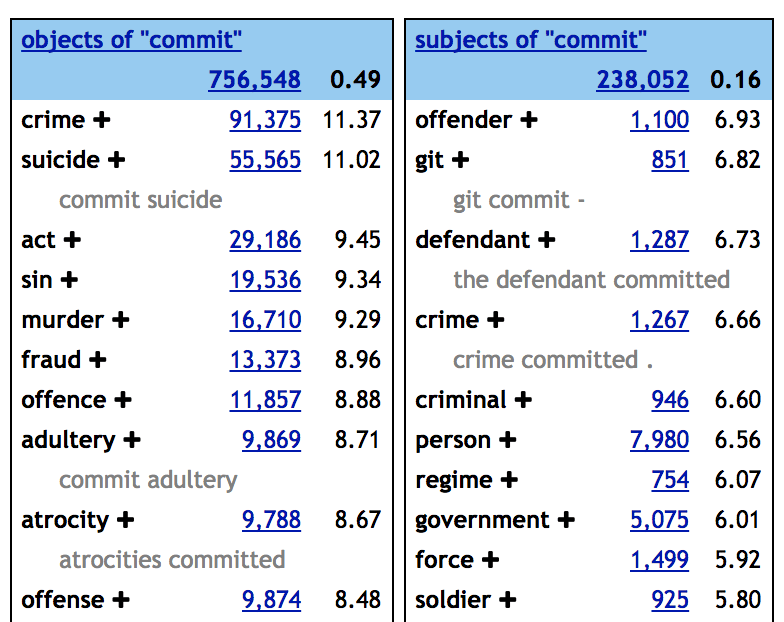
So, the verb + noun combinations in light verb constructions are pretty random. The thing about commit is this: it’s a light verb, too, in constructions like to commit suicide. Its noun is of a very specific kind, though: its verb is something bad. Compare that with the light verb to have. You can have a heart attack, you can have a migraine, or you can have a good time, or have sex. No particular semantic consistency there–could be bad (heart attack, migraine), or it could be good (a good time, sex). Here’s a list of the words that are statistically most closely associated with the verb to commit in the enTenTen corpus (a collection of 19.7 billion words of written English, available on the Search Engine web site; git is a computer science thing. See this post.)
Top objects and subjects of the verb “commit” in 19.7 billion words of English. From the enTenTen corpus on the Sketch Engine web site.
What kinds of things get commited? Crime, sin, murder, fraud, atrocity. Who commits things? Offender, defendant, criminal. Not good.
So, what are we to make of to commit suicide? Many people who work in the field (go do your own search on PubMed/MEDLINE if you’re interested, or just see here and here for examples) are of the opinion that use of the expression to commit suicide has the effect of stigmatizing the person who killed themself. Is that a bad thing? They think it is. I think it is, too. Now, does the person who killed themself care how you talk about them? Certainly not–they’re dead. But, that person’s mother, husband, son, daughter, cousin, aunt, uncle, best friend… They do, and they’re not dead. So, many people who work with suicide in some capacity would like to see that expression go away. Here’s a very eloquent expression of the idea, from Doris Sommer-Rotenberg:
The expression “to commit suicide” is morally imprecise. Its connotation of illegality and dishonour intensifies the stigma attached to the one who has died as well as to those who have been traumatized by this loss. It does nothing to convey the fact that suicide is the tragic outcome of severe depressive illness and thus, like any other affliction of the body or mind, has in itself no moral weight. —Doris Sommer-Rotenberg,Suicide and language
Who cares? Sommer-Rotenberg again:
The rejection of the term “commit suicide” will help to replace silence and shame with discussion, interaction, insight and, ultimately, successful preventive research.
Now, I know what you’re thinking: you’re thinking that the language that we use doesn’t affect the way that we think. You know what? I agree with you. However: even if how we talk about suicide doesn’t change the way that we think about it, I suggest to you–as a fellow student said to me in the basement of Oxley Hall one evening in our graduate student days: the fact that the language that we use doesn’t change our reality doesn’t change the fact that you can make someone feel bad with the language that you use, and you wouldn’t want to do that, right? Well, of course not. (I love my job, but my fellow ex-student’s job is definitely cooler–she’s the only speech therapist in New York City whose practice is exclusively concerned with transgendered people.)
There’s also controversy/discussion around the ways that we talk about what happens when people try to kill themselves, but don’t succeed–attempted suicide, unsuccessful attempt, failed attempt, failed suicide, and failed completion, versus completed suicide–the idea is that these expressions model suicide as a desirable act. (If you fail to have a good time, fail to get into medical school, fail to convince someone to marry you, that’s a bad thing.) See here for a fuller discussion.
So, yeah: there’s probably more stuff in the National Library of Medicine’s repository on how we talk about suicide than there is on how people who are suicidal talk. It would be great to change that, because if we knew more about how people who are suicidal use language, then we might be able to do a better job of preventing it. Now, that means that we need language data from people who are or have been suicidal, right? But, we also need data from people who aren’t suicidal–if you want to understand something, you usually need to compare it to something else, and in this case, that means comparing the language of suicidal people to the language of people who aren’t suicidal.
It happens that there’s an enormous amount of real, live language out there in the world on social media platforms. It would be great for suicide researchers to have it, but there are ethical issues involved–just because someone puts their life out there on the web doesn’t give you the right to just grab it and do stuff with it. However: you can donate your social media data to OurDataHelps.org, a group that collects language from all kinds of people for social media research. You can sign up with them here. As the character Père LeFève says in Anne Marsella’s wonderful short story The Mission San Martin:
Best wishes to all of you who are still alive. And if you’re yet alive, please give.
On the mechanics of how the meaning gets out of the noun and into the verb, so to speak:
Contrary to “prototypical” verbal constructions where the verb is the syntactic and semantic head of the sentence and its syntactic dependents are also its semantic arguments, in LVCs, one of the syntactic dependents of the verb, generally its direct object, functions as the semantic head, projecting its own argument structure, while the verb, which is semantically “light”, bears only inflection and projects no argument structure.
− Given the fact that the verb has no semantic contribution or rather its semantic contribution is quite weak, it cannot be selected lexically, that is on the basis of its semantic contribution. The combination of a particular predicative noun (PN) with a particular light verb (LV) is thus a matter of idiosyncrasy: The noun and the verb form a collocation that must be stored in the lexicon.
Pollet SAMVELIAN, Laurence DANLOS, and Benoît SAGOT, On the predictability of light verbs
All of that time you spend on Facebook isn’t wasted if you donate your social media data to suicide research.
Until the 1960s or so, there were basically two ways to do linguistic research.
If you were into historical linguistics and/or dead languages, you looked at ancient texts.
If you were into living languages, you went and camped out on a reservation, in a village, or whatever, and you sat with native speakers and your notebook and you collected data. You transcribed things, and then went home and copied out your notes, and then you thought about them a lot.
In either case, the underlying philosophy was that there was some body of data in your hands, and your task as a linguist was to come up with a description/explanation of what was in that body of data. Seems straightforward enough.
In the 1960s or so, the American linguist Noam Chomsky turned the world of linguistics upside down with the idea that what you should be doing is describing/explaining native speakers’ intuitions about their language. Intuition is a technical term here–it refers not to “what Kevin happens to think is the case about his native language,” but to native speaker judgements about questions like Is the sentence “I saw the man on the hill with a telescope” ambiguous? This changed the conception of what constitutes “data” enormously. On this view of linguistics, there’s no need to go freeze on the Siberian tundra to get your data–you can do it in your living room. Les données, c’est moi !
Today linguists are less likely to talk about binary “yes it is/no it isn’t” questions than they are about gradient judgments–“Sentence X is more acceptable than sentence Y”. For a really good discussion about the issues from a perspective I think you’ll like, see the work of John Sprouse under the general heading of “experimental syntax.”
–Philip Resnik
From a philosophical perspective, this was a radical shift–from empiricism (sometimes a very extreme empiricism, as for example in the case of Leonard Bloomfield (leading American linguist of the first half of the 20th century, author of the first article published in the journal Language, and Yale professor who was refused membership in the Faculty Club because they didn’t let Jews join in those days), who was of the opinion that mental states are not observable, and therefore semantics is not a fit topic for science) to rationalism, and a rather extreme rationalism at that. Not everyone was happy about this, and in fact most older linguists weren’t–from a methodological point of view, it’s hard to see how you could falsify a hypothesis when the evidence that’s being presented is some version of yes it IS ambiguous–but Chomsky took the grad students by storm, and linguistics underwent a radical change. It swept the world of academia in a way that it never had before, too. (Check out Randy Allen Harris’s The linguistics wars for details.)
Meanwhile, Henry Kučera and W. Nelson Francis were thinking about the potential for computerized analysis of language, and in 1967 they published Computational Analysis of Present-Day American English, based on the study of a bit over one million words of American English that they had had typed up by keypunch operators. They were at Brown, and called their data set, which they made available to the public–now you could check someone else’s data–as the Brown Corpus. As far as I’m aware, that data itself didn’t lead to any earthshaking discoveries, but it did make people’s ears perk up: it was clear that there were possibilities for doing defensible studies of language when you could search a large body of text with a few keystrokes that just weren’t there if your data were whatever you happened to need to intuit that morning. Or whatever your grad student happened to need to intuit that morning. Or, in a pinch, whatever you happened to need to intuit in the heat of your dissertation defense.
There were some issues with the Brown Corpus, or at any rate, with trying to make similar corpora (the plural of corpus) on your own. One was copyrights. The Brown Corpus was what is called a stratified sample: it deliberately tried to structure its contents. Those contents included fiction, non-fiction, personal correspondence, books, newspaper articles–all sorts of stuff, much of which required getting permission from someone or other. Then there was the matter of those keypunch machines–all 1,014,312 words had to be entered by hand. People continued to pursue the construction of corpora, and cool things came out of that work, both in terms of linguistic theory and in terms of designing computer programs that could do things with language. But, it was slow going–people realized that bigger and bigger corpora would let them do cooler and cooler things, but typing is neither fast, nor inexpensive.
Then a miracle happened: the Internet. All of a sudden random people around the world were vomiting forth massive quantities of linguistic data, and it was mostly copyright-free, and they were typing that shit themselves. Nectar! Now you can get access to billions of words of text in an amazing variety of language. Is it necessarily clean, pretty, or legible? No. Is it real? Yes, and that’s what matters, at least to linguists. My colleague Graciela Gonzalez at Penn has done amazing things with social media data, ranging from monitoring medications for previously unknown adverse effects to monitoring prescription medication abuse.
Until recently, there was remarkably little data available on the language of suicidal people, or even on the language of people with psychiatric disorders in general. This is surprising, because with so many mental illnesses, the symptoms are, for the most part, expressed via language. As Philip Resnik, Rebecca Resnik, and Margaret Mitchell put it in the introduction to the proceedings of the first Association for Computational Linguistics workshop on computational linguistics and clinical psychology in 2014,
For clinical psychologists, language plays a central role in diagnosis. Indeed, many clinical instruments fundamentally rely on what is, in effect, manual annotation of patient language. Applying language technology in this domain, e.g. in language-based assessment, could potentially have an enormous impact, because many individuals are motivated to underreport psychiatric symptoms (consider active duty soldiers, for example) or lack the self-awareness to report accurately (consider individuals involved in substance abuse who do not recognize their own addiction), and because many people — e.g. those without adequate insurance or in rural areas — cannot even obtain access to a clinician who is qualified to perform a psychological evaluation.
Suppose you’re interested in the language of suicidal people. Until recently, if you wanted to get your hands on actual data, you could get your hands on a set of suicide notes collected and annotated by my colleague John Pestian at Cincinnati Children’s Hospital Medical Center (and me and a bunch of other people). That data has been revealing, and we’ve learnt things about suicide from that data that we didn’t know. But, that data was hard to come by. Putting that data set together took years (if you can read French, you can find a paper here on some of the issues), and if you want to get your hands on it, you need to go through some hoops to demonstrate that you have a legitimate research interest, that you will not be posting people’s suicide notes on Facebook or Pinterest, and so on.
Social media has changed all of that. In fact, the past couple years have seen an explosion of work on the linguistic characteristics of mental states associated with mental illness, including suicidality. Much of it has appeared in the proceedings of CLPsych, the above-mentioned Association for Computational Linguistics workshop. To give you some examples:
Glen Coppersmith and his colleagues at Johns Hopkins worked with tweets from people with post-traumatic stress disorder, seasonal affective disorder, depression, bipolar disorder, and psychiatricaly healthy controls. They found that based on the contents of the tweets, they could do a pretty good job of classifying which of those categories the poster belonged to. They tried various methods of representing the contents of the tweets, and found that they got the best results with what are called statistical language models. In a later paper, they looked at six more conditions, and added exploratory analysis on the distributional characteristics of emotionally relevant language.
Margaret Mitchell of Microsoft and her colleagues worked with tweets from schizophrenics and healthy controls, and found some unexpected signals in the language of the schizophrenics. For example, the schizophrenic social media users were statistically more likely to use what linguists call hedging expressions like think, I believe, or I guess.
In one of my favorite papers of this ilk, Munmun De Choudhury and their colleagues looked at the language of people who moved from a Reddit for people with mental health related diagnoses to a suicide watch Reddit. They found a number of differences in the language of those Reddit users who moved to the suicide watch group and those who didn’t, including differences in what is called accommodation: the ways that we (can) adjust our language to that of the people with whom we’re communicating. (A post on the subject is in the works.)
Now, there’s an issue here: just because people post their lives on social media doesn’t mean that it’s OK for you to use that stuff for your own purposes. Ethical questions abound, and that’s just as true for the tweets, posts, or whatever of the psychiatrically healthy controls as it is for those with mental illness, suicidal behavior, or whatever. And that’s where you come in.
OurDataHelps.org is a group that collects social media data, particularly linguistic data, for use in doing research like the stuff that I’ve described here with the goal of suicide prevention. They want your data if you have ever flirted with suicide, but they want your data if you haven’t, too–you always need something to compare to, and people like me need data from non-suicidal people to compare to the data from suicidal people. That could be you! Check it out: OurDataHelps.org.
Work in this space is definitely emotionally taxing. I find myself with a rule similar to John’s “no more than 10 a day” rule — enough to constantly remind me of the importance of this work, without becoming emotionally oppressive. The emotional response to spot-checking the data is qualitatively different and far more visceral than something like sentiment analysis of beer reviews.
–Glen Coppersmith
One day I needed to read through some suicide notes. I set an afternoon aside to do it. I made it through about 150–an hour, maybe–before I read one that was like being punched in the stomach. I went out and bought a pack of cigarettes, and I didn’t even smoke (at the time!). I spent a lot of time over the course of the next couple weeks trying to forget it. I mentioned it to John. All afternoon? Man, you can’t do that–10 a day, max. He was, of course, right. In this kind of work, ethical issues come up with the researchers, too. We now provide free therapy for the people who transcribe data for us on suicide-related projects, our researchers who work directly with the data are required to visit a therapist or a clergyman once a month, and we rotate research assistants off of the project every quarter. Moral of the story: I don’t recommend that you go digging around in this data out of curiosity. But, you can be the data–suicidal or not, why not donate your social media data to OurDataHelps.org and maybe keep someone else from writing one of those notes?
Thanks to John Pestian, Philip Resnik, and Glen Coppersmith for their comments and contributions. French notes follow.
French notes
le suicide: suicide
le/la suicidé(e): person who kills themself
suicider: to drive someone to suicide; to make someone’s death look like suicide
se suicider: to kill yourself
se donner la mort: to kill yourself
la tentative de suicide: suicide attempt
maquiller un meurtre en suicide: to make a murder look like a suicide
Here in France, our major worries are that we’ll do the same idiotic thing in our next election that America just did in hers. Meanwhile, all the anglophone press can find to talk about is our little rat problem, while ignoring everything linguistically interesting about it.
The French 2017 presidential race is quickly coming down to a match between the far-ish right and the extreme right, it’s not clear how much longer Europe as we know it will continue to exist, and Marine Le Pen was just voted the most admired politician in France, but the main story about France in the anglophone press right now is… an explosion of the Parisian rat population.
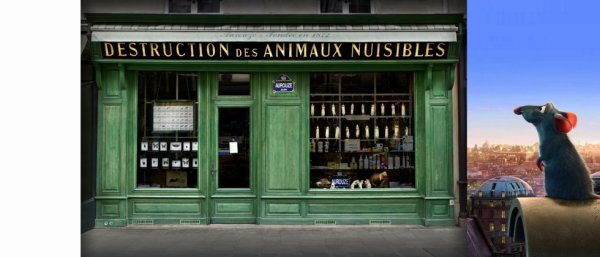
That store window in Ratatouille: it’s for real. (There’s a cool bar nearby, Le baiser salé (“The Salty Kiss”), that I stop into once in a while. I’m sparing you a photograph of the real rat window because it really is quite disgusting, and I say that as someone who once posted a picture of a grilled guinea pig here.) Friends tell me that the story has it that there is one rat for every person in Paris, but current estimates are quite a bit higher.
How would you know the size of the rat population, one way or the other? There’s a specific sampling technique that’s used to estimate the size of a population that can’t be directly observed–think about fish in a pond, or arctic ground squirrels in their little burrows, or–rats. Charming video involving goldfish crackers to be seen here.
Zipf’s Law being what it is, this brings up a linguistic oddity that I find interesting. It has to do with what’s called derivational morphology: the things that we can add to words that change their meaning or their part of speech, like the un in unlock or the ic in anemic.
French has a prefix, dé, that you can add to verbs to make them mean something like a reversal of the normal action of the verb. Alain Bentolila, in his La langue française pour les nuls (don’t mock it–it may be the best book on the linguistics of any single language that I’ve ever read) defines it and its close relatives, dés- and dis-, as contributing a meaning something like séparé de, qui a cessé de, différent. Some examples:
visser
to screw
dévisser
to unscrew
voiler
to veil
dévoiler
to unveil
vérouiller
to bolt; to lock; to close (a brèche, in a military context)
déverrouiller
to unbolt; to unlock (a phone, a keyboard, the caps lock)
valoriser
to add value to, to increase the value of
dévaloriser
to devalue
vêtir
to dress (transitive)
dévêtir
to undress (transitive)
This is relevant to current events because there is a set of words that have to do with removing things–mostly pestilential things, except for the last one–that have an interesting pattern with respect to this derivational prefix. To wit, I give you these examples from Bernard Fradin’s Nouvelles approches en morphologie (definitions in French when necessary, because these don’t typically show up in bilingual dictionaries)
dératiser
to exterminate the rats in [something] (WordReference)
désinsectiser
to spray [something] with insecticide (WordReference)
(I will mention here that some of the definitions of désinsectiser that I’ve come across have specified that this means to get rid of insects by using gas. I can’t find any at the moment, though.)
décafardiser
(not in WordReference)
détruire les cafards dans un lieu, spécialement par fumigation. (Cordial)
dénicotiniser
to remove the nicotine from [something] (WordReference)
What’s interesting about this–a lot, actually. To wit:
There are no corresponding forms without dé. Unlike visser/dévisser vêtir/dévêtir, we have no form of dératiser/désinsectiser/décafardiser without dé.
These verbs seem to have both a prefix (dé) and a suffix–where does the -is- come from?
As we will see, this gets us to an interaction that is not supposed to happen in language: between pragmatics, and morphology.
Fradin explains the pattern like this (scroll down for the translation):
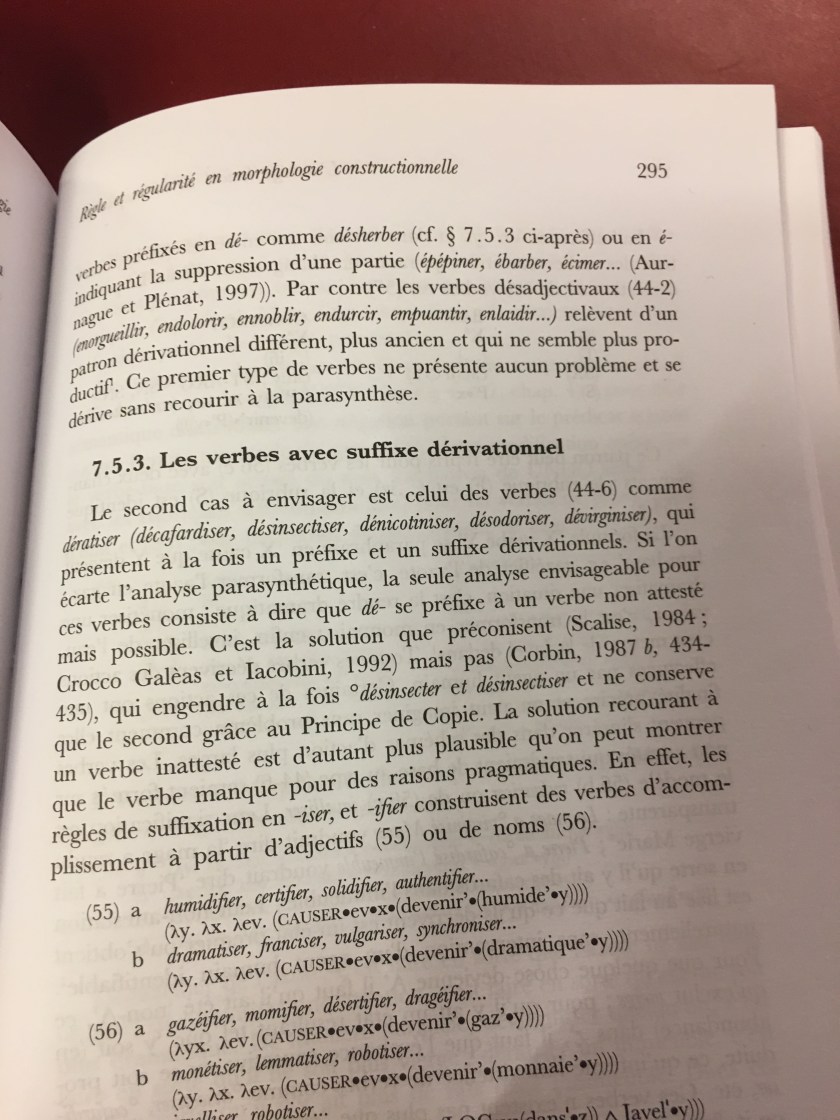
The second case to consider is that of the verbs like dératiser (décafardiser, désinsectiser, dénicotiniser, désodoriser, dévirginiser) which display at the same time a derivational prefix and a derivational suffix….[T]he only analysis worth considering for these verbs is to say that here dé is affixed to a verb that is not present in the language, but is possible. The solution appealing to an unattested verb is especially plausible since we can show that the verb is missing due to reasons of pragmatics.
Fradin goes on to make the case that what we have here is a set of verbs that describe the reversal of a state that you do not create. You don’t infest something with rats, or insects, or nicotine. (Note that Molière’s Sganarelle would disagree with the notion that nicotine is something that one is infested with.) His story is that we see this bizarre combination of patterns:
No corresponding version of the verb without dé
There’s an -is- that doesn’t seem to have anything obvious to do with the meaning of dé
…just in the case of these verbs, in which you didn’t create the initial state of infestation.
As one of my coworkers pointed out over lunch one day: that’s not to say that you couldn’t create the initial state of infestation. He’s right: you certainly could put rats in something, or insects, or a cockroach. (In fact, that’s a famous scam, right?) It’s a nice point, because it doesn’t change the essentially pragmatic nature of the explanation for this bizarre little grouping of verbs–in fact, it highlights the involvement of pragmatics, because it argues against the possibility of an ontological explanation for this. On an ontologically-based approach, you have to have a model of reality in which it simply isn’t possible to cause something to have rats, or cockroaches, or insects, and that clearly is not the case. Rather, this is more about what’s plausible than about what’s possible. It’s not about what “is” (i.e., ontology)–it’s about what people expect to be the case. (This is a big deal (to me) because you run into people who think that the answer to every question in the world is an ontology. That doesn’t seem to be the case here. It’s also a big deal (again, to me) because the dominant school of thought in 20th-century linguistics was heavily into denying the effects of pragmatics on language. However, pragmatics appears to have a role here, if we buy Fradin’s story.)
My coworker also raised a counterargument. It’s a kind of counterargument that we really like in my line of work: positing that there is a simpler explanation for the phenomenon in question. His suggestion was that the -is- thing comes from what we call denominalization, or turning nouns into something else–in this case, a verb. (You can find a discussion of nominalization–turning a verb into a noun–here.) I don’t buy the adequacy of this hypothesis, because we can find so many French verbs that are pretty clearly denominalized–that is, derived from a noun–but don’t have the -is-. Some examples:
dérater
Débarrasser une personne ou un animal de l’organe appelé Rate. Il se disait des Chiens à qui l’on faisait cette opération pour les rendre, croyait-on, plus agiles à la course. (L’appli Larousse Dict-français-français)
“To remove from a person or an animal the organ called Rate (spleen). It was said of Dogs to whom this operation was done in order to make them, it was thought, faster at racing.”
dévisser
to unscrew
..from visser, to screw, from la vis (screw, and you pronounce the s)
déclouer
Détacher, défaire ce qui est fixé par des clous. (L’appli Trouve-mot)
..from clouer, to nail, from le clou, nail
I especially like the contrast between dérater and dératiser. The semantics of both of them involves changing the state of something (linguists are heavily into the changing of states), and they both involve changing a state that you didn’t create. So, why no -is- in dérater? If we asked Fradin, he would be likely to point out that the verbs that he mentions–that is, the ones with dé and -is–all make reference to changing a state that is in some sense noxious. In contrast, having a spleen is not something that you would think of as noxious, and so dérater–the removal of the spleen–doesn’t get the -is- part. (The technical term is morpheme.)
Now, I’ve been sorta defending Fradin here, but: I hate this kind of argument in linguistics, where you’re basically arguing on the basis of examples and counterexamples. I’m aware of the venerable history of this form of rhetoric in theoretical linguistics, but I also am more and more aware–as is much of the field–that science in general, and linguistics in particular, is less often about always and never than it is about tendencies in populations. If you look at tendencies in the population of French verbs about changing states, you can notice a group of verbs that shares a particular “behavior” (mucking about with both dé and -is-) and a particular meaning (changing a noxious state that you didn’t create). But, there are other verbs that have the dé-is- pattern that involve a change of state, but don’t involve a noxious condition–Friden himself gave us the example of dévirginiser, which I passed on to you in the second table above–and as far as I know, there’s nothing noxious about virginity in the Francophone world. Furthermore, there are:
…verbs that have to do with changing a noxious state that you didn’t create, but have a different morphological structure that doesn’t involve dé or -is-: to delouse, which isépouiller, and likewise for to de-flea:épucer or, again,épouiller.
…verbs with pretty much the same semantics that do take dé, but don’t take -is-. In particular, dévirginiser has another form, dépuceller, which led to a very embarrassing moment for me over lunch one day, but that’s a story for another time…
…and beyond that: who says that there are no corresponding verbs without dé, which you will recall is crucial to his pragmatically-based analysis? There are hundreds of millions of easily searchable words of naturally-occurring French-language data on the web, and I would like to see a solid effort to find those words before I bought the idea that they don’t occur in the language.
So, from my point of view, I’d want to see quantitative data. Being a minor phenomenon in a language does not by any stretch of the imagination mean that you’re not an interesting phenomenon–but, from my point of view, part of understanding anything linguistic is understanding the distribution of the phenomenon.
The mayor’s office launched a deratization campaign last month, and the story seems to have fallen out of the news. My strolls across the city haven’t run into any of the closed-off parks that you might have read about. I still stick my bread in the microwave before I go to bed at night–but, I always have. I hate rats.
English notes
rats! is a very mild way of expressing unhappy surprise. When I say “very mild,” I mean that you could say this in front of your grandmother.
“Oh, rats!” I couldn’t find it. I had copies of other stories and poems that I’d written in the past, but couldn’t find this particular one. (Marcus Mebes, Rats! And other frustrations)
rat: an informer. This is slang.
That Richard’s been badmouthing me to the boss behind my back;he’s a rat. Ce Richard dit du mal de moi au patron derrière mon dos ; c’est une ordure. (WordReference.com)
We’ve used the term “rat” to refer to an informer since approximately 1910. (Mentalfloss.com)
to not give a rat’s ass: to not care (about some fact).
I don’t give rats ass, my niece and her boyfriend met in church but she a hoe. (Twitter, in response to a tweet asking Guys!! Can you marry a girl you met at a Club? Not standard English, obviously (I don’t give rats ass, she a hoe).)
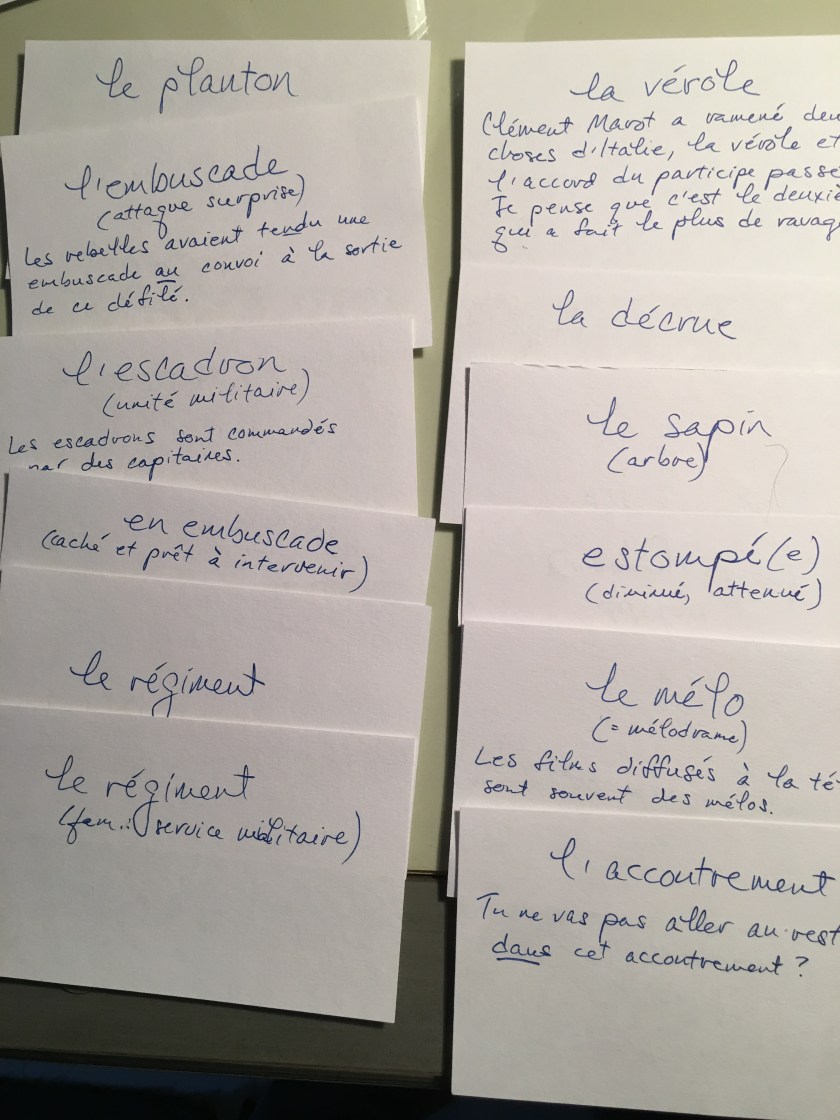
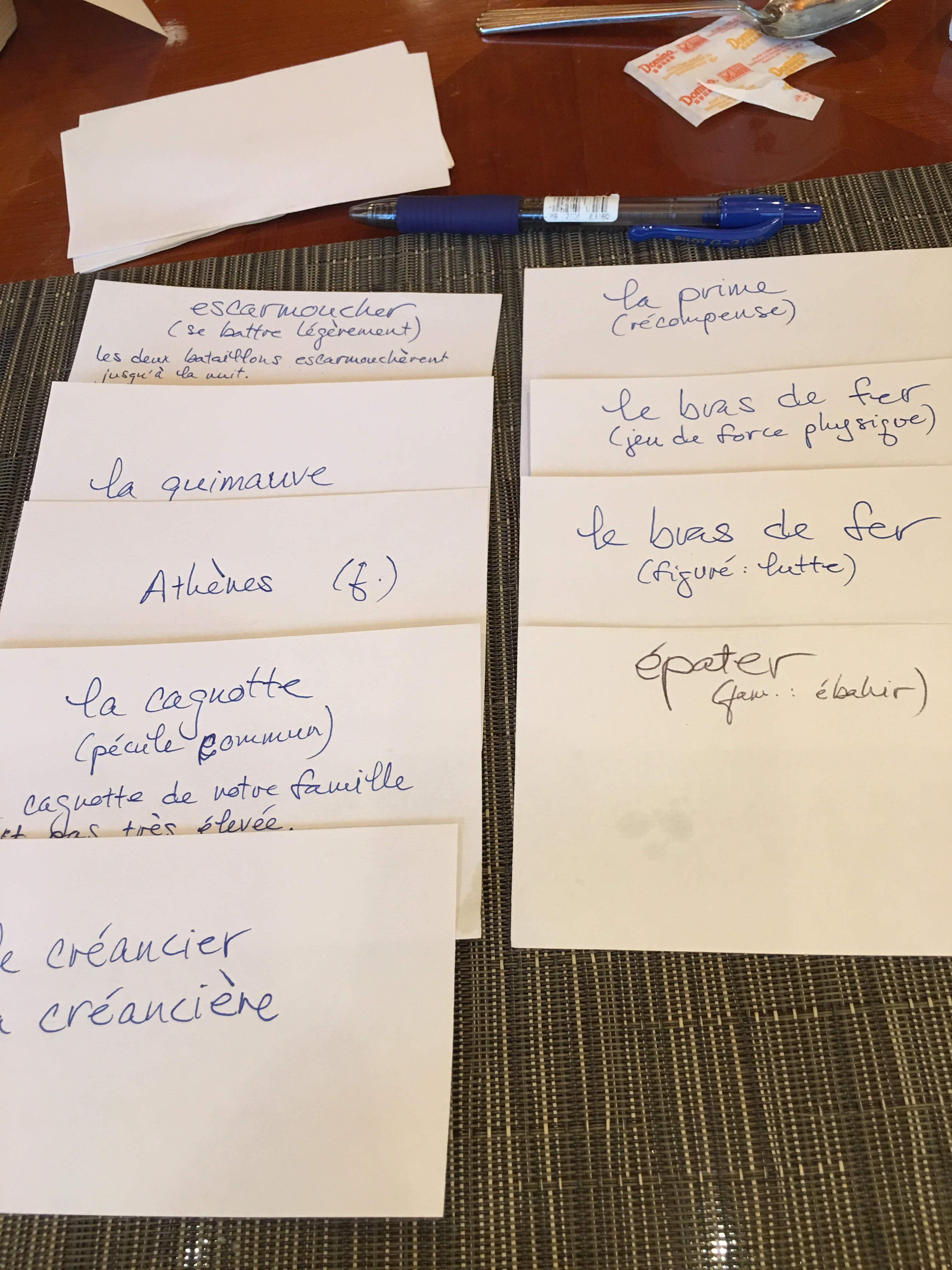
Zipf’s Law describes one aspect of the distribution of vocabulary items in a language. It often feels random; it is approximately as random as life.
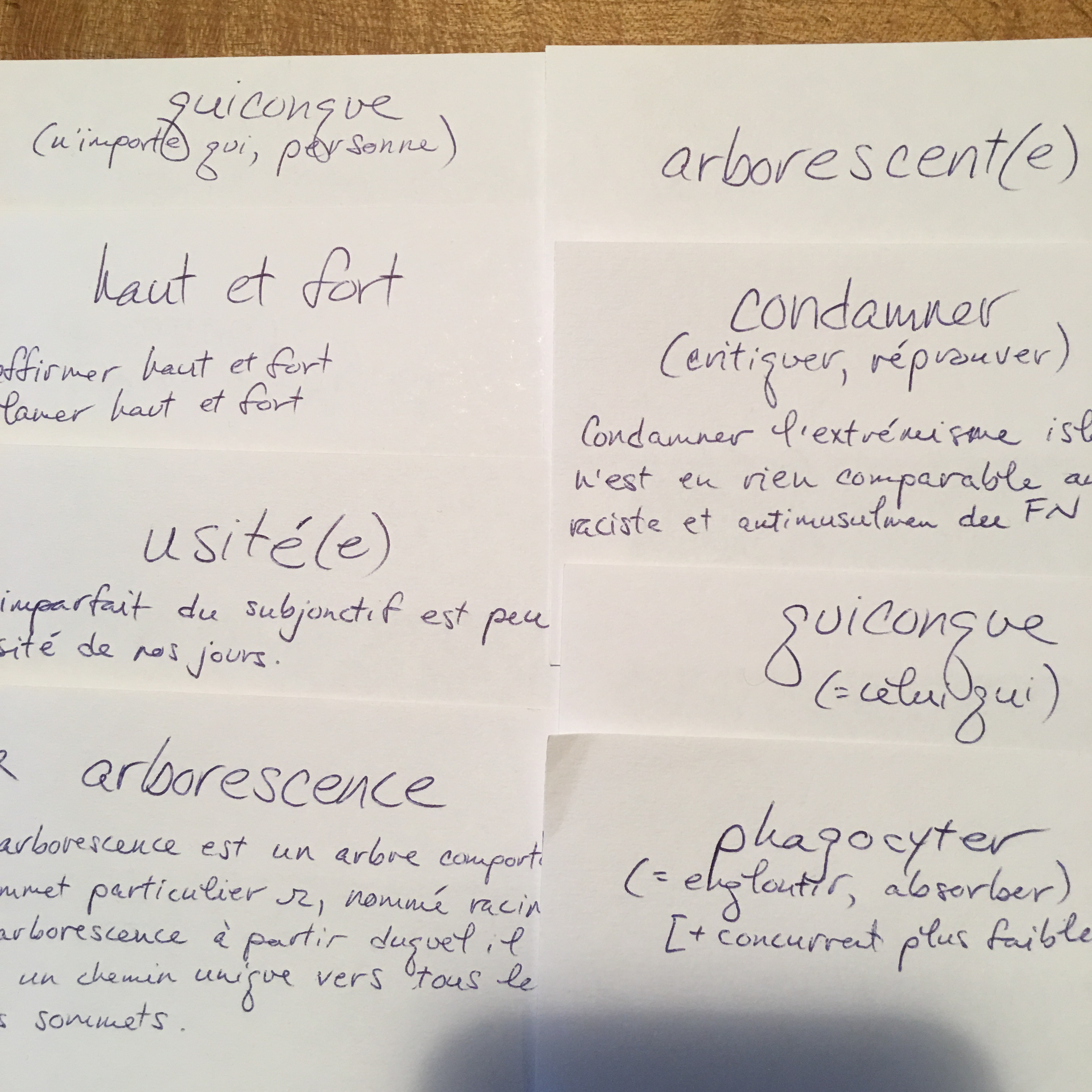
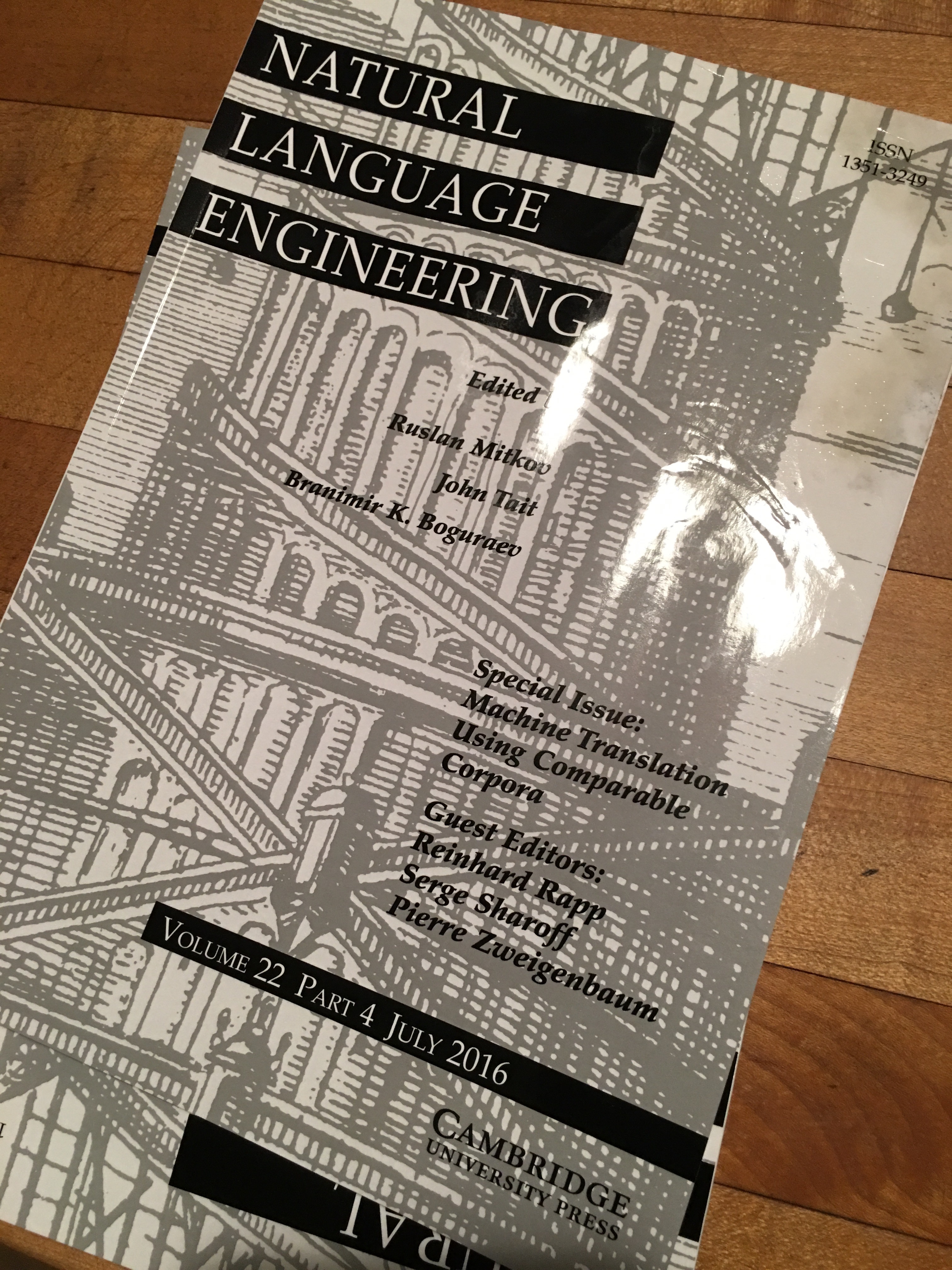
Given the vocabulary items pictured above, last night I most likely fell asleep listening to the beginning of Céline’s _________________________.
Given the posts that I have been writing lately, I have most recently probably read Queneau’s __________________________________.
French notes
le planton: orderly. In the military sense of the word, not the hospital sense of the word–a hospital orderly is an aide-soignant(e).
l’ambuscade (f.): ambush.
en embuscade: in waiting, in ambush.
le régiment: regiment.
le régiment: military service. (Native speakers: is this specifically obligatory military service?)
l’escadron (m.): squadron.
la vérole: smallpox; (slang) syphilis.
la décrue: decrease in water level, subsiding of floodwaters.
le sapin: pine tree, fir (tree).
estompé: (of memory or color) faded, dimmed, dulled
le mélo: melodrama. (Native speakers: is this pejorative?)
l’accoutrement: clothes that are amusing. Get-up.
Answers
Voyage au bout de la nuit. It starts with Bardamu enlisting in the French army during World War I.
Exercices de style, the same story told 99 times in 99 different ways, which I realized I was doing with this series of posts presented as different kinds of tests.
While I sit on a plane, somewhere past midnight, waiting for a gate to clear…
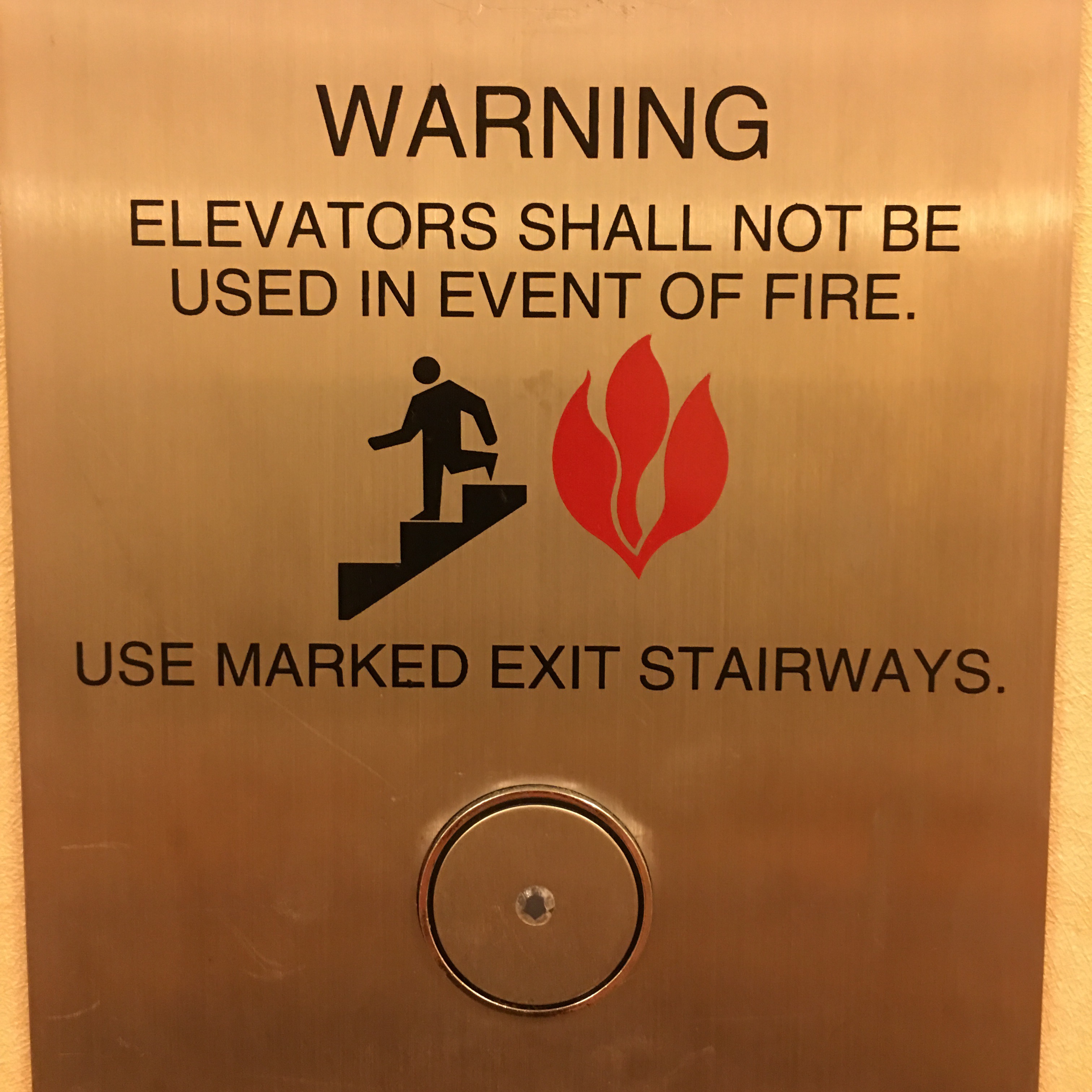
1. From a linguistic perspective, exactly how useless is this sign? Give examples.
2. Multiple choice: The fact that this was my dinner the other night, eaten in bed upon my post-midnight arrival at the hotel, is (a) a classic First-World Problem, (b) just to be expected, (c) better than trying to go to sleep hungry, (d) all of the above.
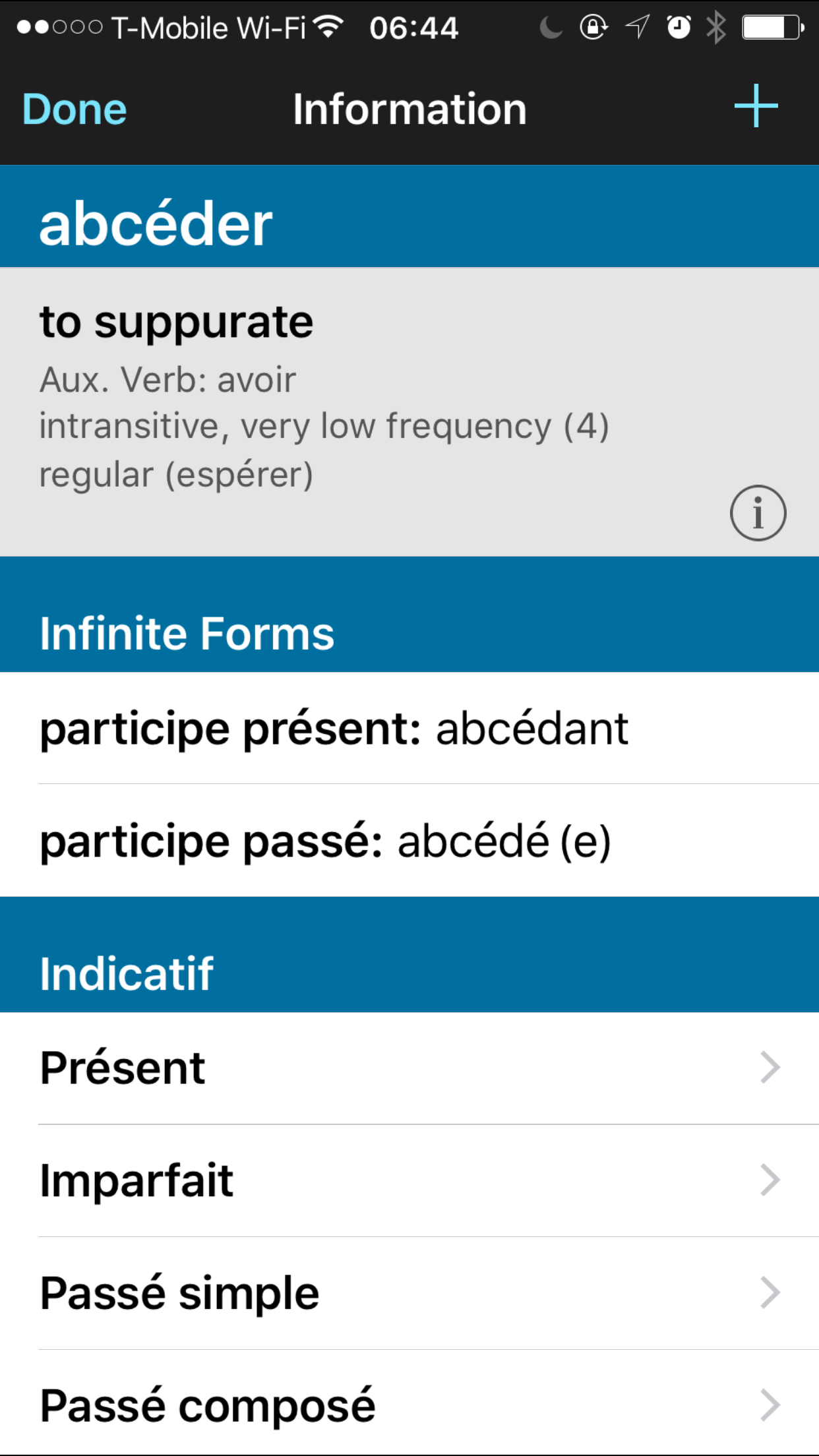
3. Knowing that the French verb “to suppurate” (I think it’s actually an inchoative–“to become suppurative,” or something like that) starts with the sequence ABC makes me feel ______________.
Paris will be a great place to survive the zombie apocalypse. Part of the reason why: those stereotypical Parisian apartment buildings.
A recent study evaluated the survivability of cities during the zombie apocalypse. The approach was rational, modeling a number of factors that contribute to surviving the apocalypse–food supplies, containment, and the like.
Paris was nowhere on the list of best places to be when the mort-vivants come. This illustrates a problem with the study, because Paris is going to be an excellent place to survive the zombie apocalypse. In a recent post, we looked at how the history of Parisian street design will make it easier to defend your little home against the marauding flesh-eaters. However, the next step is important, too–clearing the zombies from the city. In this, Paris has some distinct advantages. They come from the design of the stereotypical Parisian apartment buildings.
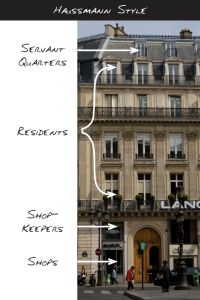
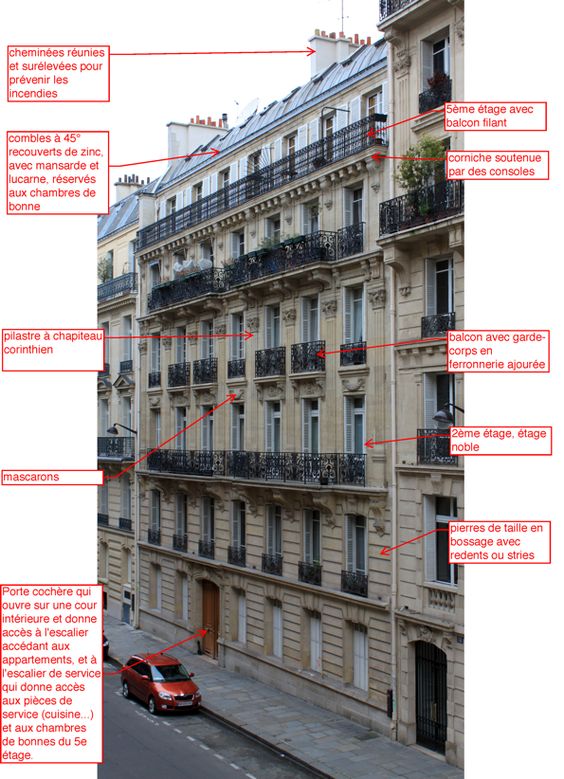
Part of everyone’s image of Paris is those stereotypical apartment buildings. They make up about 60% of the city, especially in the older quarters. You know them: seven stories tall (6 as we count them in France, where the ground floor is the rez de chaussée and the first floor is what we would call the second floor in the US). The design goes back to the 3rd quarter of the 19th century–roughly 1850 to 1875. They differ in their details, but the basic design is a 7-story building with horizontal lines of decoration and some kind of additional fancy detail–often a balcony–on the second floor (American 3rd floor, known as the étage noble) and the 6th floor. The exterior embellishments reflect the original intent of the structure of the floors: shops on the ground level, the shopkeepers on the floor above that, richer people on the floors above that, and the servants under the roof (in the chambres de bonnes). The picture to the left gives the idea, with more details to be found in the picture below, in French–scroll down past it for the rest of the post, and see the French notes below for a couple of the related vocabulary items.
Second-Empire Paris was a place where there was an enormous amount of money to be made, and an enormous amount of money was made–by people in the “right” social classes. The Haussmannian apartment buildings played a big role in that money-making. As Rupert Christiansen puts it in his magnificent Tales of the new Bablyon: Paris in the mid-19th century,
The money was made out of the apartment blocks, those distinctive…six-storey tapered edifices, which have remained the norm in stretches of central Paris until today. Architectural historians now lovingly catalogue the variations in detail that their iron- and stonework embrace, but the basic construction followed a strict code of regulation: specified height and depth, with an entrance wide enough for carriages and a courtyard for parking, ventilation and fire prevention.
Those apartment blocks are, I think, beautiful–but, their construction (along with that of the wide boulevards that we talked about here) had the effect of displacing an enormous number of people who had previously lived in the old buildings that they replaced. As Christiansen describes it, Haussmann‘s redesign of Paris
…remains the nineteenth century’s most radical experiment in shaping and governing urban society… [The logic of the redesign was to] push industry and the sans-culottiste tendency out of the centre of Paris, replacing its warren of dangerous slums with public monuments and commercial development attractive to a new class of clean-living, high-spending, Empire-supporting bourgeois. In other words, kill off a city built on the virus of poverty and give birth to a financially fecund city resting on clean foundations… [and] keep the construction trade busy and happy, thus preventing a resurgence of the discontents which had led its workers to fan the revolutionary flames in 1848…
What’s missing from the study mentioned above will be the relative ease (or difficulty) of clearing out the zombies afterwards. The architecture of Paris is made for clearing zombies. In particular, the typically small apartments limit the number of zombies that you could possibly have to deal with at one time in order to clear a building, as well as reducing the number of rooms from which a zombie could mount a surprise attack–the typical ad for an apartment in Paris (I read them obsessively) is for 30 square meters, versus a more typical 90 square meters in the US. The vertical design will play a role in this, too–you can clear the zombies one floor at a time, isolating the apartments pretty easily. A working-class Haussmannian building–if you can find one–is not an imposing edifice (see pictures of mine below, probably built around 1900, a quarter-century after the end of the big Haussmannian boom). Clearing the zombies out of my building is going to be cake–I look forward to a relatively easy time when the zombie apocalypse comes.
The view up the “courtyard” opening in by building.
The view up the “courtyard” in my building–opposite direction.
The view down to the “courtyard” of my building–just enough room for the truck belonging to the plumbing company on the rez de chaussée (ground floor).
French notes
la mansarde: attic room. In a Haussmannian apartment building, these are the chambres de bonne–the rooms for the servants. In theory it’s not legal to rent them out, but of course everyone does, and at the moment there’s a legislative move afoot to legalize those rentals while stiffening the requirements for the modifications that have to be made to them in order to make them moderately habitable.
la lucarne: skylight, dormer. Look for them in the pictures above.
English notes
to be cake: être fastoche. This is a shortened form of to be a piece of cake, which means to be fastoche, to be very easy. How it was used in the post: Clearing the zombies out of my building is going to be cake. This could also have been put as Clearing the zombies out of my building is going to be a piece of cake.
mansard roof: An English-language technical term for the type of roof that you see on Second-Empire-style buildings in France and in the US. As Wikipedia defines the term: A mansard or mansard roof (also called a French roof or curb roof) is a four-sided gambrel-style hip roof characterized by two slopes on each of its sides with the lower slope, punctured by dormer windows, at a steeper angle than the upper.[1][2][3]I didn’t use it in the post–its presence here is inspired by the definition of the French term la mansarde just above.
dormer: those things with a little roof of their own and a window that you commonly see sticking through the roof of older American houses. I love them because there is an entire vocabulary for describing them–you can find it, along with plenty of pictures, on this Wikipedia page.
French people are not rude, and syntax is not autonomous.
I’m walking up the hill to the lab the other day. It’s a long hill, and I’m old and fat, so I usually stop to catch my breath halfway up. I’m standing in my usual spot when down the hill comes a man who (I hope) looks even older than I do. (Down the hill comes an old man…explained in the English notes below.) Snow-white hair, snow-white beard, and a serious snow-white bear rug rising up out of his coat to merge with his beard. He and his well-behaved dog walk up to me. Good morning. Are you OK? I take my earphones out. Oh, yes, thank you–I’m just resting a bit. You know, there’s a nice path through the forest–the road that you’re going up isn’t really very interesting. He points out the entrance to the path, but I can’t quite make it out for the trees. He and his dog walk a bit back down the hill with me and take me right to the beginning of the path. Go straight for a while–then you can turn left and go down to the town, or turn right and go up to the campus. My dog likes to walk here–it’s really pretty. I thank him, I start down the path, and he and his dog head back up the hill.
I get up to “the plateau,” the top of the hill, where the campus is located. I have only the vaguest idea where I am. I wander down a little side street, thinking that it might lead to the lab, and pass a construction vehicle. I hear a voice calling me, and turn back. Good morning, mister, the construction worker says. Your earphones are hanging out of your back pocket. …and he’s right, they are! I thank him, ask the way to my building, brush the dirt off, and go back to listening to whatever I was listening to.
Google rude french and you will find countless web pages, YouTube videos, etc., on the subject of French rudeness. Um…seriously?? Not from where I’m standing. Have I ever had a run-in with a rude lady at the phone company? Sure–just like in the US. Have I had enormous numbers of entirely pleasant interactions with random French strangers? Sure–just like in the US. The countries are, in some ways, very, very different–but, the people aren’t any more or less nice in either. You just have to know how to recognize the very different forms of American and French politeness when you see them–and how to be polite, in both the American and the French ways, yourself.
Here’s a really good explanation of some of the ways that things can go wrong for typical Americans interacting with typical French people in a typical French context–because we mistake French politeness for rudeness. Note: no one is completely typical.
English notes
…down the hill comes an old man…: There’s a lot going on here. I’ll try to unpack it (I think that’s what the kids say these days)–let’s start with looking at the sentence and its context:
I’m walking up the hill to the lab the other day. It’s a long hill, and I’m old and fat, so I usually stop to catch my breath halfway up. I’m standing in my usual spot when down the hill comes a man who (I hope) looks even older than I do.
The first thing that you probably notice is the unusual word order–not an old man comes down the hill, but down the hill comes an old man. This phenomenon goes by a couple of names–a good one is subject-locative inversion. That is: you are inverting the positions of the subject of the sentence and of a phrase that conveys something that is more or less a location. (Down the hill is a direction, not a location, but let’s stick with the “simple” name for the moment.)
You probably already understand the sentence, but if you’re not a native speaker, may not be at all clear on when one could use it. I’m going to draw on this excellent discussion (which itself draws on the Cambridge Grammar of the English Language) and on Wikipedia in trying to explain it.
First of all: as far as I know, you would only use this construction in telling a story. Much like the passé simple in 20th-century French, this isn’t something that you would use in every-day spoken language. You can certainly say it out loud, and news reporters often use it to describe a scene when they’re reporting “on location.” But, you’re not going to stick your head into your wife’s office and say On the table is dinner.
The circumstances under which you can use this depend on aspects of what we call discourse structure, which you could think of as the way that things that are said form a coherent whole. We talked the other day about discourse connectives–words and expressions like because, even though, and as a result that establish how the ideas behind two sentences (or whatever) are related to each other. When talking about subject-locative inversion, there needs to be a particular relationship between the subject (the old man in my sentence) and the locative phrase (down the hill). The Cambridge Grammar of the English Language specifies that relationship like this:
i. The preposed phrase must not represent information that is less familiar in the discourse than that represented by the postposed NP.
(Preposed means moved to an earlier position. Postposed means moved to a later position. An NP is a noun phrase, a group of words that is focussed on a noun.)
Does Cambridge’s claim hold? Let’s look at the post again.
I’m walking up the hill to the lab the other day. It’s a long hill, and I’m old and fat, so I usually stop to catch my breath halfway up. I’m standing in my usual spot when down the hill comes a man who (I hope) looks even older than I do.
We’ve established that there’s a hill involved in whatever it is that I’m going to tell you about: I’m walking up the hill to the lab the other day. So, in down the hill comes a man, it is indeed the case that the preposed phrase (down the hill) does not represent information that is less “familiar in the discourse” than the postposed noun phrase (a man). The claim is not falsified by my data.
Back to the Cambridge Grammar of the English Language:
iii. The verb must not represent information that is new to the discourse.
…and back to the post again:
I’m walking up the hill to the lab the other day. It’s a long hill, and I’m old and fat, so I usually stop to catch my breath halfway up. I’m standing in my usual spot when down the hill comes a man who (I hope) looks even older than I do.
Is it, in fact, the case that the verb does not represent information that is new to “the discourse?” Actually, I don’t know how you would evaluate that, one way or the other. Certainly the whole “discourse” up to that point has been about my movement, so I guess you could say that the verb to come is not “new”–it’s in the same lexical field. However, if you accept that analysis, then unless you insist that the verb be identical to some preceding one, I don’t know how you could demonstrate that the verb did represent information that’s “new to the discourse.”
(You might have noticed that my quotes from the Cambridge Grammar of the English Language went straight from (i) to (iii). This is because I don’t know what the hell (ii) is talking about. See this page if you want to see it for yourself.)
This kind of phenomenon turns out to be important in one of the deep theoretical issues in linguistics. For various and sundry reasons, Chomsky and his ilk would like to posit what they call “the autonomy of syntax”–the idea that syntax is a part of human linguistic knowledge (the kind that we all have unconsciously, not the kind that people like me get in graduate school) is “autonomous”–that is, that it operates independently of the rest of language. When you have a situation like we see with subject-locative inversion, where the syntax is dependent on something else–in this case, on the structure of the discourse, or more specifically, whether something is “old information” or “new information”–it makes it tough to argue that syntax is autonomous.






 Zipf's Law