The Great Sardine Can Mystery

My search for a healthier breakfast leads to a three-day investigation of a one-syllable word.

2016-03-16 17.33.33
Picture source: me.

I’ve been struggling to get up the hill on the way to work lately.  I decided that this was due to my proteinless French breakfast of coffee, bread, and Nutella, and stopped at the little store just outside the train station and picked up a can of sardines for after the climb.  Zipf’s Law being what it is, this set off a three-day struggle to figure out how to read the label on the can.  I spend a lot of time in France trying to differentiate and remember the meanings of words that look alike, and this was one of those occasions.  After three days of this, I still don’t have it all figured out.  At its base, this is an issue of various and sundry words that look or sound like forms of the word arrêter.  Read on if you want to feel my pain.

2016-03-16 17.33.08
“Nothing stops you.”  Picture source: me–it’s a water bottle that I got from the cafet’.

arrêter: The basic meaning of this verb is “to stop,” which is simple enough, but there are some subtleties involving the pronominal form of the verb (s’arrêter) and “direct” versus preposition-specific forms of the verb.

arrêter: The verb can also mean “to arrest,” as in taking someone into police custody.  Scroll down–this picture is too good to shrink.

Screenshot 2016-03-27 03.15.40

Screenshot 2016-03-27 03.17.13
“VIDEO. Ukraine: Chewbacca arrested after campaigning for Dark Vador.” Picture source: http://www.lexpress.fr/insolite/video-ukraine-chewbacca-arrete-apres-avoir-fait-campagne-pour-dark-vador_1729418.html.

arrêter de: this is followed by an infinitive, and would translate as “to stop verbing.”
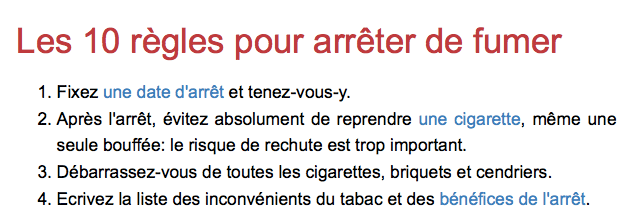
Screenshot 2016-03-25 00.52.09
“The ten rules for stopping smoking.” Picture source: screen shot of http://www.stop-tabac.ch/fr/10-regles-pour-arreter-1.
Screenshot 2016-03-25 00.54.53
“I’m going to stop judging myself.” Picture source: screen shot of https://www.facebook.com/pages/Jarr%C3%AAte-de-me-juger/634289229988133.

l’arrêt: a stop, as in a bus stop, a work stoppage, etc.  Also: a decision, as of a court.

Medical-care-specific: The verb arrêter can have a very specific meaning, which is to put someone on sick-leave.  The subject of the verb presumably has to be someone who is capable of putting you on sick-leave.   (Linguistics geekery: this kind of behavior, where the meaning of a verb can change substantially depending on the subject and/or object of the verb, is probably best accounted for by the Generative Lexicon theory, pioneered by James Pustevosky of Brandeis, and more recently elaborated by Elisabetta Jezek of the University of Pavia.)

Screenshot 2016-03-25 00.59.40
Mon médicin m’a arrêté: “my doctor put me on sick leave.” Picture source: screen shot of http://www.viedemerde.fr/travail/7503604, the #shitlife web site.  (Sorry–that’s what vie de merde means.)

However, just because “doctor” is the subject doesn’t mean that the verb necessarily has that meaning:

Screenshot 2016-03-25 01.02.41
“It’s because my doctor took me off of The Pill.” Picture source: screen shot of a page from the book Lettre overte d’un médecin à une société malade,” by Alain Bellaiche, taken from Google Books.

Here, the m’ is an indirect object pronoun, and it’s la pilule (“The Pill”) that is the direct object.  (That bit of extra information probably doesn’t help much–sorry!)

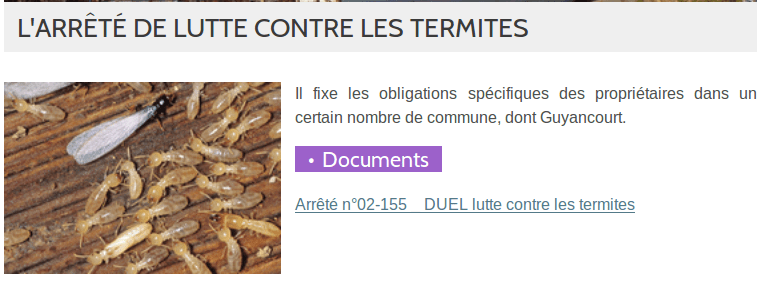
l’arrêté (n.m.): this is a noun meaning “order” or “decree.”  It shows up quite a bit in official communications of various and sundry sorts–see below.
Screenshot from 2016-03-25 11:34:02
“The decree concerning fighting termites.” Picture source: screen shot from http://www.ville-guyancourt.fr/Cadre-de-vie/Urbanisme/L-arrete-de-lutte-contre-les-termites.

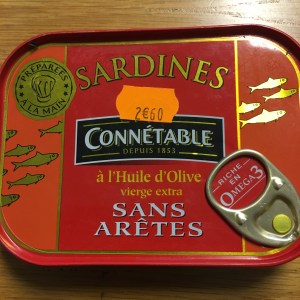
l’arête (n.f.): another noun, meaning (among other things) “fishbone.”  This is the one that finally drove me over the edge to look up all of these various and sundry meanings.  I would’ve gotten this one a lot quicker, but it took me, like, three days to realize that there was only one R.

2016-03-16 17.33.33
“Sardines in extra-virgin olive oil–boneless.” Picture source: me.
    • un arrêt: a judgement or decision, in a legal context.  Un arrêt de la cour: a court ruling.
    • un chien d’arrêt: a pointing breed of dog.

être à l’arrêt:

      to be on point (of a dog).

Le chien est à l’arrêt:

      the dog is on point.  (Thanks to native speaker

phildange

    for these.)

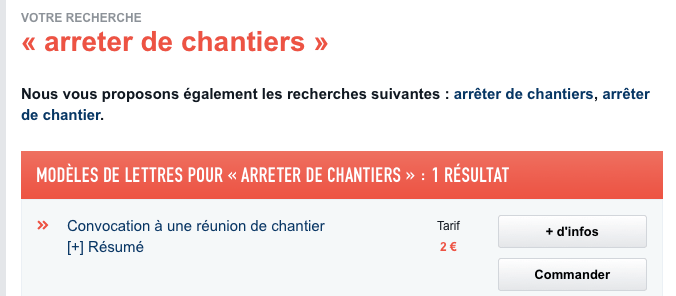
Even after this in-depth investigation, I don’t understand all of the various and sundry permutations of these words with their as, their rs, their ês, and their ts.  Here’s an example that I came across–I have no clue whatsoever what it means.  (Various native speakers have suggested that it’s an error–see the Comments section.)  PS: in the end, sardines aren’t that great of a solution to the whole I-need-more-protein problem–they smell, and I do have office mates.  Time to ramp up my already-enormous cheese consumption yet again, perhaps…
Screenshot 2016-03-25 00.47.33
Picture source: screen shot of the lemonde.fr web site.


I guess it’s not so secret any more: why linguists study children’s language games

Why would a linguist study children’s language games? It turns out that they can tell us a lot.

Screenshot 2016-04-08 13.19.56
Picture source: screen shot from the LINGUIST mailing list.

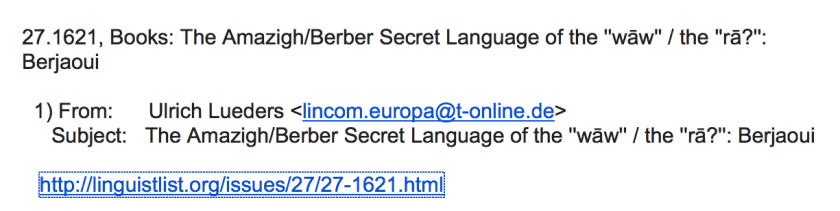
I subscribe to a mailing list that gets me news about current events in linguistics–upcoming conferences, tables of contents of new journal issues, fellowship opportunities–and notices about newly published books.  Often I look at some of this stuff and wonder: what the hell must non-linguists think when they see something like this?  Today’s email brought me an excellent example of the phenomenon: the book notice that you see above.  How could a Berber equivalent of the Pig Latin that most of us learned as kids (unless you’re French, in which case maybe you learnt Louchebem) possibly be worth a book-length treatment?  Actually, secret languages, also known as language games (described as game-like variants on some actual language, typically used by kids to mystify the uninitiated), can be quite interesting, from a linguistic point of view.  For example: in teaching introductory linguistics, many of my fellow grad students would use an example from Pig Latin to illustrate a non-intuitive fact about the English sound system.  In English, the sound that we spell ch is actually a combination of two sounds–t, as tip, and sh, as in ship.  Say t-ship with the t and the sh immediately next to each other–tship–and you’ll find that it comes out as chip.  If you survey a large class of Ohio State undergraduates, you’ll find some for whom the Pig Latin word for chip is ipchay.  For others, it’s shiptay.  What does that tell you?  For the Buckeyes (Ohio natives) with the shiptay form of chip, it’s pretty clear that ch is, on some level, represented mentally as the sequence of two sounds that it actually is.

Googling around a bit for examples of the use of secret languages in linguistic research, I came across this paper from Ruth Day at the famous Haskins Labs.  Day developed a simple secret language (take English words and substitute an r for every l and an l for every r) and taught it to subjects.  She also put them through what are known in the psychology literature as dichotic fusion tests.

normal bimodal distribution
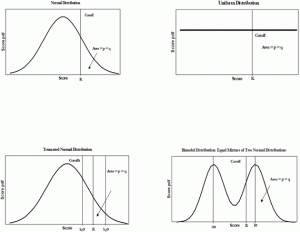
Normal distribution (upper left): results cluster around a single typical value, plus or minus a bit.  Bimodal distribution (lower right): results fall into one of two groups, plus or minus a bit.  Picture source: click here.

Dichotic fusion tests assess how people process sounds.  They have an unusual property.  Most tests of sound processing have what’s called a normal distribution.  This means that there’s some typical result, and the results mostly cluster around that value.  In contrast, dichotic fusion tests are bimodally distributed–rather than everyone clustering around some typical value, people fall into one of two categories.  Day found that some of the subjects were good at learning the secret language, and some of them weren’t.  She also found a relationship between how people behave on dichotic fusion tests and how adept they are at learning the secret language: people who were good at learning the secret language mostly fell into one group on the dichotic fusion test, and people who were bad at learning the secret language mostly fell into the other group on the dichotic fusion test.  She speculates that this might be related to individual differences in how “bound” different speakers are by the nature of what the pioneering structural linguist Ferdinand de Saussure called langue and parole–two very different ways of categorizing language.  It’s not immediately obvious that these two different categories exist, and you could interpret Day’s experimental findings as being consistent with the hypothesis that they do.  (And, yes–linguistics as we know it today was invented by a French-speaking Swiss guy.  Even the English-language technical vocabulary of linguistics has kept Saussure’s original French terms, langue and parole.)

Language games are sometimes presented as a form of evidence regarding speakers’ models of syllable structure.  You didn’t know that you have a model of syllable structure?  That’s the nature of knowledge about language–it’s mostly not conscious, and, as we say, “not accessible to introspection”–meaning, even if you think about the rules of language and try to figure them out, you mostly can’t.  (If you’re an English speaker: can you explain when to use the and when to use a?  Probably not, but you certainly know, on some unconscious level, how to do so, and you certainly recognize when someone who doesn’t natively speak a language that has an equivalent of the and a messes them up in English.)  The ship-tay speakers were surprised to have this pointed out.  It wasn’t something that they were consciously aware of, but on some level, they seemed to “think” of ch as a sequence of t and sh. 

The French connection: there’s a form of slang in France called Verlan.  It’s not clear whether Verlan should be considered a secret language/language game as such, versus a form of slang, but even if it should be considered a slang, it is clear that its words are formed by a language game.  Phildange explained a bit about how it works in his comments on a recent post.  From a cross-linguistic perspective, it’s quite unusual.  If you observe secret languages from around the world, they tend to work on the basis of one or two of four different kinds of phonological processes (phenomena involving doing something to sounds):

  • insertion of sounds
  • rearrangement of sounds
  • substitution of sounds
  • deletion of sounds

From the perspective of this kind of classification, France’s Verlan is unusual in that it combines a multitude of different kinds of phonological processes.  For lots of details, see this set of lecture notes from Stuart Davis of Indiana University.

I hope that no Berbers were planning on using the waw/ra? secret language to pass messages around linguists in the future, as I guess it’s not so secret any more.  Are you thinking that the book about it would make a great Christmas present for someone?  You can pick up a copy here.

Gender and (you got no) class

swahili-noun-classes
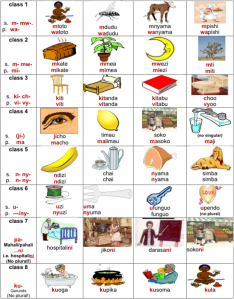
Swahili noun class markers. Picture source: http://www.kiswahili-mangat.com/.

Many languages have a phenomenon such that nouns belong to groups that affect things about the words with which they occur.  French is such a language.  You can more or less put French nouns into two groups, as follows:

  • For one group, the singular definite article (“the”) is le, the singular indefinite article (“a”) is un, the adjective “big” is grand, and the adjective “boring” is ennuyeux.
  • For the other group, the singular definite article (“the”) is la, the singular indefinite article (“a”) is une, the adjective “big” is grande, and the adjective “boring” is ennuyeuse.

When a language has two or three of these classes, the language is typically said to have a gender system.  So, French has two of these classes, and we call the nouns in these classes masculine and feminine nouns.  German has three of these classes, and we call them masculine, feminine, and neuter nouns.  Lithuanian Yiddish has three of these classes, but most other dialects of Yiddish have two.  English has basically no such classes–we have words that are sort of intrinsically masculine, like father, and words that are sort of intrinsically feminine, like mother, but since they don’t affect the forms of the words with which they appear (you say the mother and the father, with no differences in the word the), linguists wouldn’t call it a gender system.  On the other hand, Old English (spoken from around 450 to around 1400) had three noun classes.  (Look at the different forms of the word the in these three Old English nouns, taken from Wikipedia: sēo sunne (“the sun”), se mōna (“the moon”), þæt wīf (“the woman/wife”).)  A language on which I did research in graduate school only has two such classes, but referring to anything by the wrong class is a way to insult it.  It doesn’t matter which of the two classes it belongs to–if you use the wrong modifiers, it’s an insult.  I was terrified to ever open my mouth, and don’t speak it at all.  (My son often played in the corner of the office while I collected data.  It’s quite amazing to hear dô páráná come–correctly–out of the mouth of that blond-haired, blue-eyed, video game addict today.)

There’s nothing magic about the numbers two and three–languages can have more or less arbitrary numbers of these classes.  We tend to refer to them as genders when there are just two or three, and to refer to them as noun classes when there are more than that, but there is no difference between what we call the gender system in French, with two noun classes, and what we call the noun class system in Shona, which has twenty noun classes.  It’s a difference of numbers, not of kind–in both cases, you have this more-or-less arbitrary slicing up of the nominal lexicon (noun vocabulary) of the language into groups of nouns that affect the forms of articles, adjectives, etc. in various and sundry ways.

I say “various and sundry” because gender/noun class systems can work out in lots of different ways.  In Semitic languages, verbs agree with the gender of their subjects.  For example, he studied is lamad, while she studied is lamda.  In the first case, it’s the pattern of having the two a-a vowels that makes it the masculine form of the verb, and in the second case, it’s the a in the middle, the md coming together (versus mad in the masculine form), and the a at the end that make it feminine.  Different verbs, tenses, and numbers (that is, singular versus plural) have different forms, so don’t get excited about the fact that there’s an a at the end of the third person singular past tense feminine form of the verb–it’s not that way all the time.  For example, he goes is holekh, while she goes is holekhet. 

Does having classes of nouns in your language–or not having them–make a culture more or less sexist?  I only have anecdotes here, and–counter to what you might hear–anecdote is not the singular of data.  For what it’s worth: my undergraduate advisor always used to point out that Hebrew is about as gendered of a language as you can get (see above–even verbs have to have gender in Hebrew), and probably close to everyone in Israel speaks either Hebrew or Arabic (which has the identical system), but Israel was the fourth country in the world to elect a woman as the head of state.  In contrast, Finnish has no gender whatsoever, but has never had a female head of state, as far as I know.  (This is not to imply anything bad about Finland–there are a bazillion countries with genderless languages that have never had a female head of state.  I don’t know why my professor picked on the Finns.)

English note concerning the title of this post: using the word got (or gots) as the present tense of the verb to have is a social marker of class–that’s “class” in the sense of couche sociale.  Lower class, specifically.  Other speakers might use it for humorous effect.  “To have class” means something like to have elegance of style or manners.  So, if you say you got no class, man, part of the flavor of the expression comes from the fact that you’re using a “low (social) class” verb form to talk about “class” in the sense of elegance.


Full-screen and coffee breaks: conferences in France

There is essentially nothing that I do in France that doesn’t involve an encounter with Zipf’s Law.  One thing that I find quite useful here in France is to go to talks, conferences, and what are called journées–literally “days,” but in practice, a day-long mini-conference on some subject or another.  It’s a good way to learn the technical vocabulary of my field in French, and also to have casual conversations with my peers about it.  The other day, I went to a journée on natural language processing (what I do for a living) and artificial intelligence.

As far as I can tell, French researchers (at least in my field) primarily publish in English.  My field is much more oriented around conference papers than around journal papers–our conferences are peer-reviewed and often quite competitive, while our journals are more oriented towards essentially archival coverage of long-term research projects.  So, the latest and greatest research shows up in conferences, not journals.  The conference papers are published, and they’re cited quite a bit more than journal articles.  Although my French colleagues do primarily publish in English, there are also French conferences and journals in my field.  The French conferences and journals ask for papers written in French from Francophones, but allow non-Francophone scientists to submit work in English.  Being able to read some French has opened up quite a bit of stuff to me that I wouldn’t otherwise have been able to read (and cite).  I especially enjoy some of the work in French on lexical semantics; it isn’t necessarily any different in terms of topics, approaches, or the flavor of the results, but some of it is written so much more clearly than similar stuff that I’ve read in English.

One thing that still surprises me about French conferences is that during the question-and-answer period after a talk, the speaker and members of the audience address each other as tu, using the informal pronoun.  You can read more about this  phenomenon of French conference participation here, along with some speculations about where it comes from.

For official purposes, the French system often differentiates between French conferences and what the paperwork refers to as “international” conferences, which in practice seems to mean any conference outside of France.  (That’s not obvious–for example, a conference in Germany, attended primarily by a local audience, apparently would count the same as a conference like the Association for Computational Linguistics annual meeting, which is attended by people from all over the world.  I suppose that evidence of an international reputation is, indeed, supplied by presentation of your work anywhere outside of your home country.)

Just following the schedule gave me trouble, which doesn’t exactly make me feel bright.  Here are some really basic words that I came across in the course of the day:

  • la pause-café: this is what WordReference.com gives as the translation of “coffee break.”
  • plein écran: full screen.

How to sound French: March 2016 edition

This winter, the expression on everyone’s lips seems to be pas mal.  We learn this in college as meaning not bad.  However, colloquially it can also mean something like a lot.  In fact, I’ve been hearing it quite a bit even from a friend who prefers the 17th-century language of Molière to the language of today and doesn’t speak very colloquially at all.  You can find good examples of how to use pas mal in this sense on Laura Lawless’s Lawless French web site.  Here are some more:

Screenshot 2016-03-26 01.47.21
“I saw Manon this morning and we talked a lot it’s cool” Picture source: Twitter screen shot.

If you use pas mal to modify nouns, it’s a quantity term, and is followed by de:

Screenshot 2016-03-26 01.50.15
“I think that we have a lot of things in common” Picture source: Twitter screen shot.

Be aware that even the expression as we learn it in school–that is, with the meaning not bad–can be difficult to understand, with the intended meaning being conveyed in part by intonation.  There’s a very nice video on the intonational subtleties of the expression here, on the Français avec Pierre YouTube channel.

Spleens, 3x5s, Molière, and French grad students

2016-03-24 07.16.50
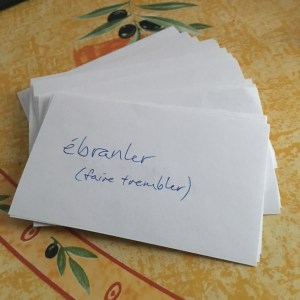
3x5s or index cards. The name “3×5” comes from their size, which is 3 inches by 5 inches.

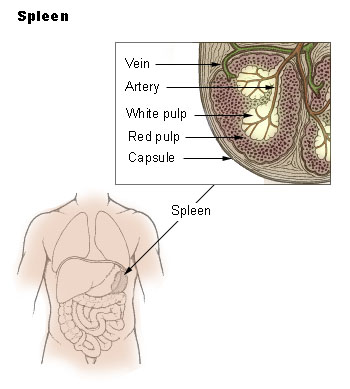
My morning routine includes studying French vocabulary, which means flash cards.  I make my flash cards from what we call in English index cards or 3x5s (pronounced “three by fives”–they take that name from the fact that they normally measure 3 inches by 5 inches).  Recently I’ve been amusing my younger coworkers by sharing my current vocabulary flash cards, and I have been impressed beyond belief by the breadth and depth of the English vocabulary that these kids have.  “Talon”?  No problem.  “Greenhouse”?  They’ve got it.  Yesterday I ran into the word rate, “spleen,” in the play Le malade imaginaire, a 17th-century French play by Molière.  One of them explained to me the various and sundry forms with which the English word “spleen” can be translated into French.  The word has at least five meanings in English.  The most common meaning is the internal organ that most vertebrates have, located on the left side in humans near the stomach and playing a role in a variety of processes, including ridding the body of old red blood cells and being involved in the immune response.  The other meaning, which is not nearly as common but is still found in the language, is given by Merriam and Webster as “feelings of anger or ill will often suppressed.”  These get split into two different words in French.

  • la rate: spleen (the internal organ).
  • le spleen: melancholy or ennui, and archaically, the same anger-related meaning as in English.
Illu_spleen
The spleen, or la rate. Picture source: Public Domain, https://commons.wikimedia.org/w/index.php?curid=1394146.

It was quite impressive to hear a computer scientist explain the 17th-century meaning of the word–that’s not something that I would expect an American computer science grad student to be able to do for the English equivalent.  I’ve been reading Molière, and apparently she has done so, too–again, I wouldn’t expect an American computer science grad student to be familiar with Shakespearean vocabulary.

It amazes me that there seems to be no French equivalent to the 3×5.  (I saw friends exchange the sidelong glances that I inspire so often here by accidentally saying inappropriate things when I referred to them by the Canadian term, fiches vierges–it can mean “blank cards,” but also “virgin cards.”)  I only survived my education by using these things to obsessively memorize pretty much every term, equation, and random fact that I was taught.  Considering the very demanding nature of the French educational system, I’m baffled by how French students manage to pass the  exams that are required to progress through the system without some equivalent of index cards.  I throw several packs of them into my luggage every time that I come to France, and can’t imagine learning as much as I do without them.

No clever title about the bombings in Brussels, but here’s some relevant vocabulary

ward-markey-sur-Twitter-echt-wtf-daar-in-zaventem-httpst.co2AGTBBA0xs-Google-Chrome-630x0
Scene from Zaventem airport in Brussels after the bombings of March 22, 2016. There is some concern that with the security in restricted areas of airports as high as it is now, terrorists will now start attacking the public areas, as they did today. Picture source: http://www.lejournaldelorne.fr/2016/03/22/attentats-explosions-a-l-aeroport-et-dans-le-metro-de-bruxelles-suivez-les-evenements-en-direct/.

The radio show that I listen to in the mornings (Les matins de France culture) starts with the various and sundry reporters going around and saying a few words about what they’ll be talking about.  Yesterday one of the reporters said this: I’ll be talking about the attacks in, um…in, um…well, there are so many of them.  [Nervous chuckle.]  This morning I woke up to the news of the latest attacks in Brussels: two bombings at the airport, then one at a metro station.  All major European capitals are on heightened security at the moment, especially at transit points, but other than that, planes are flying (except to and from Brussels), the trains are moving (except in Brussels, where all subways, busses, and trams are shut down, and people are being advised to stay at home), etc.

It’s depressing to note that I now know most of the words in any given story about a terrorist attack.  However, Zipf’s Law never really goes away, so here are some words from stories about this morning’s bombings.  For the full story from the source, click here.

  • survenir: to occur, to arise.

 Une explosion survenue dans le métro, à la station Maelbeek, aurait fait une dizaine de morts et de nombreux blessés.

“An explosion that took place in the metro, at the Maelbeek station, has caused a dozen deaths and numerous injured.”

  • réaffirmer: to reaffirm.

Nos pensées vont naturellement aux victimes, à leurs proches ainsi qu’à l’ensemble des autorités belges auxquelles nous réaffirmons notre solidarité.

“Naturally our thoughts are with the victims, with their dear ones, and we reaffirm our solidarity to all of the Belgian authorities.”

  • faire le point sur: to take stock of, to review.

Nous venons de faire le point sur notre dispositif en place aux frontières et dans les transports.

“We have just reviewed our security team in place at the frontiers and in the means of transport.”

  • rehausser: to raise, to boost.

Nous n’avions pas attendu cette attaque pour réhausser notre niveau de sécurité.

“We didn’t wait for this attack to boost our level of security.”  Note: the news story spells the word réhausser, but WordReference.com gives it as rehausser.


How we’re sounding stupid today: #JeSuisCirconflex

2016-03-21 08.41.55
“The last day of the fast.” Picture source: picture by me of an advertising poster in the train station.

The military has this problem.  People transfer from one “duty station” to another fairly often, and you need to be able to get them integrated quickly–you can’t have someone taking up unproductive space on a ship or on a base for very long.  The US military has gotten this integration process down to a science.  Basically, when you show up at a new command, you’re given a check-sheet.  You take it around to various and sundry places–the medical clinic, the pay clerk, the base library, etc.  The people who work there do whatever has to be done to get you integrated into the unit.  They sign your check-sheet, and you go on to the next place.  It takes maybe two days to get totally set, and then you’re productive.

The place where I work when I’m in France has a similar system.  By now, je connais déjà cette musique–I know the drill–and I can usually get all of my administrative stuff done the first day back in the lab.  There’s only one problem: I have to successfully pick up the check-sheet.  The issue is that it’s called a feuille jaune–a “yellow piece of paper” (it is indeed a piece of paper, and it is indeed yellow), and I constantly mess up and ask the administrator for a feuille jeune.  Only a one-vowel difference, but it means “young piece of paper,” not “yellow piece of paper.”  This gets me confused looks, or by now a smile.  I was reminded of just how ambiguous this really is on the way to work this morning, when I saw the poster that you can see at the top of this post.  What’s interesting about it is the word jeûne, which is pronounced the same as the word jeune, but spelt differently–notice the circumflex accent in the former.  As I said, they’re pronounced the same, but jeune (no accent) is “young” or “youngster,” while jeûne (with accented û) is a fast (that is, when you don’t eat).  The pair of words has been much in the news lately.  The issue here is that the French government will be instituting a spelling reform at the beginning of the next school year.  Among other derangements of the current system, some words with circumflex accents will be losing them.  There is a major Twitterstorm about this.  One funny tweet that I read pointed out that the circumflex accent on jeûne (a fast) is the only difference between je vais me faire un petit jeûne (I’m going to take a little fast) and je vais me faire un petit jeune (I’m going to have myself a little youngster.)

Now, “fast” is a perfect Zipf’s Law sort of word: it certainly is not common, but it also is certainly not particularly weird in any way–any native speaker knows it.  I had never run into jeûne before the Twitterverse went crazy about the spelling reform, and in fact, that’s how I learnt it.  Now it’s a couple months later, and there it is: right there in my face as I went to work this morning.  Zipf’s Law!

  • jaune (adj.): yellow.
  • le jaune: scab, strikebreaker.
  • le/la jeune: young person.
  • le jeûne: fast, fasting.


Paris metro etiquette

If you follow Parisian rules of etiquette on the metro, your visit will go more smoothly. Here’s how to do it.

enleve son sac a dos
“He who travels with his back loaded removes his back pack in order to be less bothersome.” Picture source: photo that I took of a sign in a metro station.

If you look on question-answering web sites like Quora, or even just do a quick Google search, you’ll see many people asking this question: Why do Parisians hate tourists?  The answer: Parisians do not hate tourists.  On the contrary–Paris is very aware that tourists are part of the life-blood of the city, and they are happy to have foreign visitors in droves.

However: there are definitely things that tourists do that can interfere with the flow of your daily life here, and those things can be irritating.  A lot of those things happen on the métro, the Paris subway system.  Every morning, 2.5 million people get on that thing for their commute to work, and then they do it again in the evening.  In hopes of preventing you from being one of those tourists who irritate the locals, here are some notes on metro etiquette.  You’ll note here many instances of what I understand to be the basic principle of French behavior: don’t inconvenience the other guy.

  • Entering/exiting: When you’re waiting to enter a subway car or train, stand off to the side of the door so that you’re not blocking it.  People will exit through the center, and then you enter at the side, or through the center if it’s not obstructed.  (This is a really common rule for tourists to break, and it’s really irritating during rush hour when lots of people are trying to get off and into the cars.  Don’t be that tourist.)
  • Hold gates open: When you go through the gate, hold it open behind yourself for the next guy.  You don’t have to stand there and wait for him, but if there’s someone right behind you, this is the polite thing to do.
  • Luggage: Be considerate about trying to wrestle your big, bulky suitcase through the turnstile when there are lots of people trying to go through it–wait until traffic lets up, so that you’re not keeping everyone else from getting to their train.  Some stations also have a space next to the turnstile for luggage, so look for those.  Also note that you shouldn’t be taking your @#$% luggage on the metro anyway–see this post for reasons why that’s a bad idea.
  • Strapontins: Subway cars in Paris typically have a couple of folding seats right next to the doors, called strapontins, believe it or not (it’s the general word for a folding chair).  If the car is crowded, don’t sit in them–you will see French people who are using them stand up when a bunch of people enter the car.
  • Be quiet: If you hear someone talking or laughing loudly on the metro, they will probably be speaking English.  If you hear someone speaking on a cell phone, they will probably be a foreigner.  In general, Parisians tend to be quiet on public transportation.  See here for a funny story about what can happen if you’re not.
  • Backpacks off: If a car is crowded, take off your backback–even if it’s a little one.  If you don’t, it’s super-awkward, both for you and for everyone else.
  • Offer your seat to pregnant/elderly people: Even kids from bad neighborhoods will offer their seats to an old person or a pregnant woman on the métro.  You should do the same.
  • Say pardon: You will often have to squeeze by a few people to get on or off of a crowded car.  The polite thing to do is to say pardon when you do so.
  • Don’t block the quai, stairs, or escalators–move to the right.  If you’re walking along the subway platform or going up/down stairs and escalators, stay to the right.  People will pass you on the left.  Similarly, if you need to stop and figure out which way to go, don’t stop in the middle of heavy foot-traffic–get out of the way while you get your bearings.
  •  le strapontin: folding seat, jump seat.
  • le quai: platform, dock, quay.
  • le wagon: subway car, train car.


Don’t take the train from the airport to Paris

Any guidebook will tell you that you can take the train from the airport to Paris. What they don’t tell you is that you can–BUT, YOU SHOULDN’T.

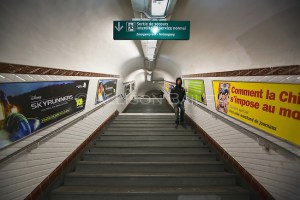
Man descending stairs, Abbesses Metro Station, line 12, Paris, France
Stairs at the Abbesses metro station. Picture source: http://allisonbailey.photoshelter.com/image/I0000_biCI_fb7wM.

I happened to be on the metro on the way home from work during rush hour yesterday.  Onto the packed train climbed a young woman wearing an enormous backpack.  Her travelling companion was similarly encumbered, and was also carrying an enormous, ornately embroidered, blue velvet sombrero.

Their backpacks took up at least as much space as two additional people would have.  Furthermore, since they were wearing them on their backs, there was no way that they could move without smacking someone with 65 liters’ worth of stuff, and no way that they could maneuver out of anyone else’s way in those tight quarters.

You didn’t even have to be able to hear them to know what their nationality was–just by watching their mouths, it was pretty clear that they were Americans.  (Yes, the mouths of American English speakers move quite differently from the mouths of French speakers.)  They had probably read their Paris guide books closely–and they had been lead astray by them.

Any Paris guidebook will tell you that you can get from Charles de Gaulle Airport (or Roissy, as the locals call it) by taking the train into Paris, and then switching onto the subway.  This is certainly true.  What the guidebooks don’t tell you is that even though you can, you should not do this. 

There are two basic problems with the take-the-train-to-the-subway plan, and I see those two problems raise their ugly heads all the time.

  1. There are a heck of a lot of stairs in some of those stations.  I can’t tell you how often I have come across someone trying to struggle up–or down–a long flight of stairs in a Parisian metro station with a huge suitcase.  (Oh, there really ARE nice people in the world, said one old lady with an absolutely enormous suitcase who I found almost in tears at the top of a loooong flight of stairs in a metro station.  If I hadn’t recently been training to fight in Nationals, I don’t think that I could have carried that big honking thing down the stairs, either.)  Even if your plan is to take the train to someplace from where you can catch a taxi, versus transferring to a subway, you are not going to escape the stairs in the train station.
  2. Trains and metro cars can both be absolutely packed with people.  Want to get stared at with deep dislike?  Try to squeeze your suitcase with a week’s worth of vacation wear into a subway wagon filled with people jammed [trying to think of a non-vulgar way to put this] together like sardines already.  Enjoy the welcoming looks of all of the people on their way to/from work as they try to squeeze around your giant suitcase, which is now mostly blocking the door.  Roll your 49-pound suitcase over the toes of some nice Parisian woman’s $835 asymmetric-strap Manolo Blahniks.  Or, roll your 49-pound suitcase over the toes of some nice Parisian woman’s $10 Converse knock-offs after she’s just spent all day on her feet at her job as a cashier.  Or…well, the possibilities for pissing off people on a crowded train or metro car are endless, really.

Is that really how you want to start (or end) your vacation?  Probably not.  I recommend that instead, you spring for a taxi.  Due to a recently-passed law, the price of taxi rides from either Paris airport into Paris proper is fixed: 50 euros to the Right Bank, 55 euros to the Left Bank.  You get in the taxi, the total price shows up on the meter, and that’s it.  After a looong flight across the Atlantic, this is the only civilized way to start your Parisian adventure.

I ate my dinner last night while mulling over what the heck that kid could possibly have been doing with that giant sombrero.  Using it to cover his eyes while he slept on the plane?  Using it to cover his entire body while he slept on the plane?  Bringing it as a present for some unsuspecting Parisian who couldn’t possibly have enough room in their tiny Parisian apartment for a Sombrero of Unusual Size?  Hard to say…

  • fourvoyer: to mislead; to lead astray.  The American tourists with their giant backpacks (and their giant sombrero) were led astray by their guide books.
  • se fourvoyer: to be mistaken, to get something completely wrong; to get lost, to stray from one’s path.  I do this pretty much all the time.
Ukrainian Humanitarian Resistance

Resisting the russist occupation while keeping our humanity

Languages. Motivation. Education. Travelling

"Je suis féru(e) de langues" is about language learning, study tips and travelling. Join my community!

Curative Power of Medical Data

JCDL 2020 Workshop on Biomedical Natural Language Processing

Crimescribe

Criminal Curiosities

BioNLP

Biomedical natural language processing

Mostly Mammoths

but other things that fascinate me, too

Zygoma

Adventures in natural history collections

Our French Oasis

FAMILY LIFE IN A FRENCH COUNTRY VILLAGE

ACL 2017

PC Chairs Blog

Abby Mullen

A site about history and life

EFL Notes

Random commentary on teaching English as a foreign language

Natural Language Processing

Université Paris-Centrale, Spring 2017

Speak Out in Spanish!

living and loving language

- MIKE STEEDEN -

THE DRIVELLINGS OF TWATTERSLEY FROMAGE