
Ambiguity exists when something can have more than one interpretation. Ambiguity is completely pervasive in language. There is almost nothing that you will say, hear, write, or read today that will not be ambiguous in some way, but humans are so good at what’s called “resolving” ambiguities that we only rarely notice them. Computers, on the other hand, are not–they have no way of not stumbling on them, and you could think of the entire challenge of people like me whose work involves computers and language as being finding ways to let computers resolve ambiguity.
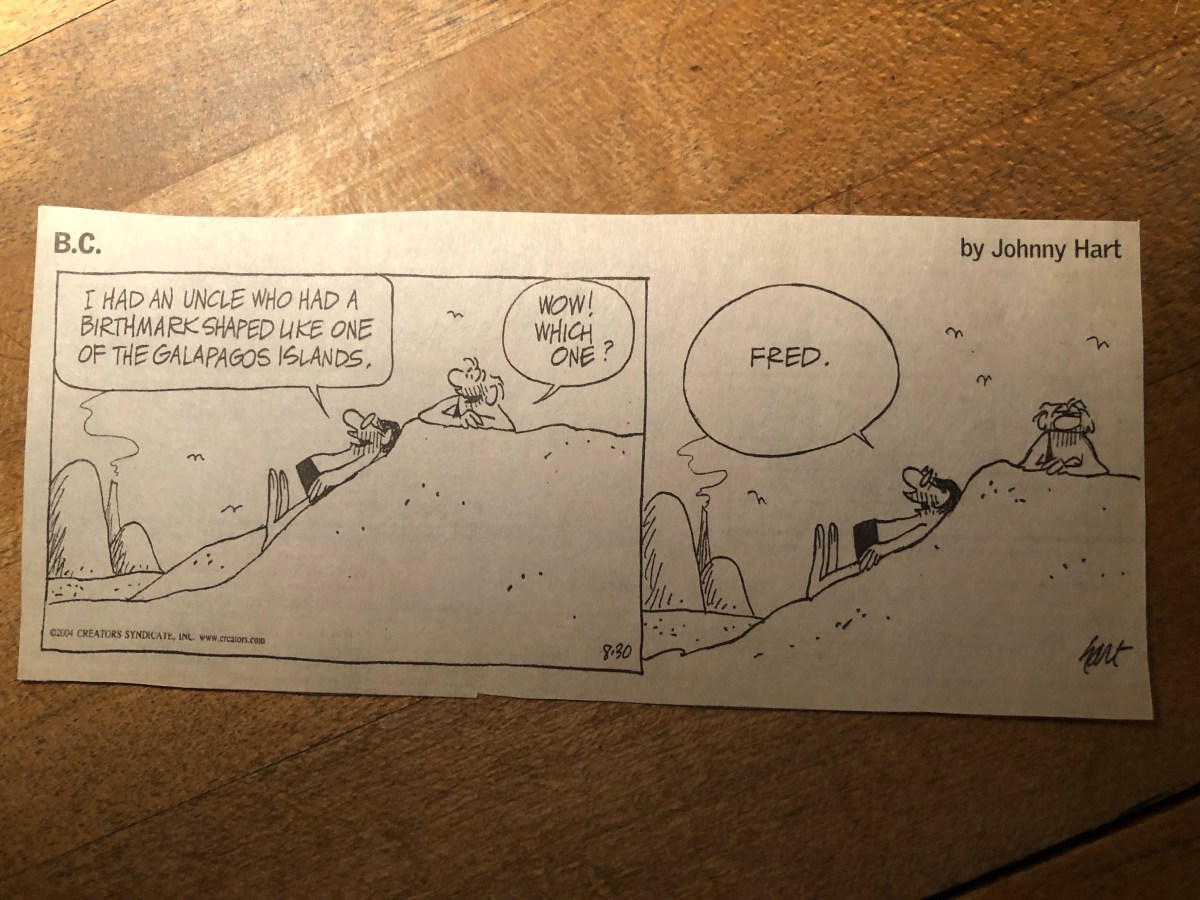
Ambiguity is often manipulated in humor, and jokes, cartoons, and the like are the best way that I know of to get people to notice it. In that spirit, here’s an example of what’s called ambiguity of anaphoric reference. Anaphora is the phenomenon of something in language having its referent–you could think of that as the thing that gives it its meaning—from something else in language. Consider this cartoon:
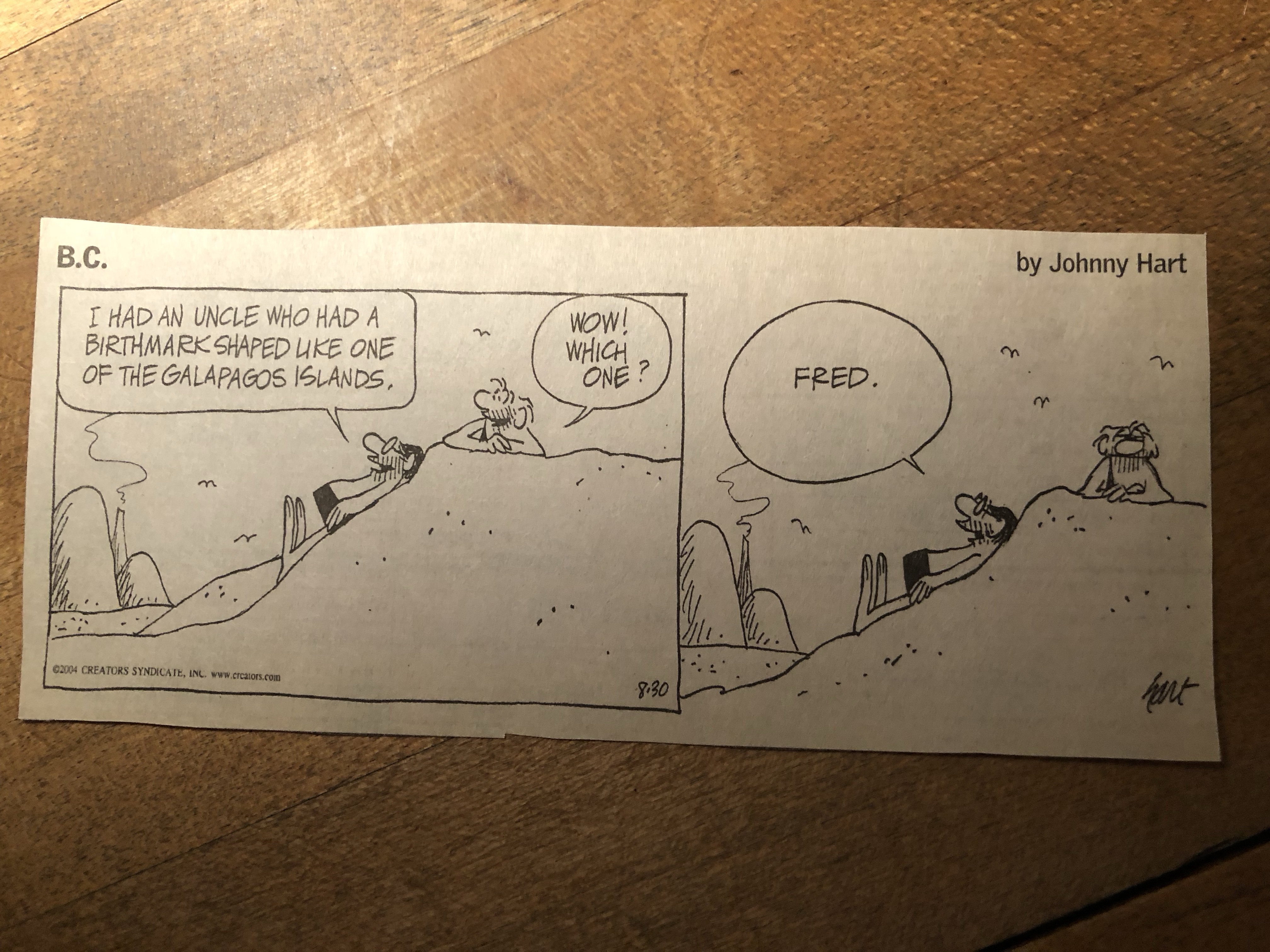
Why is it funny? The joke is built on the fact that the word one in which one? gets its meaning from something earlier in the conversation. To a human, it’s obvious that the intended referent is an island in the Galapagos. However, the speaker interprets the referent as being one of his uncles. Why can he do that? Because the one is, in fact, ambiguous—there’s nothing in the linguistic structure of the sentences that indicates one way or the other whether the referent is the uncle, or the island. The humor works by violating our expectations. A computer program, on the other hand, doesn’t have any such expectations—unless we can figure out how to give them to it. Hence my job.
Want to know more about anaphora? Check out my colleague Ruslan Mitkov‘s excellent book Anaphora resolution. #cleaningthebasement



 Zipf's Law