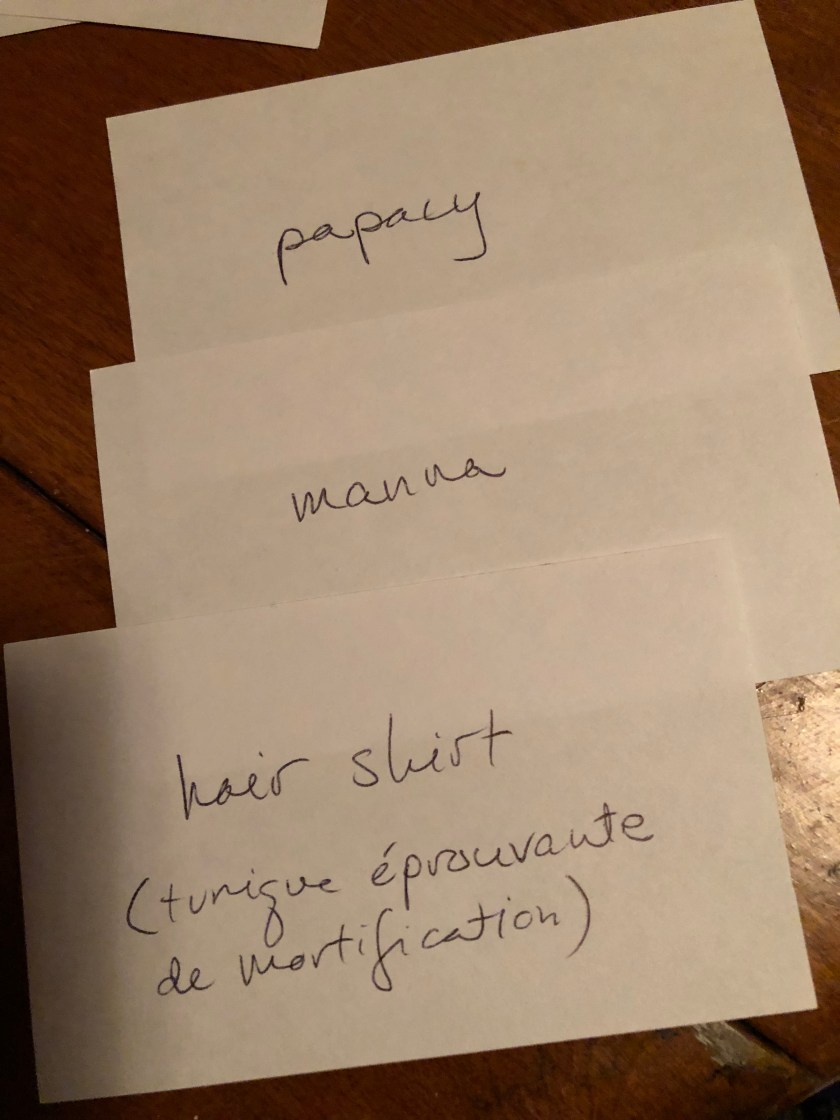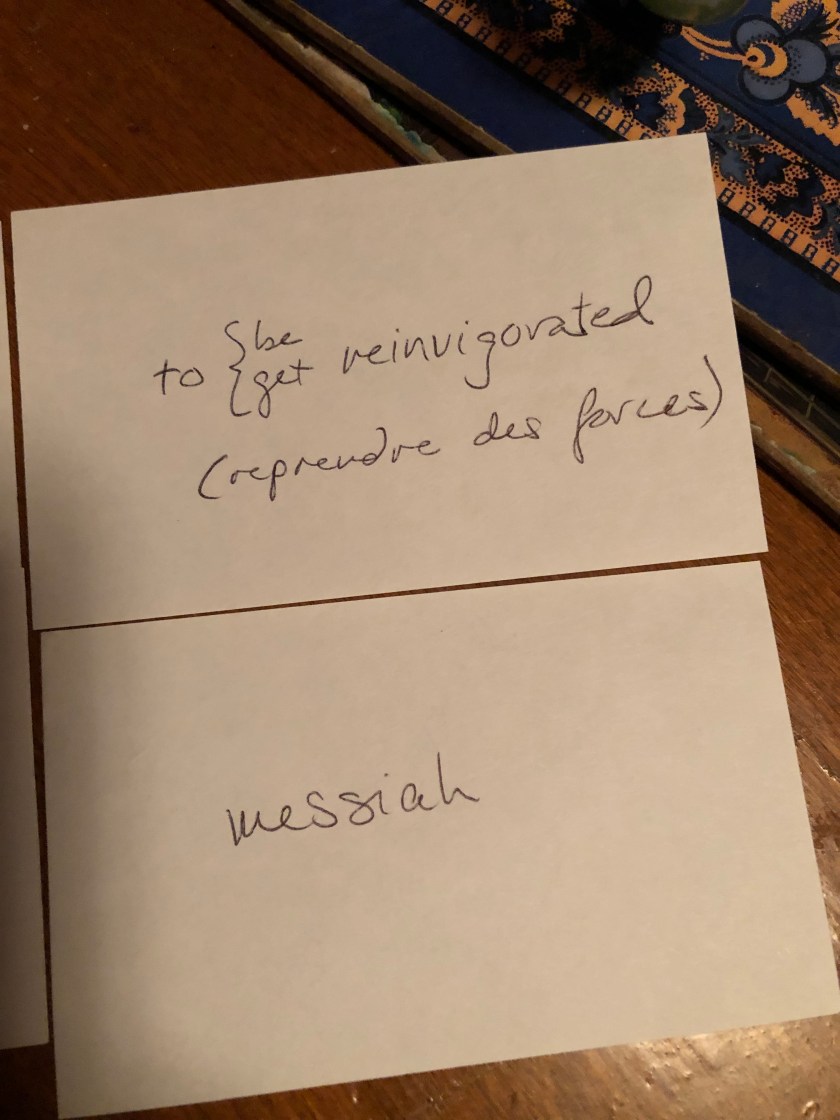
Prévert’s Pater Noster

Our Father who art in Heaven // Stay there

Notre Père qui êtes aux cieux
Restez-y
Et nous nous resterons sur la terre
Qui est quelquefois si jolie
Avec ses mystères de New York
Et puis ses mystères de Paris
Qui valent bien celui de la Trinité
Avec son petit canal de l’Ourcq
Sa grande muraille de Chine
Sa rivière de Morlaix
Ses bêtises de Cambrai
Avec son Océan Pacifique
Et ses deux bassins aux Tuilleries
Avec ses bons enfants et ses mauvais sujets
Avec toutes les merveilles du monde
Qui sont là
Simplement sur la terre
Offertes à tout le monde
Éparpillées
Émerveillées elles-mêmes d’être de telles merveilles
Et qui n’osent se l’avouer
Comme une jolie fille nue qui n’ose se montrer
Avec les épouvantables malheurs du monde
Qui sont légion
Avec leurs légionnaires
Aves leur tortionnaires
Avec les maîtres de ce monde
Les maîtres avec leurs prêtres leurs traîtres et leurs reîtres
Avec les saisons
Avec les années
Avec les jolies filles et avec les vieux cons
Avec la paille de la misère pourrissant dans l’acier des canons.

Our Father who art in heaven
Stay there
And we’ll stay here on Earth
Which is sometimes so pretty
With its mysteries of New York
And then its mysteries of Paris
Which are worth every bit as much as the Trinity
With her little Canal of the Ourcq
Her Great Wall of China
Her Morlaix River
Her stupidities of Cambrai
With her Pacific Ocean
And her two fountains of the Tuileries
With her good children and her bad apples
With all of the wonders of the world
That are here
Just right here on Earth
Free to all the world
Scattered
In wonder over being such wonders
And who don’t dare admit it to themselves
Like a beautiful naked girl who doesn’t dare show herself
With the dreadful calamities of the world
Which are legion
With its legionnaires
With its torturers
With the masters of this world
The masters with their priests, their traitors, and their mercenaries
With the seasons
With the years
With the pretty girls and with the old jerks
With the straw of misery rotting in the steel of the cannons.


As someone smarter than me first observed: love poetry tends to be pro-love, while war poetry tends to be anti-war.  This one is by Jacques Prévert, a veteran of the First World War who was a major figure in French poetry, theater, and cinema after the Second World War.  There’s a lot of love in his poetry, a lot of Paris in his poetry–and a lot of war.  Like almost everyone who has ever been in a war, he hated it.  This poem follows a common pattern of Prévert’s war poetry: start off with something sweet and funny, and then…the war comes along.

Reading Prévert was the first thing that ever really made me grasp “the impossibility of translation.”  Most good poets will, at some point or another, play around with the sounds of the language; most of the time, I don’t notice it.  Prévert pushes it far enough for even me to get it.  For example, here are my second-favorite lines of the poem:

Avec les maîtres de ce monde
Les maîtres avec leurs prêtres leurs traîtres et leurs reîtres

The bolded words are all rhyming monosyllables.  I’ll just note in passing that when spoken, the lines have the effect of someone beating on a drum.  I’ll just note in passing that there is no way to translate that while maintaining that beautiful rhythm, that repetition of the internal rhyme.  I’ll just note in passing that as someone who loves the circumflex accent about as much as anything else he loves about the French language, the fact that each of those words has one is… a joy.  But, I’ll dwell a bit more on the vocabulary.

Le reître is obscure enough that even educated French people don’t necessarily know it.  Here’s what I found when I looked it up:

HIST. MILIT. Cavalier allemand mercenaire au service de la France aux xveet xvies. Vainement aussi il [le roi Henri III] tenta, en négociant, d’arrêter une armée allemande, vingt mille reîtres en marche pour rejoindre les rebelles de l’ouest et du Midi (BainvilleHist. Fr., t. 1, 1924, p. 179).

Translation: German mercenary in the service of France in the 15th and 16th centuries.  (I believe it’s also a regionalism meaning something like an old (retired?) soldier.  Being a fat old bald guy who spent 9.5 years in the service of his country: I can dig it.)

As an American, I find the word reître interesting because it opens a window on something quite topical: the US military’s low level of support for Trump.  He’s at under 50% approval among service members as a whole, and at 30% in the officer ranks.  Why?  Lots of reasons, some of which I’ve written about elsewhere.  The relevant one in this case: conscience.


When you join the American military, you take an oath.  The oath is not to protect the country, or the president, and certainly not to protect the flag.  (Has anyone ever been stupid enough to kill for a piece of cloth?)  The oath is to protect the Constitution.

What’s the Constitution all about?  Basic principles.  Principles in the sense of what is right, and what is wrong.  Note what is not in there: money.

We the People of the United States, in Order to form a more perfect Union, establish Justice, insure domestic Tranquility, provide for the common defence, promote the general Welfare, and secure the Blessings of Liberty to ourselves and our Posterity, do ordain and establish this Constitution for the United States of America.

www.archives.gov

Let’s go back to the definition of reître now:

German mercenary in the service of France in the 15th and 16th centuries.

Is there anything wrong with being German?  No.  Is there anything wrong with being in the service of France?  No.  Is there anything wrong with being a mercenary?  Absolutely.


Being in the American military does not have much to do with the question What would you die for?  That’s straightforward: in the American military, you might die if your boss makes a stupid mistake, but if your boss doesn’t make a stupid mistake, you’re probably coming home again.  The question, then, is this: What would you kill for?  The answer to that: basic principles.  Justice, liberty, tranquility.  Notice what’s not on that list: money.  The American warfighter is not a mercenary.


How does that relate to President Donald J. Trump?  Because he–never a fighting man himself–seems to think that we do, in fact, kill for money.  Here are the kinds of quotes that make an American military person think that their Commander in Chief should not, in fact, be their Commander in Chief.  They are President Trump talking about American commitments of military troops to our allies:

…why are we doing this all free?…They should be paying us for this. 

President Donald J. Trump, excerpted from a Fox News interview with Greta van Susteren on April 5th, 2013: response to a question on US troop commitments in South Korea.

they have to protect themselves or they have to pay us.

President Donald J. Trump, from an interview with Anderson Cooper, quoted here.

…they [South Korea and Japan] have to protect themselves or they have to pay us.  Here’s the thing, with Japan, they have to pay us or we have to let them protect themselves.

President Donald J. Trump, CNN Town Hall on March 29th, 2016, quoted here.


My 9.5 years in the US Navy ended over 30 years ago.  One of my ex-military buddies is less than 30 years old.  Point being: I have some personal insight into the views of American military veterans over a wide range of time.  I get why the kids in the military today support President Trump at a level even lower than the general American population.  I get why my military veteran friends support President Trump at a level much lower than the kids on active duty.  I don’t want to get paid to kill people.  What non-sociopath does?
Death of the Ball Turret Gunner: Lexical fields

I hunched in its belly till my wet fur froze…

In honor of National Poetry Month…

In a book about war poetry, I once read a striking point: poetry about love tends to be pro-love, while poetry about war tends to be anti-war.  This observation is probably related to the American military’s low level of support for Trump (under 50% overall, as it has been for a long time; about 30% in the officer ranks): he seems to feel virile when orders a bombing or a missile strike, while the military people who have to carry it out are much more likely to just feel guilty. (The link goes to a list of articles on the subjects of guilt and shame in combat veterans from the National Library of Medicine’s PubMed/MEDLINE database of biomedical journal articles.)

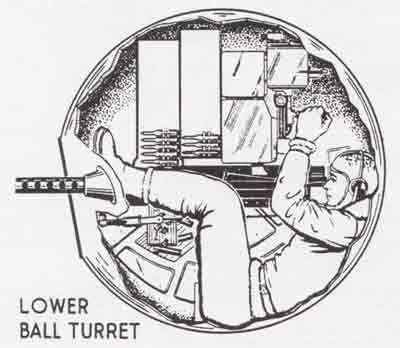
Randall Jarrell, the author of today’s poem, was a professor at the University of Texas-Austin when the Second World War started.  He left the university in 1942 to join what was called at the time the Army Air Force.  His poem The Death of the Ball Turret Gunner is widely anthologized, and most Americans will have read it in college (université in French, where collège is the American middle school).  A ball turret is a small sphere of metal and glass containing a heavy machine gun, some ammunition, and the smallest guy possible.  (No parachute.)  The ball turrets to which Jarrell refers were mounted on the underside of an aircraft.  As Wikipedia puts it:

The gunner was forced to assume a fetal position within the turret with his back and head against the rear wall, his hips at the bottom, and his legs held in mid-air by two footrests on the front wall.

Other than a ball turret, the belly of a bomber is unprotected, and the tendency at the time was for fighter pilots to attack bombers either by diving down and firing from above–or by climbing and firing into the belly from below.

The Death Of The Ball Turret Gunner

From my mother’s sleep I fell into the State,
And I hunched in its belly till my wet fur froze.
Six miles from earth, loosed from its dream of life,
I woke to black flak and the nightmare fighters.
When I died they washed me out of the turret with a hose.

English notes:

It wasn’t until I started writing this post that I noticed for the first time–bear in mind that I’ve certainly read the poem tens of times since college–how much the lexical field (le champ lexical) of sleep is woven through it.  To wit:

From my mother’s sleep I fell into the State,
And I hunched in its belly till my wet fur froze.
Six miles from earth, loosed from its dream of life,
I woke to black flak and the nightmare fighters.
When I died they washed me out of the turret with a hose.

lexical field is a set of words that are grouped by subject.  For example, in the poem, we have sleep, dream, to wake, nightmare.  This is an odd kind of grouping in linguistics, where we tend to group words by structural characteristics (e.g. sleep and dream can both be either nouns or verbs, and their nouns and verbs have the same form; phosphorylate and phosphorylation are a verb and a noun that are related by the addition of -tion to the former) or by semantic characteristics (e.g. to nap is a way of sleeping, pail is a synonym of bucket).  Subject, the grouping characteristic of a lexical field, is thus an odd sort of concept from a linguistic perspective–to the extent that a language is a structure, it is difficult to see how subject would be an element of that structure, rather than, say, an element of the world that we use a language to talk about, or an element of how we talk about that world.  In my profession–natural language processing–the concept corresponding to lexical fields is the lexical chain, which can serve as an indicator of the structure of a text and creates a context for disambiguating and otherwise interpreting the words of that text.  See this paper by Jane Morris and my colleague Graeme Hirst for more information on the topic:

How I used lexical field in the post: It wasn’t until I started writing this post that I noticed for the first time how much the lexical field of sleep is woven through it.

French notes

la tourelle: turret.  In a submarine, it is the conning tower.

la tourelle boule: ball turret.


Sanguine

The tip of your breast//has traced a new luck-line//in the hollow of my hand

The poetry of Jacques Prévert was one of the nicer discoveries of the past year for me.  Prévert did his military service around the time of the First World War (I’m not sure when–English-language and French-language Wikipedia give different dates).  During the Second World War, he protected the Jewish composer Joseph Kosma, who would set some of his poetry to music–and who joined the maquis (combatants in the Resistance) and was injured when he jumped on a mine during the liberation of Nice.

There are some themes that recur quite frequently in Prévert’s poetry.  They include Paris and the Seine; love; and war.  This being the very first day of National Poetry Month, I’ll give you one of his love poems, along with my attempt at a translation–we’ll get to some of the war poetry later.  The poem is Sanguine, published in 1951.

la pointe de ton sein
a tracé une nouvelle ligne de chance
dans le creux de ma main

the tip of your breast
has traced a new fate line
in the hollow of my hand 

Sanguine

La fermeture éclair a glissé sur tes reins
et tout l’orage heureux de ton corps amoureux
au beau milieu de l’ombre
a éclaté soudain
Et ta robe en tombant sur le parquet ciré
n’a pas fait plus de bruit
qu’une écorce d’orange tombant sur un tapis
Mais sous nos pieds
ses petits boutons de nacre craquaient comme des pépins
Sanguine
joli fruit
la pointe de ton sein
a tracé une nouvelle ligne de chance
dans le creux de ma main
Sanguine
joli fruit
Soleil de nuit.

The zipper slid down your lower back
and all of the happy storm of your loving body
right in the midst of the shadows
suddenly burst out
And falling on the waxed floor, your dress
made no more noise
than an orange peel falling on a rug
But beneath our feet
its little pearl buttons crackled like seeds
Blood orange
beautiful fruit
the tip of your breast
has traced a new fate line
in the hollow of my hand
Blood orange
beautiful fruit
night sun.


A number of Prévert’s poems have been set to music.  Here’s Yves Montand singing Sanguine:


…and here’s a guy with an odd accent–probably no odder than mine, me being, like him, an American–reading it:


French notes

la chiromansie : palmistry.  The chi is pronounced ki.  How would one know that, other than by looking it up (I had to)?  I don’t know–the pronunciation of chi usually baffles me.

la fermeture éclair: zipper, except when you’re talking about the zipper on a pair of pants, which is la braguette, as I learned the hard way in a café on rue des Écoles one day–a story for another time, perhaps.

A question (I’m lookin’ at you, Phil dAnge, and I have a poem for you later this month): why is the feminine form of éclair written without a final e?  Looks like clair to me, whose feminine is claire. 

Focus versus feedback: Blogging about your grad school experience

Don’t think the picture matches the topic? Read the post.

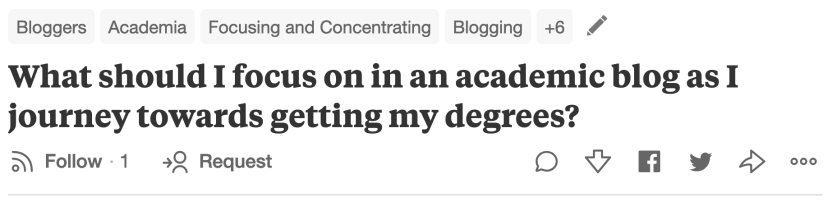
My response to a question on Quora (English notes below):

Screen Shot 2019-03-18 at 12.40.21

I agree with the other answers that suggest that you focus on your research work, as opposed to blogging.

Having said that: I myself am an academic, and I sometimes benefit from using my blog to solicit feedback on work in progress. Particularly, I will post the occasional introduction to a paper and ask people to tell me what parts of it are not clear. Since feedback on this specific kind of question is better if it comes from non-specialists in your field than if it comes from specialists, a blog with a random readership base is actually a pretty good way to get it.

Note that I do not recommend this approach to getting feedback if you are not yet at a place in your career where you see critiques as attempts to help you, as opposed to attempts to attack you! Thick skin is a prerequisite in academia in general, and certainly when you ask others to tell you about the problems with your work. Having said that: comments on your blog might be a good way to start getting thick skin!

Good luck with your studies!

English notes

to solicit: When followed by a noun, this means “to ask for (something).”  Examples:

  • We solicited participation in an online survey through national and city LGBT organizations and personal contacts to examine differences in depression, anxiety, alcohol and tobacco use, and body mass index among lesbian, gay, and transgender veterans (n = 252) in suburban/urban and rural/small town locations.  (Source: Kauth, Michael R., Terri L. Barrera, F. Nicholas Denton, and David M. Latini. “Health differences among lesbian, gay, and transgender veterans by rural/small town and suburban/urban setting.” LGBT health 4, no. 3 (2017): 194-201.) It’s so interesting to me that neither Trump nor any of his children have served in the US military–and yet, he wants to keep transgender troops from doing so.  Could we have, like, at least five of them to make up for his, Melania, Donald Jr., Eric, and Ivanka’s failure to serve?
  • This study utilized qualitative interviews and focus groups with veterans with documented polytrauma/TBI history to explore veterans‘ perceived barriers to employment and vocational rehabilitation program participation, as well as to solicit thoughts regarding interest in an evidence-based vocational rehabilitation program, the Individual Placement and Support model of Supported Employment (IPS-SE).   (Source: Wyse, Jessica J., Terri K. Pogoda, Ginnifer L. Mastarone, Tess Gilbert, and Kathleen F. Carlson. “Employment and vocational rehabilitation experiences among veterans with polytrauma/traumatic brain injury history.” Psychological services (2018).
  • It is critical to solicit and use input from team providers and leaders when establishing PST services.  (Source: Chinman, Matthew, Rebecca Shoai, and Amy Cohen. “Using organizational change strategies to guide peer support technician implementation in the Veterans Administration.” Psychiatric Rehabilitation Journal 33, no. 4 (2010): 269.

The verb to solicit is interesting in that if you use its nominalization solicitation without an object–i.e., without specifying the thing being asked for–the most obvious interpretation of it means to ask to purchase the services of a prostitute.  Examples:

…and the adjectival form means something completely different:

solicitous: showing or expressing concern.  Examples:

  • solicitous inquiry about his health (Source: Merriam-Webster)

…and then the “agentive” nominalization solicitor has yet another unrelated meaning:

solicitor: “the chief law officer of a municipality, county, or government department” (Source: Merriam-Webster). Examples:

https://platform.twitter.com/widgets.js

https://platform.twitter.com/widgets.js

https://platform.twitter.com/widgets.js

How I used it in the response to the question:

I myself am an academic, and I sometimes benefit from using my blog to solicit feedback on work in progress. 

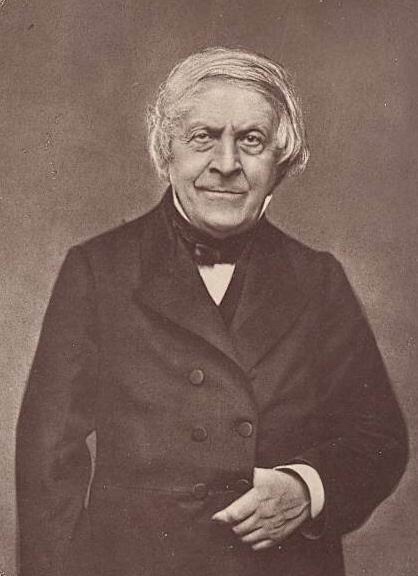
Mix and match: miscellaneous Michelet

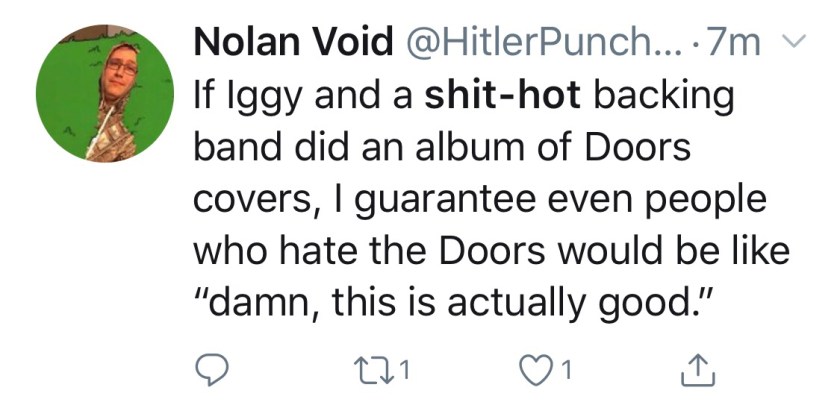
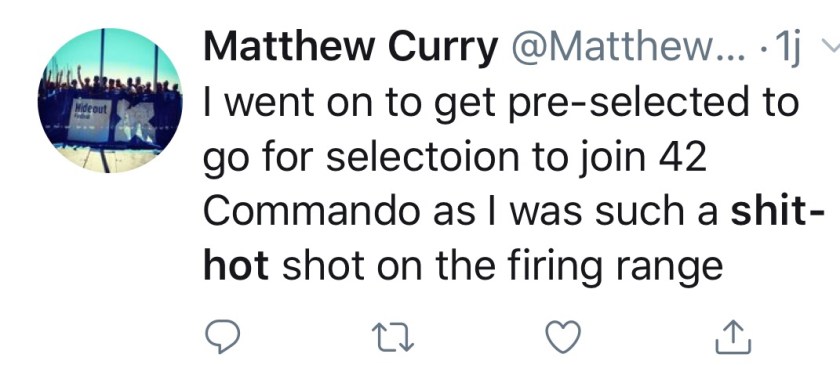
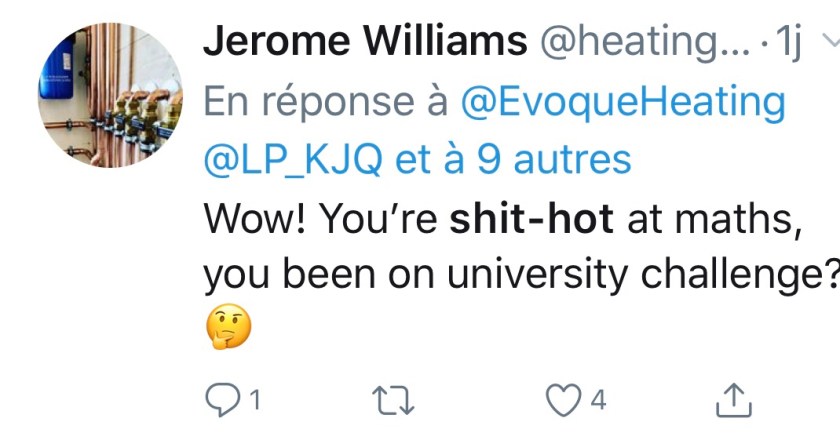
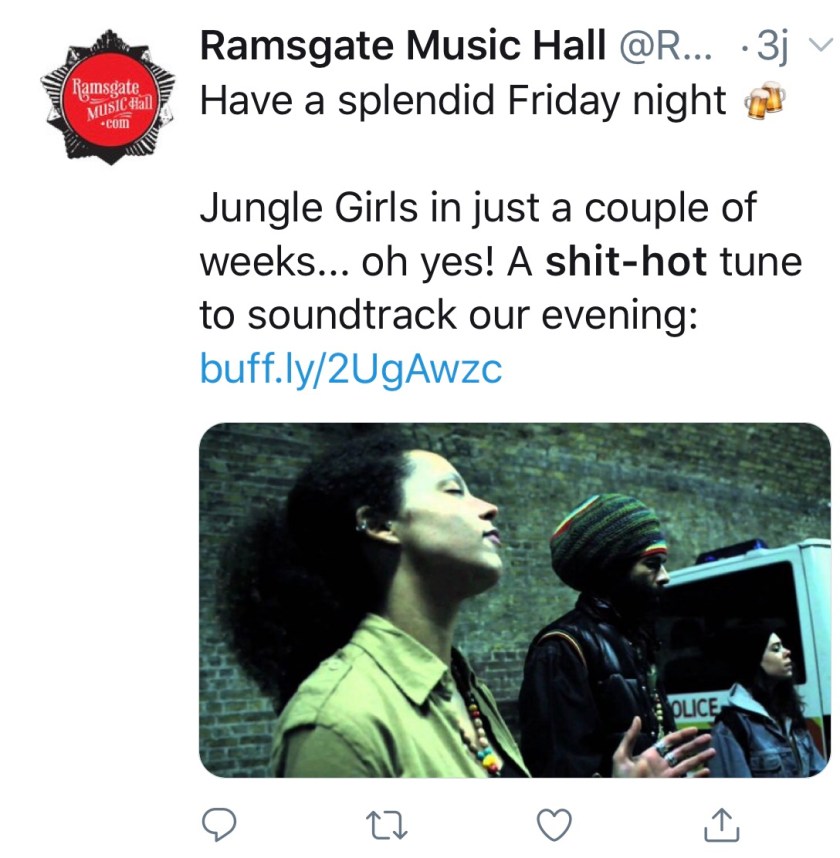
A shortage of French-language reading materials in Japan leads me to discover Jules Michelet, who turns out to be one shit-hot writer… Miscellaneous vocabulary from Les croisades and a random volume of Histoire de France.

Scroll down to the bottom of the page for today’s English notes.

Shit-hot: very, very good. Some examples:

That last example is especially interesting because it includes both “shit-hot,” which is quite good, and “shit,” which is quite bad.

Navy Blue: One discourse, one sense? No.

I spent most of the 1980s in the US Navy.  The music that we were listening to in those days: Pat Benatar, Joan Jett, REO Speedwagon.  But, the classics, too: In the Navy, Navy Blue… ay, matey, there’s the rub. 

There’s this thing called word sense ambiguity.  A “word sense” is a meaning, and many words have more than one; “word sense ambiguity” is the case of a word in context (as opposed to in the “lexicon,” or “mental dictionary”) having more than one possible sense.  In practice, a word in context has as many possible senses as there are for that word in the lexicon, so: many words are always going to be ambiguous.

Does that mean that it’s not possible to recover the correct sense?  Not at all.  In fact, humans are so good at “resolving” word sense ambiguity that we rarely notice that it’s there, even though we experience it almost constantly.  For computers, though–that’s a different story.  Word sense ambiguity is a problem for any computer program that tries to do things with language.  What to do?  Well, mostly, people try to get their programs to take advantage of context in some way.

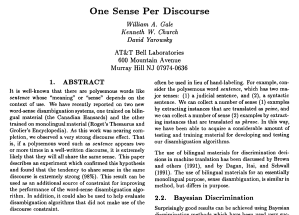
Screen Shot 2019-02-06 at 04.59.28
Gale, William A., Kenneth W. Church, and David Yarowsky. “One sense per discourse.” In Proceedings of the workshop on Speech and Natural Language, pp. 233-237. Association for Computational Linguistics, 1992.

Some approaches to this problem, known as word sense disambiguation, take advantage of what’s known as the one sense per discourse hypothesis.  Said hypothesis postulates that in any given discussion, an ambiguous word will only have one of its meanings.  So, if you can figure out that in a given conversation the word bank refers to the land along the side of a river, then you don’t even have to consider the meaning place where you keep money for the conversation as a whole.  Figure it out one time, and you’re done for the remainder of that “discourse.”


I spent most of the 1980s in the US Navy.  The music that we were listening to in those days: Pat Benatar, Joan Jett, REO Speedwagon, Berlin.  But, the classics, too: In the Navy (Village People), Navy Blue (Diane Renay)… ay, matey, there’s the rub.  See, in the single song Navy Blue, there is a play on the word blue.  

dress-blues
Replace the crossed keys with a caduceus and that’s what my blues looked like at the end of my enlistment. Source: https://www.etsy.com/listing/640957347/navy-dress-blues-wwii-uniform-top
  • navy or navy blue is a color.  It’s the color of what we call in the Navy our “dress blues,” which for enlisted men means the “Cracker Jack” uniform, which in fact is a hell of a lot more black than it is blue–but, whatever.
  • blue means something like mildly sad, mildy depressed.  In French, a rough equivalent of the phrase to be blue or to have the blues would be avoir le cafard.  

One discourse, two senses: a counter-example to the one sense per discourse hypothesis.

To be fair, I should point out that Gale et al. never claimed that the one sense per discourse hypothesis was an absolute–it’s more of a heuristic.  They reported it to be true 98% of the time or so–but, not always.  Still: I must point out the shameful lack of attention to Diane Renay’s #6 hit in their classic paper.  For shame, for shame, for shame.

Here’s a link to the song.  Scroll down for the full lyrics with explanations of some of the obscure military terminology and terms of romance, and don’t forget to buy a sailor a drink today–he’s serving his country, unlike, say, Donald Trump, Donald Trump Jr., Ivanka Trump, Eric Trump…


Navy Blue

Sung by Diane Renay, lyrics by Bob Crewe, Bud Rehak, and Edward Fluri

Blue, navy blue, I’m as blue as I can be
‘Cause my steady boy said “Ship ahoy”
And joined the Nay-ee-ay-vee
  • steady boy: old term for boyfriend with whom you have an exclusive relationship.
  • ship ahoy: old mariner’s term used to hail a ship
He said he wanted to settle down
And let me be his girl 
But first he had to do a little travelin’ around
And see the whole wide world
  • to settle down: to establish a permanent residence
  • girl: in this context, ‘girlfriend’
That’s why I’m
Blue, navy blue, I’m as blue as I can be
‘Cause my steady boy said “Ship ahoy”
And joined the Nay-ee-ay-vee
I got a letter yesterday from Tokyo
And a souvenir
A walky-talky wind-up little China doll
That says “Wish you were here”
  • wish you were here: stereotypical text written on a postcard when you’re too lazy to write anything substantive
Blue, navy blue, I’m as blue as I can be
‘Cause my steady boy said “Ship ahoy”
And joined the Nay-ee-ay-vee
He’s comin’ home to see me on a weekend pass
A forty-eight hour day
That boat he’s sailin’ on just better get here fast
‘Cause I can hardly wait
  • pass: permission, sometimes written, for a military person to take time off.  A weekend pass is from Friday evening to Sunday evening–also known as a “48,” although that doesn’t have to be on a weekend.  A “96” is a 4-day pass.
  • day in this song is sometimes transcribed as day-ate, i.e. date, giving the line the meaning of a rencard galant of 48 hours.
Till then I’m
Blue, navy blue, I’m as blue as I can be
‘Cause my steady boy said “Ship ahoy”
And joined the Nay-ee-ay-vee
Ah-ahhhhhh
Blue, navy blue, I’m as blue as I can be
Ah-ahhhhhh
Paroliers : Bob Crewe / Bud Rehak / Edward Fluri
Paroles de Navy Blue © Sony/ATV Music Publishing LLC

How to irritate a linguist, Part 5: English irregular past-tense verb practice

You just stand there, silent–trying not to glare balefully, either at your new interlocutor or–more likely–at the back of your departing host.  This is a mistake.

You’re at a party, sipping a dark beer and minding your own business, when the host introduces you to another cheerful attendee.  Biggie, meet Zipf.  He’s a linguist. …and disappears.

You just stand there, silent–trying not to glare balefully, either at your new interlocutor or–more likely–at the back of your departing host.  This is a mistake.


Conditional probability is the likelihood of some event given some other event.  For example: the probability of the word barf being said is, in the absence of any other information, equal to the frequency of the word barf being said divided by the frequency of any word whatsoever being said.  For example: I went to the Sketch Engine web site, your home for fine linguistic corpora and the tools to search them with, and searched a collection of 15.7 billion words of English scraped from the Web in 2015 and found that the word barf occurred 0.12 times per million words.  In other words: in the absence of any other information about what’s being said, you can expect that you will run into the word barf once every 8 million words or so.

If dogs are being talked about, the situation changes.  If you look only in the vicinity of the word dog, then the frequency of barf is 2.41 times per million words.  In other words, when dogs are under discussion, you will run into the word barf every 415,000 words or so.   So: the probability of the word barf is 0.12, and the conditional probability of the word “barf” given that you have seen the word “dog” is 2.41.

An aside: it isn’t necessarily the case that having seen some word tells you anything about the probability of seeing another word.  For example, the probability of the word barf and the probability of the word barf given that you have seen the word the are probably equal.  When the probability of some event (say, seeing some word) and the probability of that event given some other event (say, having seen some other word) are equal, we say that they are conditionally independent.  When the probability of some event is not the same as the probability of that event given some other event, we say that they are conditionally dependent.  


So, you’re at a party, sipping a dark beer and minding your own business, when the host introduces you to another cheerful attendee.  Biggie, meet Zipf.  He’s a linguist. …and disappears.  You just stand there, silent–trying not to glare balefully, either at your new interlocutor or–more likely–at the back of your departing host.  This is a mistake, for the following reason: when you just stand there silently, you let the other person establish the grounds of the conversation.  (Note that I’m assuming a party in the United States, where we find silence uncomfortable, and thus there will, indeed, be a conversation.)

Someone saying Wow–irregular verbs, huh?  Aren’t they weird?  …is equal to the frequency of wow–irregular verbs, huh?  Aren’t they weird?  …being said, divided by the frequency of anything whatsoever being said.  In other words: vanishingly small.  However, the probability of someone saying Wow–irregular verbs, huh?  Aren’t they weird? …given that you have just been introduced to someone as a linguist is not vanishingly small–it is much, much larger than vanishingly small.

Just to be sure that we’re all paying attention here:

  1. Suppose that the probability of the word barf is not equal to the probability of the word barf given that the word dog has been said.  These two words are:
    1. conditionally dependent
    2. conditionally independent
  2. Suppose that the probability of the word barf is equal to the probability of the word barf given that the word the has been said.  These two words are:
    1. conditionally dependent
    2. conditionally independent
  3. The probability of someone saying Wow–irregular verbs, huh?  Aren’t they weird? is much higher if they have just been told that you are a linguist than the probability of someone saying Wow–irregular verbs, huh?  Aren’t they weird? …given no additional information.  Those two events are
    1. conditionally dependent
    2. conditionally independent

Answers: (1) conditionally dependent, (2) conditionally independent, (3) conditionally dependent.


What’s so irritating about this?  The answers to that question are probably as numerous as the number of linguists in the world (which is to say: not enormous, but not zero, either), but here are my top 5 explanations:

  1. Your question is looking for a specific answer–yes, they sure are weird–but I do not, in fact, think that English irregular past-tense verbs are weird, so I feel pressured into lying, so fuck you.
  2. Talking about what’s interesting about English irregular past-tense verbs (I said interesting, not weird) would require me finding a napkin and a pen with which to draw on it, and no one seems to carry pens anymore, so I would have to wander around the party like a bumbling idiot, breaking up innumerable conversations while I looked for one, plus I have facial hair, so I really need my napkin.
  3. A reasonable linguist would suspect that if they engage with you on this question, then they’re going to find themselves in an annoying conversation with you about linguistic complexity, and that would really ruin their evening, which given that I was just sipping a dark beer and minding my own business seems pretty unfair.

English is the language of my profession, and I know an enormous number of non-native speakers who can read and write it close to perfectly.  But: drink a couple of beers at the Association for Computational Linguistics convention meet-and-greet, get into an animated conversation about the inability of Big Data to demonstrate causality, and anyone will start to trip over irregular forms.  If you’re speaking English, that’s probably mostly going to involve irregular past-tense verbs.  But: practice makes perfect better, so: let’s practice!

Today we’ll look at irregular past-tense verbs that follow a specific pattern.  In this pattern, a verb with the vowel [i] (International Phonetic Alphabet) in the present tense has the vowel [ε] in the past tense.  Examples:

  • feed/fed
  • lead/led
  • meet/met
  • read/read
  • lead/led

Notice that I’m grouping these verbs by pronunciation, not by spelling–our goal here is to help you develop spoken habits.  (Mécanisation–thanks, Phil d’Ange!)  The astute reader (OK, a linguist) might also have noticed that those verbs all end with one of the two English “alveolar oral stop consonants:” that is, with a or a d.  Other verbs that have the [i]-in-the-present-[ε]-in-the-past pattern may add a or a d:

  • feel/felt
  • creep/crept
  • keep/kept
  • kneel/knelt
  • leave/left
  • mean/meant
  • leap/leapt (leaped is also possible)
  • cleave/cleft (cleaved and clove are also possible)
  • flee/fled
  • sleep/slept
  • sweep/swept
  • weep/wept
  • deal/dealt
  • dream/dreamt (dreamed is also possible)
  • plead/pled (pleaded is also possible, and I think common these days, at least in the US)

OK: practice time!  Here are some sentences that include past-tense verbs of the [i]-in-the-present-[ε]-in-the-past pattern.  Read them out loud, replacing the present-tense verb in parentheses with the past-tense form.  (In some of these examples, it’s actually a past participle that happens to have the same form as the past tense.)

All examples are from the New York Times story Trump and Putin have met five times.  What was said is a mysteryby Peter Baker, published January 15th, 2019.  I have edited some of them for clarity, e.g. by replacing they with Trump and Putin. 

The first time that Trump and Putin (meet) was in Germany.

Each of the five times President Trump has (meet) with Mr. Putin since taking office, he has fueled suspicions about their relationship.

The unusually secretive way he has handled these meetings has (leave) many in his own administration guessing what happened and piqued the interest of investigators.

At the height of the campaign, his son, son-in-law and campaign chairman had (meet) at Trump Tower with Russians on the promise of obtaining dirt on Mrs. Clinton from the Russian government.

Their most famous meeting came on July 16, 2018, in Helsinki, where they talked for more than two hours accompanied only by interpreters.  The Kremlin later reported that the leaders reached important agreements, but American government officials were (leave) in the dark.  American intelligence agencies were (leave) to glean details about the meeting from surveillance of Russians who talked about it afterward.

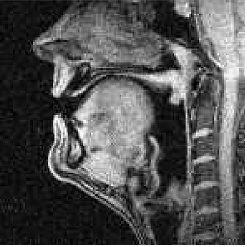
The picture at the top of this post is an MRI of the vowel [i] being pronounced.  Source: I don’t remember, but if you care, I’ll look it up.  Enjoying the How to irritate a linguist series?  Here are the previous episodes.

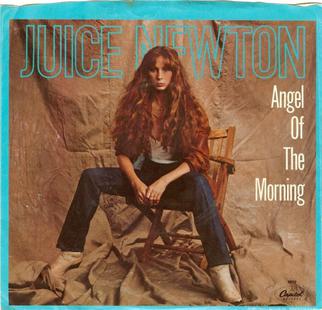
Juice Newton and the nature of semantics

There’s a theory that language has meaning by making assertions about the world that are either true, or false.  Juice Newton says otherwise.

How does language mean things?  One way of thinking about it:

  1. There is a world, with things in it.
  2. Language makes statements about those things.
  3. Those statements are either true, or false.

To expand on (3): suppose that I say the sentence Zipf’s Law is an “empirical” law.  …then if and only if it is, in fact, the case that:

  1. Such a thing as “Zipf’s Law” exists, and…
  2. …it is, in fact, a “descriptive” law (i.e. one that provides an accurate description of some set of facts, as opposed to, say, explaining them, or making a prediction about some as-yet-unobserved condition…

…then the sentence has the “truth-value” of true, and it means (1) and (2).


Here’s the thing, though: a lot of language does not, in fact, assert things about the world.  Suppose that I say the following to you: call me Angel of the Morning.  I am not asserting anything—I’m taking the action of giving you an order.  If I say to you if we’re victims of the night, I won’t be blinded by the night, then I’m not talking about something in the world—rather, I’m performing the action of making a prediction.   Is it true?  Is it false?  That’s not a relevant question, if you think that language means things by making a statement about the state of the world.  If it has no “ontological status”—in other words, it does not, in fact, exist—then not only is it not meaningful to talk about whether or not it’s true, but it’s not even meaningful to talk about what it “means.”

Juice Newton’s beautiful Angel of the Morning suggests that this–I’ll call it the ontologist’s point of view–is all bullshit.  From a linguist’s perspective, what’s cool about it is that from the preceding point of view, almost the entire song has no “truth value,” one way or the other.   Here are the lyrics:

There’ll be no strings to bind your hands
Not if my love can’t bind your heart
There’s no need to take a stand
For it was I who chose to start
I see no need to take me home
I’m old enough to face the dawn

Just call me Angel of the Morning, angel
Just touch my cheek before you leave me, baby
Just call me Angel of the Morning, angel
Then slowly turn away from me

Maybe the sun’s light will be dim
And it won’t matter anyhow
If morning’s echo says we’ve sinned,
Well, it was what I wanted now…
And if we’re victims of the night
I won’t be blinded by the light

Just call me Angel of the Morning, angel
Just touch my cheek before you leave me, baby
Just call me Angel of the Morning, angel
Then slowly turn away
I won’t beg you to stay
With me

Just call me Angel of the Morning, angel
Just touch my cheek before you leave me, darling
Just call me Angel of the Morning, angel
Just touch my cheek before you leave me, darling

Why do I say that the ontologist’s point of view is, in this case, bullshit?  Let’s start with the observation that the majority of the song by far (22 lines out of 26, or 84.6% of the lines in the song) does not make statements about the world.  Which lines do make a statement about the world?  The following, and no others:

  1. There’s no need to take a stand
  2. For it was I who chose to start
  3. I see no need to take me home
  4. I’m old enough to face the dawn

Everything else in the song falls into the category of “utterances” (a technical term in linguistics—something that is said, basically) called irrealis.  Here’s how Wikipedia defines irrealis:

 In linguistics, irrealis moods are the main set of grammatical moods that indicate that a certain situation or action is not known to have happened as the speaker is talking.  — Wikipedia

There are a lot of moods that qualify as irrealis—in fact, most of them.  Some examples that we see in Angel of the Morning:

  • There’ll be no strings to bind your hands (future)
  • Not if my love can’t bind your heart (hypothetical or presumptive)
  • Just call me Angel of the Morning, angel (imperative)
  • Just touch my cheek before you leave me, baby (imperative)
  • Then slowly turn away from me (imperative)
  • Maybe the sun’s light will be dim (dubitative)
  • If morning’s echo says we’ve sinned… (hypothetical)
  • Well, it was what I wanted now… (the only sentence in the song that I’m not sure about with respect to its irrealis versus realis status—looks like a conditional (irrealis), but if it’s intended to describe a current reality (implying regardless of what happens in the future, it is, at this time, what I want), then it’s realis)

So, you have a couple of choices here: (1) side with the ontologists and assert that most of the song (and, in fact, most of what you, personally, will say and hear today) is meaningless, or (2) abandon the assumption that language means things by referring to states of the world that are either true, or false.  Most of this song is devoid of ontological status, and the notion of having a “truth value” just doesn’t apply to the majority of this song, one way or the other.

Who you gonna side with here–the ontologists (represented here by me in asomewhat caricatural, but by no means entirely inaccurate, fashion), or Juice Newton?  Do I even need to ask??


Frequently Asked Questions

  • Q: Can linguists suck the joy out of anything?
  • A: Yes.
  • Q: Do linguists suck the beauty right the fuck out of language?
  • A: Yes.
  • Q: Am I a hopeless romantic?
  • A: Apparently.
  • Q: Why do I get divorced so often?
  • A: I don’t know.

Note: Angel of the Morning was written not by Juice Newton, but by Chip Taylor.  It has been recorded numerous times–Juice Newton’s is “just” the one that you would remember if you were an American of my age.  No ontologists were harmed in the making of this blog–neither were any’s opinions requested.  Not that their opinions would be unwelcome, of course, for all that I disagree with their deeply politically conservative opinions.  

What Japan knows that the Western world doesn’t

It’s 2 AM and it’s been less than a week since the last time that I crossed an ocean, so I’m jet-lagged and sitting on the back porch having a cigarette.  There’s a full moon.  It’s warning me.

It’s 2 AM and it’s been less than a week since the last time that I crossed an ocean, so I’m jet-lagged and sitting on the back porch having a cigarette.  There’s a full moon.  It’s warning me.


I’ve written about man-eating rabbits beforeLe lapin anthropophage in French, el conejo antropófago in Spanish–we’re not talking about the adorable little Monty Python killer rabbit here.  We’re talking about rabbits with sharp, bloody fangs who eat people.  Yeah, I know–you’ve never seen a man-eating rabbit.  How do I know?  Because you’re still alive–if you ever see a man-eating rabbit, that’s the last thing you see.  You know how I know that the adorable little Monty Python killer rabbit is not a real, actual man-eating rabbit?  Because he let some of the humans get away.


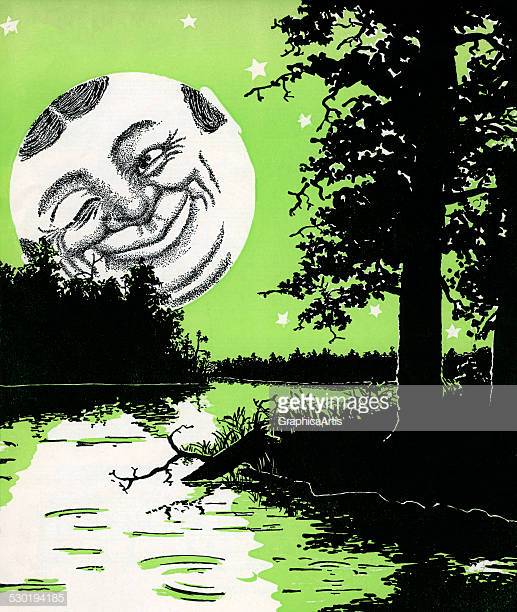
Look up at the night sky and what do you see?  If you were born and raised in the Pacific Northwest, like I was, you see the Man in the Moon.  The Pacific Northwest, Russia, Germany, France–it’s all of a piece.  It’s an optical delusion that pervades Western artistic expression.  From music…

And the cat’s in the cradle and the silver spoon

Little Boy Blue and the Man in the Moon

When you comin’ home, Dad?  I don’t know when,

But we’ll get together then, yeah–you know we’ll have a good time then.

Harry Chapin

…to the graphic arts…

gettyimages-530194185-612x612
Source: https://www.gettyimages.com/detail/news-photo/vintage-illustration-of-a-winking-man-in-the-moon-rising-in-news-photo/530194185

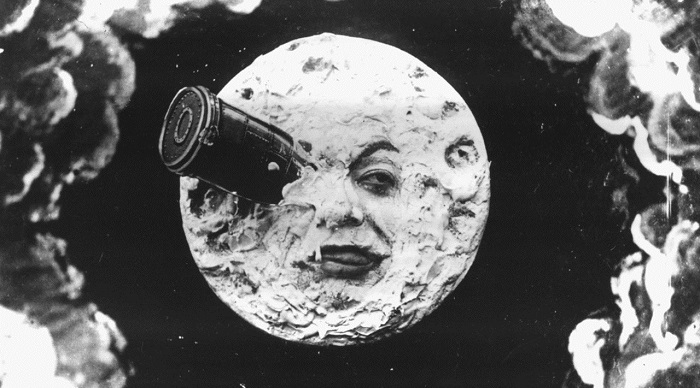
…to the cinema…

trip-to-the-moon
Source: https://www.signature-reads.com/2016/01/how-jules-verne-inspired-a-generation-of-rocket-scientists/

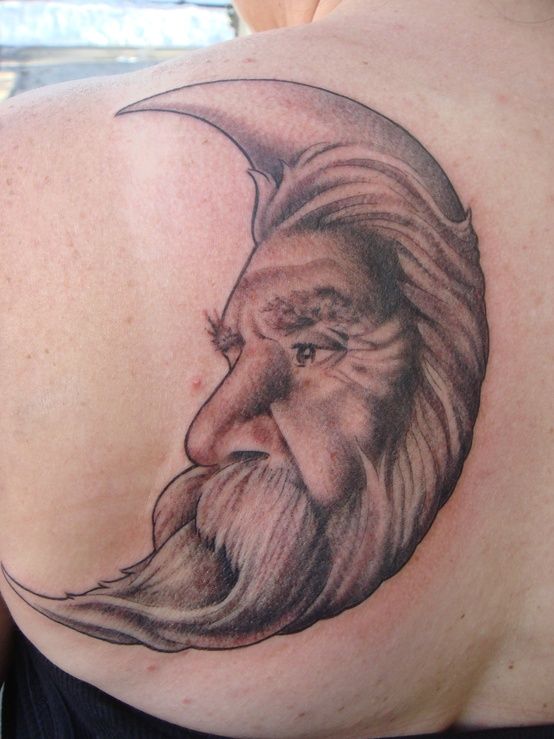
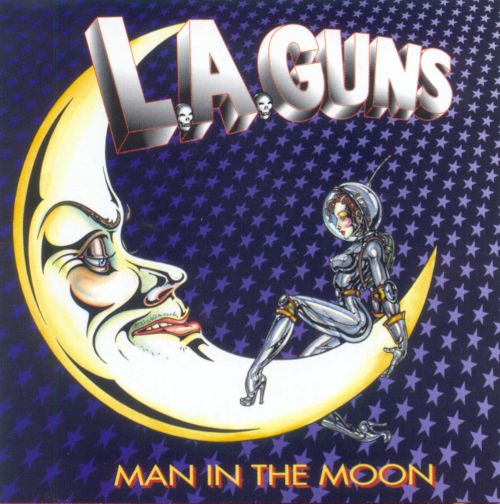
…the Western world looks at the moon and sees…the face of a man.  In fact, the idea of the Man in the Moon is so embedded in Western culture that the moon is portrayed with a man’s face even when the moon is not full:

079601cfe12345f02989aa254dd5815b
Source: https://www.pinterest.com/pin/406449935092586325/?lp=true
mi0000315984
Source: https://www.allmusic.com/album/man-in-the-moon-mw0000586669

It’s 2 AM and it’s been less than a week since the last time that I crossed an ocean, so I’m jet-lagged and sitting on the back porch having a cigarette.  There’s a full moon.  I look around the yard: any telltale long ears sticking up out of the grass?  Is there the gleam of moonlight off of pointy white little fangs?


Japan: I think of it as the France of Asia.  France: I think of it as the Japan of Europe.  Culturally, the two countries share a lot: an obsession with aesthetics, with presentation, with formality and with formalism; and food…  Generalizing about individuals is usually a losing proposition, but cultures–yeah, you can generalize about cultures.  (That’s sorta their point, right?)  And if there is one thing that Japanese culture and French culture share, it is an obsession with food.

The great Japanese food movie: Tampopo.  If you’ve only watched one Japanese movie, it’s probably the one.  Cinephiles have Ran, of course, and The Seven Samurai; teenagers have (or once had) The Ring; but poll your friends and you’ll find that if they’ve only seen one Japanese movie, it was Tampopo.  It’s about food, and sex, and food, and heroism, and food, and love, and food, and America (yes, in a minute you’re going to see a Japanese truck-driving Western movie hero), and food, and work, and… well, food.  Everyone has seen Tampopo, or should, and if you’ve seen it–when you’ve seen it–you’ll have a favorite scene.

For many people, that scene is this comedic skit.  YouTube auto-completes it as tampopo choking scene: 

The glutinous substance upon which the old man chokes is mochi.  You making it by pounding glutinous rice.  I especially love it when used to make o-manju–when in Japan, I conduct research on how long you can live on a diet consisting solely of its daifuku form, and coffee.


It’s 2 AM and it’s been less than a week since the last time that I crossed an ocean, so I’m jet-lagged and sitting on the back porch having a cigarette.  There’s a full moon.  I look at the rabbit in it.


In Western culture, you look at the moon and you see the Man in the Moon.  In Japan and China, you look at the moon and you see what’s really there.  In China, I understand that he’s pounding herbs.  In Japan: he’s pounding mochi.  As I said: mochi starts with sticky rice.  You pound it.  It becomes mochi.  Somebody makes o-manju out of it, and I eat it.  Artisanal manju in a fancy department store, 7-11 daifuku at midnight–it’s all good.  Great, even.  (Yes, there are 7-11s in Japan.  If it weren’t for 7-11 and their competitor Lawson’s, I would not survive.)


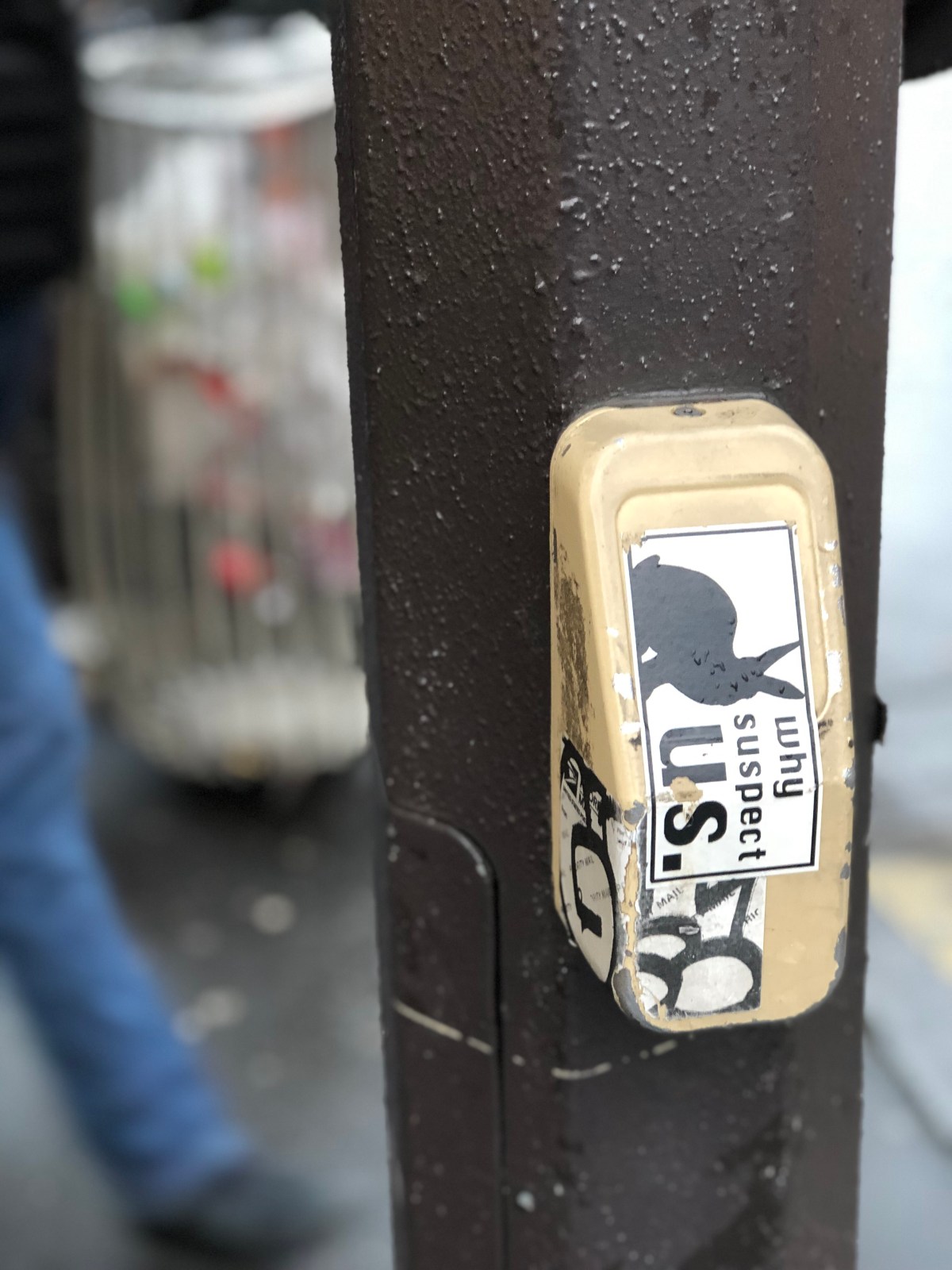
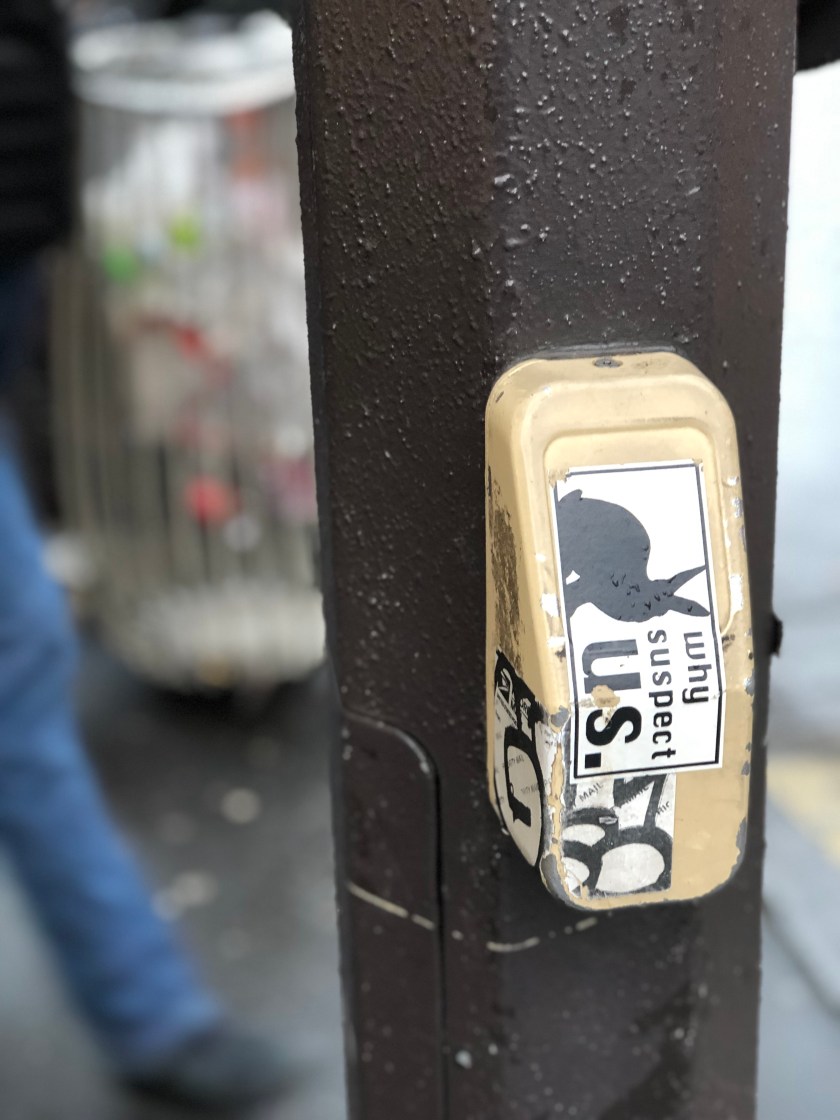
Yeah, I know that you’ve never seen a man-eating rabbit.  I mean, neither have I–if I had, I wouldn’t be alive and sitting on the back porch smoking a cigarette, would I?  But, the man-eating rabbits leave traces, like everything else.  Crossing the boulevard St-Michel the other day, I saw this sticker:

Here’s the thing: no, you’ve never seen a man-eating rabbit.  But, like everything else, they leave traces, and sometimes they do so deliberately.  Propaganda.  Man-eating rabbit propaganda.  Why suspect us, indeed.  (Fun, and little-known, fact: inter-annotator agreement, a fundamental measure of corpus linguistics, has its roots in the pre-WWII study of propaganda.  Check out Krippendorff’s book Content Analysis: An introduction to its methodology for the story.)  Why English-language man-eating rabbit propaganda in Paris?  I don’t know–possibly because the man-eating rabbits know that the boulevard St-Michel is infested with non-French-speaking tourists.  Possibly man-eating rabbits just have so much disdain for les valeurs républicains that they can’t be bothered to pick up a fucking dictionary.  Who can understand the thought processes of a man-eating rabbit (beyond their obvious nastiness)?

What Japan knows that the Western world doesn’t: it’s not a man in the moon–it’s a rabbit.  It’s a rabbit that is pounding mochi.  

gyokuto-watermark
Source: Matthew Meyer, http://yokai.com/gyokuto/.

Japan has given the world some wonderful things.  Judo, the “gentle way,” with its philosophy of mutual benefit between humans as the best way forward.  (Yes, it is the opposite of stupid “America First” isolationism.)  Ramen, the noodle dish that surpasses any other known human food for its comfortingness, yumminess, and general ability to make the world feel like a good place.  (Yes: aligot is a strong competitor.)  And something that people are, in general, less aware of: the rabbit in the moon, that constant reminder that we must always, always, always be vigilant.  Vigilant of the man-eating rabbits.  Vigilant of zombies.  Vigilant of petulant man-babies who would sacrifice America on the altar of their own narcissism, pathetically weak ego, and financial profit.


It’s 2 AM and it’s been less than a week since the last time that I crossed an ocean, so I’m jet-lagged and sitting on the back porch having a cigarette.  There’s a full moon.  It’s warning me.  It’s warning you.  It’s warning all of us.


English notes: bare relative clauses

It is an unfortunate fact that in English, relative clauses can–and it sounds perfectly natural–appear without their relativizer.  What that means: a week since the last time that I crossed the ocean can also be said a week since the last time I crossed the ocean.  In the second case, the last time I crossed the ocean is known as a “bare” (basically, “unclothed”) relative clause.

Leaving out the relativizer (in this case, that) is totally natural in the spoken language, and as far as I know, it’s totally fine in the written language, too.  Not all thats can be omitted.  I think it has something to do with whether the relative is “restrictive” or “non-restrictive;” unfortunately, despite having a doctoral degree in linguistics, I’ve never quite grasped the difference between them, so I can’t say anything more on the subject.  Try this web page, and explain it to me if you can.

Bare relative clauses are totally English, but I suspect that they must be very difficult for non-native speakers who don’t yet have an excellent command of the language, so I try to avoid them in this blog.  Here I’ll give you bare and non-bare examples of relative clauses from this blog post, just to familiarize you with the issue:

Bare: It’s 2 AM and it’s been less than a week since the last time I crossed an ocean, so I’m jet-lagged and sitting on the back porch having a cigarette.  There’s a full moon.  It’s warning me.

Not bare (there must be a term for that): It’s 2 AM and it’s been less than a week since the last time that I crossed an ocean, so I’m jet-lagged and sitting on the back porch having a cigarette.  There’s a full moon.  It’s warning me.

Bare: You know how I know the adorable little Monty Python killer rabbit is not a real, actual man-eating rabbit?  Because he let some of the humans get away.

Not bare: You know how I know that the adorable little Monty Python killer rabbit is not a real, actual man-eating rabbit?  Because he let some of the humans get away.  (Note that this one is almost certainly not a restrictive/non-restrictive issue–the relative clause is not modifying a nominal group.)

Bare: And if there is one thing Japanese culture and French culture share, it is an obsession with food.

Not bare: And if there is one thing that Japanese culture and French culture share, it is an obsession with food.


Ukrainian Humanitarian Resistance

Resisting the russist occupation while keeping our humanity

Languages. Motivation. Education. Travelling

"Je suis féru(e) de langues" is about language learning, study tips and travelling. Join my community!

Curative Power of Medical Data

JCDL 2020 Workshop on Biomedical Natural Language Processing

Crimescribe

Criminal Curiosities

BioNLP

Biomedical natural language processing

Mostly Mammoths

but other things that fascinate me, too

Zygoma

Adventures in natural history collections

Our French Oasis

FAMILY LIFE IN A FRENCH COUNTRY VILLAGE

ACL 2017

PC Chairs Blog

Abby Mullen

A site about history and life

EFL Notes

Random commentary on teaching English as a foreign language

Natural Language Processing

Université Paris-Centrale, Spring 2017

Speak Out in Spanish!

living and loving language

- MIKE STEEDEN -

THE DRIVELLINGS OF TWATTERSLEY FROMAGE